
Ukraine SOF Cuts North Crimean Canal Rail Bridge June 2026
Ukraine destroyed a railway bridge over the North Crimean Canal on 23 June 2026, severing the sole rail corridor and suspending all passenger trains in Crimea.
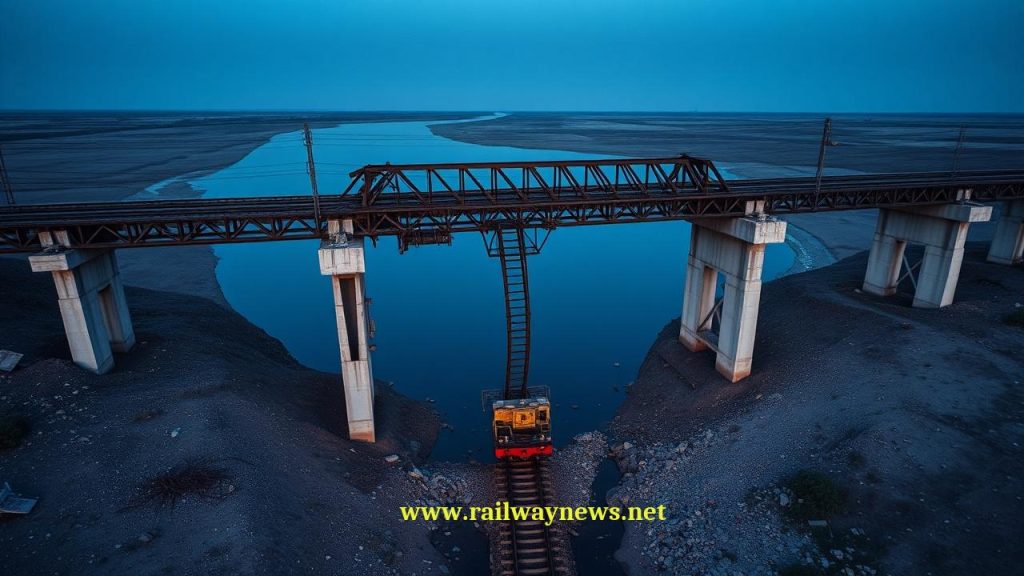
⚡ In Brief: Ukraine’s Special Operations Forces destroyed a railway bridge over the North Crimean Canal near Rozdolne in occupied Crimea on 23 June 2026, severing a critical military logistics artery and triggering the suspension of all passenger trains across the peninsula.
OCCUPIED CRIMEA – Ukraine’s Special Operations Forces (SOF) announced on Tuesday, 23 June 2026, that they had destroyed a railway bridge spanning the North Crimean Canal near the town of Rozdolne, eliminating a structure that formed part of the sole rail corridor connecting the Kerch Strait to Russian forces deployed in southern Ukraine’s Kherson region and along the Sea of Azov coast. The Moscow-installed occupation authorities confirmed the suspension of all passenger train services within Crimea, though the extent of structural damage to the bridge has not been independently verified by Russian officials.
What Happened and What Is the Scale of Impact?
The destroyed bridge carried a single-track railway line across the North Crimean Canal, a waterway that channels Dnipro River water into occupied Crimea, and its elimination severs the primary rail link between the Kerch Strait area—including the illegally constructed Kerch Strait Bridge—and the remainder of the peninsula. Ukraine’s SOF stated the operation was executed in coordination with a resistance network operating inside occupied territory, and released video footage purportedly showing the moment of impact. On the same night of 23 June, Ukrainian drones struck 60 Russian targets across occupied territories, including oil tanks at the Kerch thermal power plant and the “Western Crimea” power station in Karierne, alongside air defence systems and radar equipment. The combined strikes suggest a coordinated degradation of both logistics corridors and the protective surveillance umbrella shielding them.
Key Incident Data
| Parameter | Value |
|---|---|
| Incident Type | Deliberate military strike / Railway bridge destruction |
| Total Value | Not disclosed (cost of damage and repair not officially estimated) |
| Parties Involved | Ukraine’s Special Operations Forces; resistance network in occupied Crimea; Moscow-installed occupation authorities (response) |
| Timeline / Completion | Strike executed 23 June 2026; repair timeline not disclosed by occupation authorities |
| Country / Corridor | Occupied Crimea, Ukraine / Kerch Strait–Rozdolne–Kherson rail corridor, North Crimean Canal crossing |
How Does This Compare to Similar Incidents on This Network?
This strike is the latest in a multi-year Ukrainian campaign to isolate occupied Crimea by degrading its rail and maritime logistics infrastructure. The Kerch Strait Bridge, a 19-kilometre road-and-rail crossing opened in 2018, has been targeted repeatedly: a truck bomb damaged the road span in October 2022, and maritime drone strikes in July 2023 caused further structural damage to both road and rail sections. Rail traffic on the Kerch Bridge has since operated at reduced capacity under heightened security. Concurrently, Ukraine disabled the Kerch Strait ferry service in mid-2025, eliminating a parallel fuel supply route that had compensated for partial rail disruptions (Source: Maritime Executive, 2025). The Rozdolne bridge strike now compounds these bottlenecks: with the eastern rail gateway constrained and the western corridor severed at the North Crimean Canal, Russian forces in the Kherson region face a lengthened overland supply route through the Azov coastal corridor—exposed to further interdiction. The US approval of up to 3,350 Extended Range Attack Munitions (ERAMs) for Ukraine in August 2025 has expanded Kyiv’s standoff strike capacity, though the specific munition used against the Rozdolne bridge was not confirmed (Source: US Defence Security Cooperation Agency, August 2025). Separately, Ukraine launched its first open tender for large-scale strike drone procurement in 2026, signalling an industrialisation of the capabilities that have enabled these sustained infrastructure strikes (Source: Defence-ua.com, 2026).
Editor’s Analysis
The Rozdolne strike shifts the Crimean logistical equation from degradation toward dismemberment. Russia’s rail-dependent supply architecture in southern Ukraine now operates with a severed mainline, a damaged crossing at Kerch, and no maritime ferry fallback—a convergence of constraints that no single repair can resolve. Ukraine’s simultaneous targeting of air defence and radar systems on 23 June indicates a sequenced approach: blind the surveillance network, then strike the logistics nodes it protects. The broader Ukraine rail freight market for 2025 was already projected to contract under the weight of these disruptions, with traditional fuel and commodity corridors rerouted at higher cost (Source: IndexBox, 2025). If the occupation authorities cannot restore rail connectivity across the North Crimean Canal within weeks, Russian forces in Kherson will absorb rising transport costs and delivery delays during the summer operational window.
FAQ
Q: Why is the railway bridge over the North Crimean Canal strategically important?
A: The bridge carried the only railway line connecting the Kerch Strait area to central and western Crimea, and onward to Russian forces in occupied Kherson and along the Sea of Azov. Its destruction forces supply trains to find alternative—and longer—routes through the Azov coastal corridor.
Q: How long will it take to repair the bridge?
A: No repair timeline has been announced by the Moscow-installed occupation authorities. Given the bridge’s location in an active strike zone and the need for specialised rail engineering assets, estimates from comparable military infrastructure repairs range from several weeks to multiple months, though this remains speculative.
Q: What does this mean for civilian passengers in Crimea?
A: All passenger train services within Crimea were suspended following the strike. The city of Kerch, at the eastern end of the peninsula, remains the arrival and departure point for trains to and from Russia via the Kerch Strait Bridge, but internal rail movement to central and western Crimea is no longer possible until repairs are completed.
Q: Is the Kerch Strait Bridge still operational after the Rozdolne strike?
A: The Kerch Strait Bridge is a separate structure approximately 200 kilometres east of Rozdolne and was not targeted in this specific strike. However, the bridge operates under reduced capacity due to previous attacks, and the severing of the rail line at Rozdolne means that trains crossing the Kerch Bridge cannot reach destinations beyond eastern Crimea.
Note: Independent verification of the full extent of structural damage to the Rozdolne bridge was not available at time of publication, as Russian authorities have not released damage assessments or imagery. The specific munition type used in the strike also remains unconfirmed by Ukrainian or Russian sources.

Railway infrastructure, rolling stock and transport technologies specialist focused on global rail industry developments, high-speed rail systems, signaling technologies and freight transportation. Covering railway investments, public transport modernization, rail operations and international mobility projects across Europe, Asia and North America.
RELATED POSTS

September 6, 2026 5:19 am
Hitachi delivered Taiwan's first N700ST high-speed train from Japan in...

September 5, 2026 4:19 pm
CPK launched formal tender talks with four consortia to design...

September 5, 2026 7:14 pm
HS2 Ltd signed renegotiated civils contracts with EKFB and Align...
September 6, 2026 6:17 am
Hungary ordered a national ban on most freight trains from...

September 6, 2026 8:17 am
DB InfraGO reopened the Nuremberg-Regensburg line in Bavaria on 31...

September 6, 2026 1:17 am
Hitachi Toshiba Supreme Consortium confirmed the first of 12 N700ST...