
WSJ Reports U.S. Rail Freight Shift as Truck Rates Climb
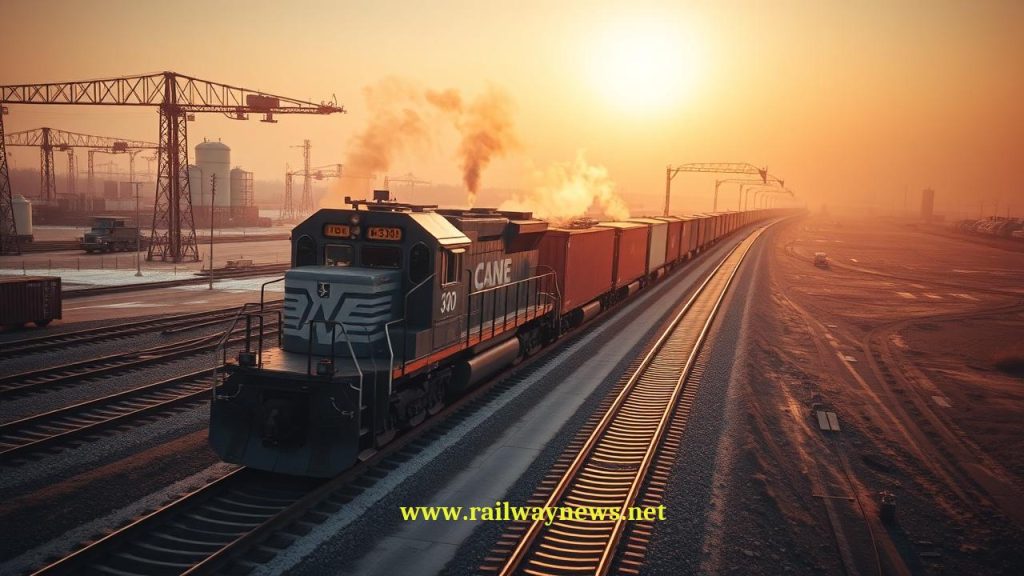
Wall Street Journal reported in June 2025 a shift of U.S. freight from truck to rail, driven by climbing road transport costs, as companies reallocate logistics budgets.

⚡ In Brief: U.S. companies are returning freight to railroads as trucking rates climb, while private equity targets tech-enabled premium rail assets and India plans a stake sale in Indian Railway Finance Corp.
NEW YORK – A Wall Street Journal report has documented a shift by U.S. companies from truck to rail freight, driven by rising road transport costs. The modal reversal, reported in June 2025, coincides with a broader investment pivot as private equity dealmaking in transportation increasingly focuses on premium, technology-enabled rail and rail-adjacent assets. (Source: WSJ, 2025; PwC Midyear Outlook via Logistics Management, 2025)
How Is the Funding Structured?
The funding landscape for rail in 2025 is characterized by multiple, unconnected streams rather than a single program. U.S. companies reallocating logistics budgets to rail freight represent an organic shift valued in millions of dollars of monthly transport spend, though aggregate totals were not disclosed. In the investment sphere, private equity firms are eschewing volume-based logistics plays for premium assets, including rail-adjacent technology platforms, according to PwC’s midyear outlook. Separately, the Indian government plans to sell up to 2% of Indian Railway Finance Corp, a move that could raise approximately $300 million based on current market capitalization, as part of a broader asset monetization strategy (Source: Reuters, 2025). Meanwhile, Transport for London appointed Amey to an infrastructure improvement framework, sustaining a pipeline of maintenance spending in the UK. (Source: Rail UK, 2025)
Key Funding Data
| Parameter | Value |
|---|---|
| Fund / Programme Name | U.S. Rail Freight Reallocation & Global Rail Investment Trends |
| Total Value | Not disclosed in aggregate; India IRFC stake sale could raise ~$300 million |
| Parties Involved | U.S. shippers, private equity firms, Indian government, Amey (TfL contract) |
| Timeline / Completion | Ongoing during 2025; India’s stake sale planned for June 2025 |
| Country / Corridor | United States, India, United Kingdom, China (tourism integration) |
How Does This Compare to Similar Funding Programs?
Compared to China’s state-led rail-tourism investment, which has driven a measurable increase in travel and spending in connected towns (Source: Tourism Review, 2025), the U.S. trend is a market-driven reallocation rather than a government program. India’s planned divestiture of a 2% stake in its railway finance corporation mirrors similar partial privatizations in other infrastructure sectors globally, though it is modest in scale compared to full concessions seen in European rail. Private equity’s pivot to premium assets contrasts with the earlier emphasis on high-volume freight brokerage, indicating a maturation of transportation investing. (Source: PwC via Logistics Management, 2025)
Editor’s Analysis
The simultaneous push of cost-driven modal shift and pull of premium tech-enabled asset interest suggests rail is entering a new phase of investor relevance. For operators, the influx of capital and freight volume could improve margins, but the focus on technology may accelerate automation and alter labor needs. The India stake sale, while small, signals government willingness to recycle capital from railways—a trend with potential to reshape state-owned rail networks globally.
FAQ
Q: Why are U.S. companies moving freight back to railroads?
A: Rising trucking rates, driven by fuel and driver shortages, have made rail a more cost-effective option for long-haul shipments, according to the Wall Street Journal.
Q: What is the value of India’s planned stake sale in Indian Railway Finance Corp?
A: India aims to sell up to 2% of the company, which could raise approximately $300 million, though exact proceeds depend on market conditions. (Source: Reuters, 2025)
Q: How is China integrating rail and tourism?
A: China has expanded high-speed and regular train networks to tourist destinations, increasing visitor numbers and spending in connected towns, as reported by Tourism Review in 2025.

Railway infrastructure, rolling stock and transport technologies specialist focused on global rail industry developments, high-speed rail systems, signaling technologies and freight transportation. Covering railway investments, public transport modernization, rail operations and international mobility projects across Europe, Asia and North America.
RELATED POSTS

June 4, 2026 11:05 am
California High-Speed Rail Authority awarded a $3.5 billion track and...

June 4, 2026 6:22 pm
Network Rail and HS2 demolishes two strategic rail bridges, Saltley...
June 1, 2026 9:19 pm
300 IBEW signal workers initiated a strike against Canadian Pacific...

June 2, 2026 8:44 am
⚡ In Brief: The UK Office of Rail and Road...
June 2, 2026 10:31 am
⚡ In Brief: The UK’s Office of Rail and Road...
June 2, 2026 11:37 am
⚡ In Brief: The UK’s Office of Rail and Road...