
LTG Infra Confirms €64M Rail Baltica Bridge Termination
LTG Infra terminated a €64 million contract with Rizzani de Eccher for the Neris railway bridge with the Rail Baltica main line at 43% readiness.
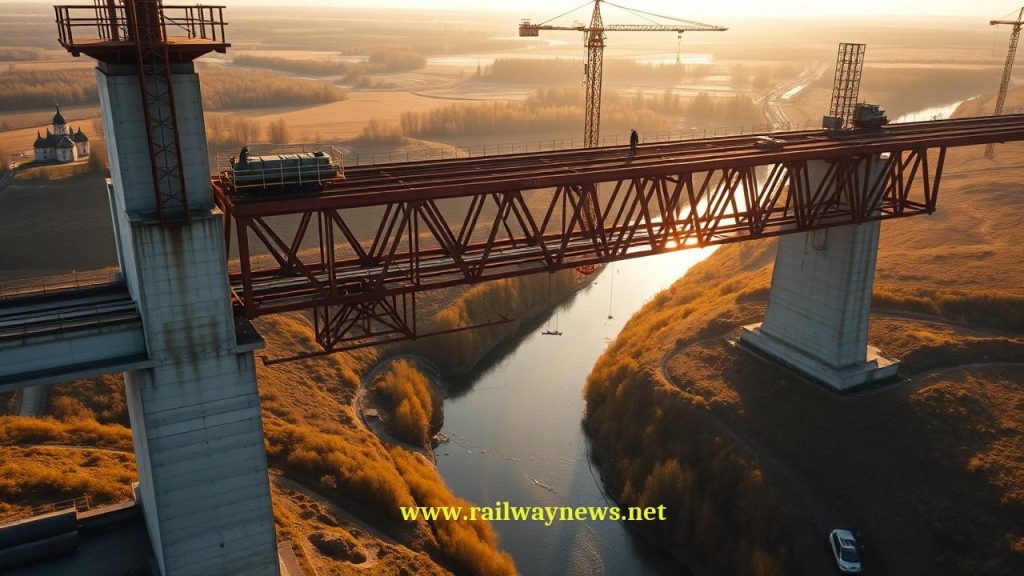
⚡ In Brief: LTG Infra terminated its EUR 64 million contract with Rizzani de Eccher for the 1.5 km Neris River railway bridge after the overall Rail Baltica main line reached only 43% construction readiness and subcontractors went unpaid.
VILNIUS, LITHUANIA – On 23 June 2026, Lithuania’s infrastructure manager LTG Infra cancelled a EUR 64 million construction contract with Italian general contractor Rizzani de Eccher for the European-gauge railway bridge over the Neris River, a key element of the EU-backed Rail Baltica corridor, after the contractor repeatedly breached contractual obligations, including extended delays and failure to pay subcontractors. When the decision was made, the wider Rail Baltica main line had achieved only 43% construction readiness, underscoring the risk to the 2030 completion target.
What Does This Contract Cover?
The terminated contract covered the design and construction of a 1.5 km double-track railway bridge spanning the Neris River valley at a height of 40 metres and a width of nearly 14 metres, built to standard European gauge (1,435 mm). Work began in July 2022 under Lithuania’s LTG Infra, the implementing body for Rail Baltica in the country, and the bridge forms an essential link on the Kaunas–Panevėžys section, where the first European-gauge tracks have already been laid on a 114 km alignment. The structure is one of the most complex engineering segments on the route; interruption of its construction puts the entire corridor’s scheduled in-service date of end‑2030 at immediate risk. Note: The specific percentage of bridge completion was not disclosed separately; the 43% figure refers to the overall Rail Baltica main line corridor.
Key Contract Data
| Parameter | Value |
|---|---|
| Contract Name | Neris River Railway Bridge (Rail Baltica) |
| Total Value | EUR 64 million |
| Parties Involved | LTG Infra (client), Rizzani de Eccher (general contractor) |
| Timeline / Completion | Start: July 2022; Terminated: 23 June 2026; Rail Baltica main line target: end of 2030 |
| Country / Corridor | Lithuania, Rail Baltica (TEN‑T North Sea–Baltic Corridor) |
| Construction Readiness at Termination | 43% overall main line readiness (Source: LTG Infra, 2026) |
How Does This Compare to Similar Contracts?
The Neris bridge termination echoes a earlier Rail Baltica contract failure in the region: in 2021, Rail Baltic Estonia cancelled a contract with Spanish contractor OHL for the Pärnu–Ikla section after repeated delays and performance shortfalls (Source: European Commission, 2021). Both cases highlight the vulnerability of single‑contractor delivery models on cross‑border mega‑projects where schedule overruns can cascade. In contrast, the UK’s £1.2 bn Electricity Transmission Partnership (ETP) overhead line upgrade programme, running through June 2026, spreads risk across five firms under a framework agreement, a structure that insulates the client from any one contractor’s failure (Source: National Grid, 2026). No directly comparable terminations on other large‑scale railway bridge contracts in the Baltic states were publicly available at the time of publication.
Editor’s Analysis
LTG Infra’s decision to sever ties rather than accept a remediation plan reflects a hardening stance among transport infrastructure owners across Europe: on strategically important corridors, tolerating contractor underperformance is no longer an option. The move aligns with a broader 2025‑2026 market shift identified by PwC, where transportation dealmaking and investment are concentrating on premium, time‑critical assets, with a premium on reliability (Source: PwC Midyear Outlook, 2026). For Rail Baltica, the re-procurement of the bridge contract must be executed with unusual speed; any further delay at this chokepoint will almost certainly push the main line’s 2030 deadline out of reach. The fact that LTG Infra chose not to disclose the bridge’s own progress percentage suggests that it was materially lower than the overall corridor average, implying a multi‑month gap before a new contractor can begin work.
FAQ
Q: Why was the contract terminated?
A: LTG Infra cited major contractual violations—specifically construction delays and failure by Rizzani de Eccher to pay subcontractors—combined with a deteriorating financial situation at the contractor that made the proposed remediation plan unworkable.
Q: What happens to the subcontractors who are owed money?
A: LTG Infra stated that all payments for work already performed have been settled with the general contractor. Unpaid subcontractors will have to recover their funds through legal action against Rizzani de Eccher; the client has no direct obligation to pay them.
Q: Will the bridge still be ready in time for Rail Baltica’s 2030 completion?
A: LTG Infra and Lithuania’s transport ministry have said completing the main line by the end of 2030 remains the target and that restarting bridge construction is a priority, but the re-procurement process has not yet been defined and any significant hiatus will put the 2030 deadline at serious risk.

Railway infrastructure, rolling stock and transport technologies specialist focused on global rail industry developments, high-speed rail systems, signaling technologies and freight transportation. Covering railway investments, public transport modernization, rail operations and international mobility projects across Europe, Asia and North America.
RELATED POSTS

September 6, 2026 5:19 am
Hitachi delivered Taiwan's first N700ST high-speed train from Japan in...

September 5, 2026 4:19 pm
CPK launched formal tender talks with four consortia to design...

September 6, 2026 6:17 am
Hungary ordered a national ban on most freight trains from...

September 5, 2026 7:14 pm
HS2 Ltd signed renegotiated civils contracts with EKFB and Align...

September 6, 2026 8:17 am
DB InfraGO reopened the Nuremberg-Regensburg line in Bavaria on 31...

September 6, 2026 1:17 am
Hitachi Toshiba Supreme Consortium confirmed the first of 12 N700ST...