
European Commission Opens €1.1bn CEF Transport Rail Call
European Commission launched the final €1.1bn CEF Transport call under the 2021-2027 EU budget for rail and military mobility, with proposals due 6 October 2026.
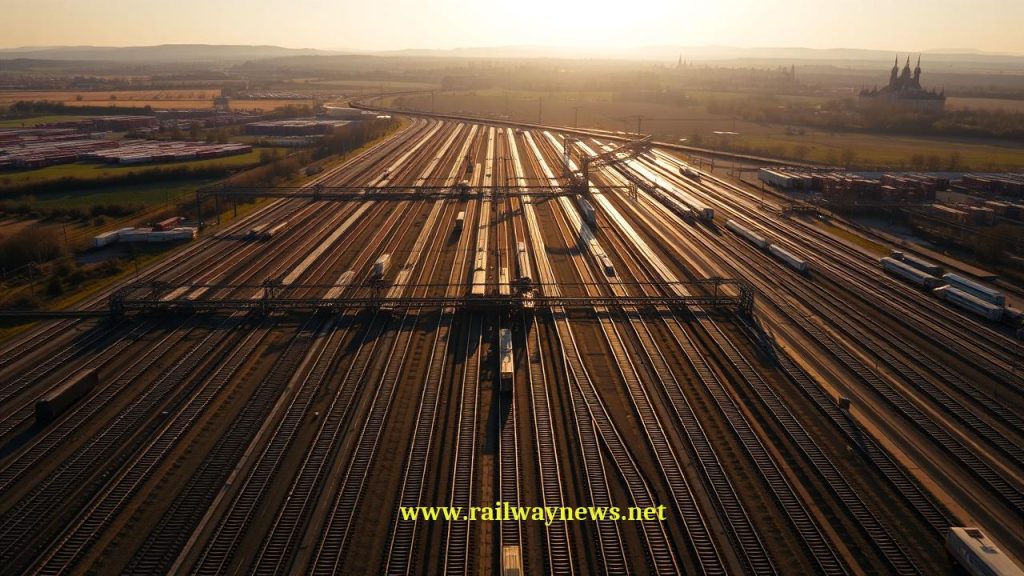
⚡ In Brief: The European Commission opened a €1.1bn CEF Transport 2026 call for rail, military mobility, and better links with Ukraine and Moldova; proposals are due by 6 October 2026.
BRUSSELS, Belgium – The European Commission, through its executive agency CINEA, launched the CEF Transport 2026 call on 22 June 2026, releasing €1.1 billion for transport infrastructure projects. Eligible proposals must target the trans-European transport network (TEN-T) and can be submitted by EU member states, international organisations, or public and private entities in associated countries, including Ukraine and Moldova. The call marks the final such opportunity under the current 2021–2027 EU multiannual budget.
How Is the Funding Structured?
The €1.1 billion envelope is allocated across multiple priorities: rail infrastructure on the TEN-T core network, military mobility upgrades, inland waterway projects, electrification of road freight and airport ground operations, alternative fuel retrofits for ships, and digitalisation of road transport. Rail and military mobility receive special emphasis, with funding directed at interoperability, resilience, and the removal of physical and technical bottlenecks. Ukraine and Moldova are now full participants in the Connecting Europe Facility, meaning their rail and border-crossing projects can access co-financing alongside EU member states.
Key Funding Data
| Parameter | Value |
|---|---|
| Fund / Programme Name | CEF Transport 2026 (Connecting Europe Facility) |
| Total Value | €1.1 billion |
| Parties Involved | European Commission, CINEA, EU member states, Ukraine, Moldova, and eligible public/private entities |
| Timeline / Completion | Submission deadline: 6 October 2026, 17:00 CET; grant agreements expected within 9 months of deadline |
| Country / Corridor | EU-wide plus Ukraine and Moldova, focusing on TEN-T core network and nine European transport corridors |
How Does This Compare to Similar Funding Programs?
The CEF Transport programme has provided €25.8 billion for the 2021–2027 period alone, and since 2014 it has backed over 1,900 transport projects with €47.2 billion in total co-financing (Source: European Commission, 2026). The current €1.1 billion call closes the programme cycle, making it the last chance for member and associated states to secure grants before the next EU budget allocation. Meanwhile, Ukraine’s rail freight market is poised for growth from deeper cooperation with neighbouring Romania on logistics and investments, a dynamic that contrasts with the steep decline in Russian railway cargo volumes observed in 2025–2026 (Source: GMK Center, United24 Media, 2026). That shift strengthens the commercial case for integrating Ukraine’s railways into the TEN-T core network, complementing the call’s security-oriented military mobility priorities. However, separate EU efforts to improve passenger rail ticketing — such as the 2024–2025 contract comparison initiative under the EU Passenger Package — remain limited in geographic scope, with 43% of the EU’s busiest cross-border flight routes still hard or impossible to book by train as a single ticket (Source: CleanTechnica, 2026). This mismatch highlights a gap between infrastructure funding and the operational rules needed to deliver seamless passenger experience.
Editor’s Analysis
The inclusion of Ukraine and Moldova in a final-call CEF Transport window signals that Brussels expects enduring demand for cross-border connectivity irrespective of the geopolitical timeline. Paired with the collapse of Russian railway cargo traffic, the competition for these grants could accelerate the reorientation of east-west logistics corridors away from Russia and toward Romania and the broader EU network. If the EU fails to align its passenger-rights framework with the infrastructure it funds, however, much of the network’s potential for modal shift will remain untapped.
FAQ
Q: Who can apply for the CEF Transport 2026 funding?
A: One or more EU member states, international organisations, or public and private entities established in an EU member state or in a country associated with the Connecting Europe Facility, which now includes Ukraine and Moldova.
Q: What is the deadline for submitting a proposal?
A: Proposals must be submitted electronically via the European Funding & Tenders portal by 6 October 2026 at 17:00 CET (Brussels time).
Q: Does the call cover both civilian and military infrastructure?
A: Yes. Funding explicitly targets military mobility alongside civilian rail, inland waterways, and electrification projects, supporting the EU’s military mobility package and the elimination of bottlenecks for rapid equipment movement.
Q: How long will it take to know if a project is selected?
A: Applicants will receive evaluation results within six months of the submission deadline, and grant agreements are expected to be signed within nine months.
Q: What kind of rail projects are eligible?
A: Projects on the TEN-T core network that modernise infrastructure, increase interoperability, boost resilience, and contribute to the European high-speed rail plan — including border-crossing sections with Ukraine and Moldova.
Note: The exact allocation split between rail, military mobility, and other categories was not disclosed in the call announcement. Independent verification of individual project budgets will only be available after grant agreements are finalised.

Railway infrastructure, rolling stock and transport technologies specialist focused on global rail industry developments, high-speed rail systems, signaling technologies and freight transportation. Covering railway investments, public transport modernization, rail operations and international mobility projects across Europe, Asia and North America.
RELATED POSTS

October 1, 2026 7:09 am
United States regulators confirmed a September 30 deadline for the...

October 1, 2026 12:13 am
Illinois approved $1.5 billion annually for the Northern Illinois Transit...

October 1, 2026 5:14 am
Siemens confirmed delivery of the first new S200 train to...

October 1, 2026 6:10 am
Amtrak approved a System Expansion Committee on July 30 to...
October 1, 2026 3:12 am
Greenbrier confirmed Brian Comstock as new president and CEO effective...

October 1, 2026 4:10 am
DART launched two public ridership dashboards in March 2026 to...