
BNSF Wins Approval for 4,500-Acre Barstow Intermodal
BNSF secured Barstow City Council approval for its 4,500-acre Barstow International Gateway intermodal and transload facility in California, designed to cut 205 million truck miles by 2028.
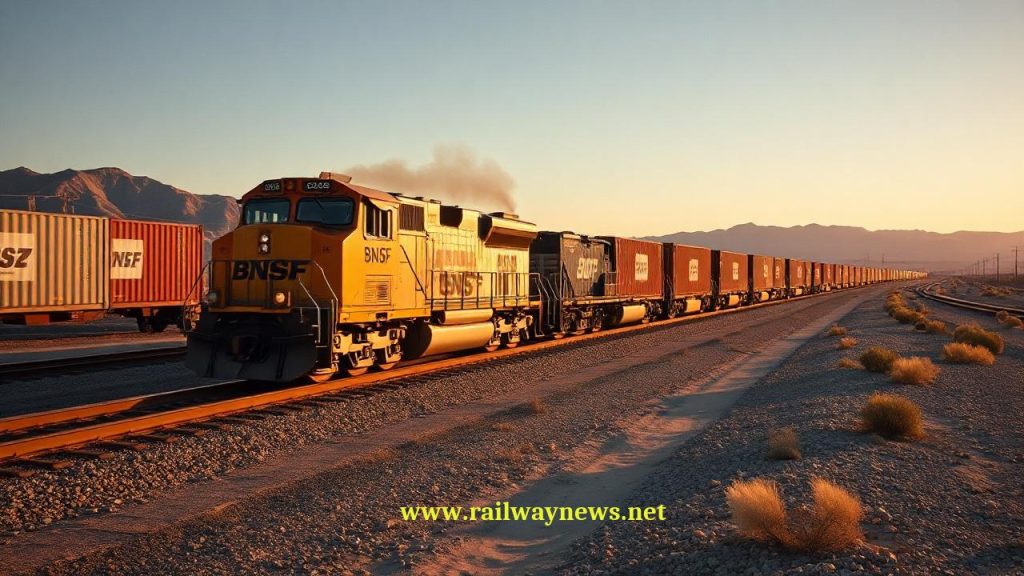
⚡ In Brief: The Barstow City Council approved BNSF Railway’s 4,500-acre Barstow International Gateway intermodal and transload facility, set to shift container processing 130 miles inland and eliminate 205 million truck miles in 2028.
BARSTOW, California – The Barstow City Council approved BNSF Railway’s 4,500-acre Barstow International Gateway (BIG) rail and transload facility on the city’s west side, the railway announced. The facility will receive containers directly from the Ports of Los Angeles and Long Beach via the Alameda Corridor, moving them approximately 130 miles inland for sorting and transloading, and is projected to eliminate 205 million truck miles in 2028 alone.
What Is the Full Scope of This Project?
The Barstow International Gateway will include a rail yard, an intermodal facility, and transload warehouses where containers arriving from the San Pedro Bay ports will be processed before being built into unit trains for BNSF’s eastern network. Westbound freight will also be consolidated at the site, improving efficiency for trains returning to the ports and other California terminals. BNSF estimates the relocation of container sorting will cut truck miles traveled (TMT) by 205 million in 2028, 269 million in 2033, and 312 million in 2048, while reducing congestion in port communities.
Key Project Data
| Parameter | Value |
|---|---|
| Project / Contract Name | Barstow International Gateway (BIG) |
| Total Value | Not disclosed |
| Parties Involved | BNSF Railway; Barstow City Council (approving authority) |
| Timeline / Completion | Not disclosed |
| Country / Corridor | USA, Southern California; Alameda Corridor to BNSF Southern Transcon |
How Does This Compare to Similar Projects?
The 4,500-acre footprint would make BIG one of the largest intermodal/transload complexes in North America. By comparison, BNSF’s Logistics Park Chicago spans approximately 2,400 acres, and Logistics Park Kansas City covers 1,100 acres (Source: BNSF Railway publicly available terminal data). The 205 million truck-mile reduction in 2028 represents a significant modal shift in a corridor where total annual U.S. truck vehicle-miles traveled exceed 300 billion. The investment also arrives as U.S. rail intermodal volumes rose 2.7% year-over-year in the week ending June 13, 2025, signalling a recovery in demand (Source: Association of American Railroads via Logistics Management, 2025). BNSF has not disclosed the total capital cost or a completion date for the facility.
Editor’s Analysis
BNSF’s Barstow project accelerates the decades-long trend of moving container processing away from congested waterfront terminals to inland hubs with cheaper land and easier highway access. The scale signals an ambition to capture not just intermodal lift but also transload and warehousing activities that currently rely on drayage trucks. A tight trucking capacity environment, underscored in a 2026 logistics report (Source: FleetOwner, 2026), further strengthens the economic case for shifting long-haul freight to rail. The truck-mile savings align with California’s freight decarbonization goals and could boost BNSF’s share of San Pedro Bay container traffic as marine terminals push for on-dock rail solutions.
FAQ
Q: How large is the Barstow International Gateway compared to BNSF’s other terminals?
A: At 4,500 acres, BIG would be more than 80% larger than BNSF’s Logistics Park Chicago (2,400 acres) and roughly four times the size of Logistics Park Kansas City (1,100 acres).
Q: When will the project be completed?
A: BNSF has not publicly announced a completion timeline. The projected truck-mile reductions extend to 2048, suggesting a multi-phase buildout.
Q: How will this affect truck traffic around Los Angeles and Long Beach?
A: By moving container sorting 130 miles inland, the facility is forecast to eliminate 205 million truck miles in 2028, reducing highway congestion and drayage-related emissions in the port region.

Adem Kaya is a railway news editor focused on global rail operations, infrastructure developments and freight transportation trends across international railway markets.His coverage includes railway investments, rolling stock projects, metro and urban transit systems, freight rail operations and next-generation transportation infrastructure. With a strong interest in operational efficiency and railway modernization, he follows industry developments from Europe, Asia-Pacific and North America.Through RailwayNews, Adem Kaya contributes industry-focused reporting and accessible analysis designed for railway professionals, transport stakeholders and rail enthusiasts worldwide.
RELATED POSTS

October 8, 2026 1:15 pm
Alstom secured a €1bn contract to build 13 automated trains,...

October 1, 2026 7:09 am
United States regulators confirmed a September 30 deadline for the...

October 8, 2026 12:18 pm
Siemens Mobility signed an agreement with VinSpeed to supply 350...

October 4, 2026 5:14 pm
Alstom secured a CA$4.7 billion order from VIA Rail Canada...

October 5, 2026 6:12 pm
AECOM and Jacobs secured a contract in September 2026 to...

October 1, 2026 12:13 am
Illinois approved $1.5 billion annually for the Northern Illinois Transit...