
ZSSK Launches First Modernized Double-Decker Sleeper
ZSSK’s first modernized ex-German double-decker sleeping car, part of a 10-car upgrade by ŽOS Vrútky, launched in 2026 for the new cross-border night train routes.
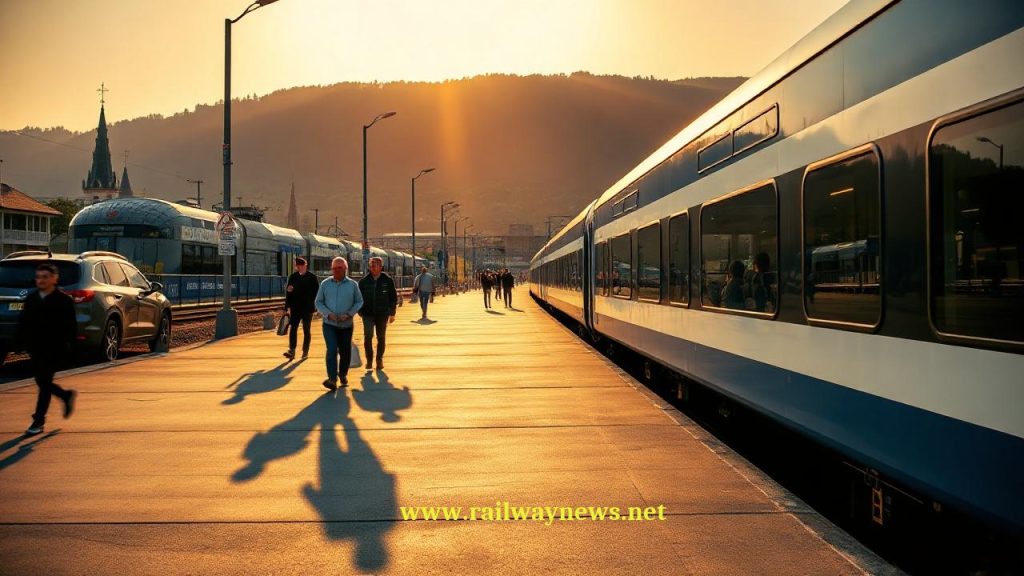
⚡ In Brief: ZSSK unveiled the first modernized double-decker sleeper railcar at Rail Business Days 2026 in Ostrava, launching a 10-car upgrade by ŽOS Vrútky to enter international service later this year.
OSTRAVA, Czech Republic – Slovak national operator Železničná spoločnosť Slovensko (ZSSK) presented the first modernized double-decker sleeping car at the Rail Business Days 2026 fair in Ostrava on 16 June, as part of a programme to overhaul 10 second-hand Deutsche Bahn coaches built in 1995. The car will begin revenue service this year on cross-border night routes linking Slovakia with the Czech Republic.
What Is the Full Scope of This Project?
The project encompasses a complete interior and technical overhaul of 10 double-decker sleeper cars acquired from Deutsche Bahn, modernized by Slovak rolling-stock specialist ŽOS Vrútky. Each car now features air-conditioned compartments, new beds, electrical sockets and USB ports at every berth, a digital passenger information system, and previously unavailable premium compartment categories. The first unit is already complete; the remaining nine will follow under the same contract, though ZSSK did not disclose the total financial value.
Key Project Data
| Parameter | Value |
|---|---|
| Project / Contract Name | Modernization of double-decker sleeping cars for night trains |
| Total Value | Not disclosed |
| Parties Involved | ZSSK (operator), ŽOS Vrútky (modernization contractor) |
| Timeline / Completion | First cars enter service in 2026; remaining deliveries not specified |
| Country / Corridor | Slovakia – Czech Republic (Humenné–Košice–Žilina–Prague / Bratislava) |
How Does This Compare to Similar Projects?
The ZSSK sleeper car renewal sits within a broader European push to secure cross-border rail links, though approaches differ by mode. While Slovakia is investing directly in passenger rolling stock for international night services, Sweden and Germany have just secured a rail-ferry connection: Stena Line signed an agreement with the Swedish Transport Administration on 16 June 2026 to maintain the Trelleborg–Rostock route until 31 December 2031, specifically to serve freight wagons that cannot use the Öresund Bridge due to weight and width restrictions. Both initiatives address strategic corridor reliability, but the Slovak project targets overnight passenger comfort whereas the Stena Line deal guarantees uninterrupted freight capacity across the Baltic (Source: Stena Line/Swedish Transport Administration, June 2026). No comparable double-deck sleeper modernization of this scale has been publicly reported in the Visegrád region in the past five years.
Editor’s Analysis
ZSSK’s decision to unveil the car at Ostrava’s Rail Business Days is no coincidence: the Czech railway signalling market is entering a rapid growth phase in 2025–2026, driven by ETCS deployment and digital interlocking projects that will directly benefit cross-border night-train punctuality on the Prague–Košice corridor. Reviving sleeper services with modernized coaches from the mid-1990s rather than new-build stock is a pragmatic cost strategy, but it raises questions about long-term fleet renewal beyond these 10 units. If demand follows the European night-train resurgence tracked by operators such as ÖBB Nightjet, ZSSK will need either deeper modernization of its 1980s-era sleepers or a new procurement programme within this decade (Source: Market analysis, Czech Railway signalling outlook, 2025).
FAQ
Q: When will passengers be able to travel in the modernized sleeper cars?
A: ZSSK stated the first cars will enter service during 2026 on the Humenné–Košice–Žilina–Prague and Humenné–Košice–Žilina–Bratislava international night routes.
Q: How many sleeping cars does ZSSK currently operate?
A: ZSSK has approximately 30 sleeping cars, most built in the 1980s; many lack air conditioning and are approaching end of life, according to the operator.
Q: What new passenger features differentiate these cars from the existing fleet?
A: The modernized cars offer air conditioning, USB and power outlets at every seat, digital passenger information, upgraded beds, and premium compartment types not previously available on Slovak domestic overnight services.
Q: How much did ZSSK pay for the 10-car modernization contract?
A: The contract value was not disclosed by either ZSSK or ŽOS Vrútky.

Transport and railway industry editor covering global rail infrastructure, sustainable mobility, urban transit systems and next-generation railway technologies with a focus on accessible and industry-focused reporting.
RELATED POSTS
August 4, 2026 1:11 pm
Hitachi Rail Canada secured a $407.7M contract to install CBTC...
August 11, 2026 11:13 am
Hungary confirmed the €2.5B Hungarian rail upgrade will not see...

August 4, 2026 11:12 am
MBTA confirmed a $150.8 million overhaul of the 85-year-old Green...

August 1, 2026 7:14 pm
€205 billion funding shortfall threatens the TEN-T rail network's completion...

August 1, 2026 7:56 am
BMZ delivered two new TEM18DM diesel shunting locos to RZD...

August 5, 2026 7:11 pm
JR Central secured Shizuoka governor approval July 7, 2026 for...