
SBB Cargo Orders 36 Locomotives with Battery from Stadler
SBB Cargo placed a firm order for 36 EURO DuFour locomotives from Stadler, including 22 battery units for last-mile freight, with deliveries by late 2027.
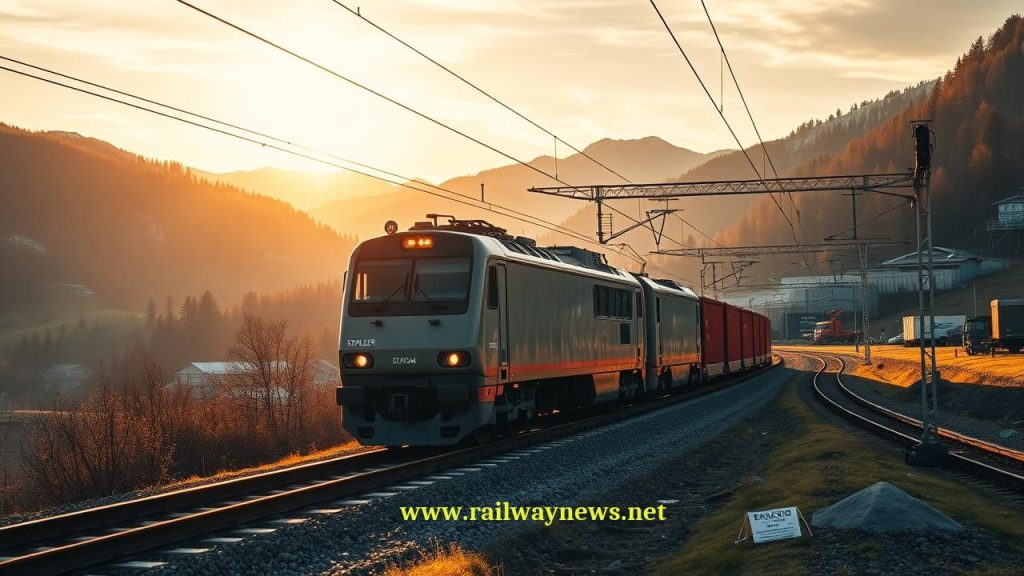
⚡ In Brief: SBB Cargo ordered 36 EURO DuFour locomotives from Stadler for Swiss freight operations, with 22 units equipped with battery modules for non-catenary last-mile delivery and a fleet-wide entry target of late 2027.
ZÜRICH, SWITZERLAND – SBB Cargo Schweiz placed a firm order for 36 EURO DuFour mainline freight locomotives from Stadler in September 2024, with an option to acquire an additional 93 units. The first locomotives are scheduled to enter revenue service by the end of 2027, following testing at the Velim Test Centre from mid-2026. Total contract value was not disclosed by either party.
What Does This Contract Cover?
The firm order covers 36 six-axle electric locomotives, of which 22 will be factory-fitted with battery modules to enable autonomous operation on non-electrified sidings and industrial spurs. The base units are designated Re 494 and the battery-equipped variants Rea 494 under Swiss classification rules. Stadler will manufacture the fleet at its Valencia plant, with the full batch of 36 units due to be delivered by March 2029. The contract includes an option for 93 additional vehicles that would allow SBB Cargo to retire all other mainline traction types from its fleet by 2040.
Key Contract Data
| Parameter | Value |
|---|---|
| Contract Name | EURO DuFour Locomotive Supply Agreement |
| Total Value | Not disclosed |
| Parties Involved | SBB Cargo Schweiz (buyer); Stadler Rail (manufacturer) |
| Timeline / Completion | Delivery start: end 2027; Initial batch completion: March 2029; Fleet standardisation target: 2040 |
| Country / Corridor | Switzerland, Swiss mainline network plus non-catenary industrial spurs |
How Does This Compare to Similar Contracts?
The SBB Cargo order contrasts with Kazakhstan’s locomotive procurement from Wabtec, signed in September 2024, where a per-unit price of roughly $14 million was made public and triggered parliamentary scrutiny over maintenance costs and the absence of local assembly provisions. By withholding the unit cost, SBB and Stadler avoid immediate price benchmarking, though the Swiss operator has projected a 60% reduction in rolling-stock operating costs once fleet standardisation is complete (Source: Kursiv Media Kazakhstan, 2026). The 36-unit initial batch is modest relative to Kazakhstan’s broader fleet renewal ambitions, but the option structure gives SBB Cargo a pathway to over 129 locomotives without committing politically sensitive upfront expenditure. Competitor platforms such as Siemens’ Vectron MS and Alstom’s Traxx DC3 offer comparable multi-system and last-mile battery configurations, yet SBB’s decision to source exclusively from Stadler reflects a longstanding domestic supply relationship and a design tailored to Switzerland’s curving alpine corridors.
Editor’s Analysis
SBB’s emphasis on a single locomotive family by 2040 mirrors a pattern seen across European state freight operators — including DB Cargo’s consolidation around Traxx variants — where maintenance simplification drives unit-cost savings more effectively than competitive tendering alone. The 20% reduction in rail wear and 15% drop in energy consumption give Swiss infrastructure managers a direct financial incentive to support the fleet transition, a dynamic absent in the Kazakh deal where track-access charges are calculated differently. If the battery-equipped Rea 494 proves operationally reliable on last-mile segments, the model could set a template for other European operators seeking to eliminate diesel shunting without full-electrification capital spend.
FAQ
Q: What distinguishes the battery-equipped Rea 494 from the base Re 494?
A: The Rea 494 variant carries onboard battery modules that allow it to move freight wagons on sidings and industrial branches that lack overhead catenary, removing the need for separate shunting locomotives.
Q: When will SBB Cargo’s EURO DuFour locomotives begin commercial service?
A: The first units are scheduled to enter service at the end of 2027, after testing at Velim in the second half of 2026 and subsequent certification trials in Switzerland.
Q: How much did SBB Cargo pay per locomotive?
A: The per-unit price has not been publicly disclosed, and neither SBB nor Stadler released total contract value when announcing the order.

Railway infrastructure, rolling stock and transport technologies specialist focused on global rail industry developments, high-speed rail systems, signaling technologies and freight transportation. Covering railway investments, public transport modernization, rail operations and international mobility projects across Europe, Asia and North America.
RELATED POSTS

October 8, 2026 1:15 pm
Alstom secured a €1bn contract to build 13 automated trains,...

October 1, 2026 7:09 am
United States regulators confirmed a September 30 deadline for the...

October 4, 2026 5:14 pm
Alstom secured a CA$4.7 billion order from VIA Rail Canada...

October 1, 2026 12:13 am
Illinois approved $1.5 billion annually for the Northern Illinois Transit...

October 5, 2026 1:13 pm
New York MTA confirmed a late 2026 DEIS release for...

October 6, 2026 9:17 am
Illinois approved $1.1M in state funds to upgrade two McHenry...