
TfL Launches £15.6bn DLR Extension Consultation in London
TfL launched a public consultation on DLR extension to Beckton Riverside and Thamesmead, projected to deliver up to 30,000 new homes and £15.6bn in benefits.
⚡ In Brief: Transport for London opened public consultation on the DLR extension to Beckton Riverside and Thamesmead, projected to unlock 30,000 homes and £15.6bn in economic benefits, with a TWAO application planned for early 2027.
LONDON, UK – Transport for London (TfL) launched its third public consultation on 4 June 2026 for the proposed Docklands Light Railway extension to Beckton Riverside and Thamesmead, seeking feedback on station designs, construction methods, and environmental impacts ahead of a Transport and Works Act Order application in early 2027. The consultation runs until 16 July 2026 and includes detailed proposals for two new stations, a new tunnel beneath the Thames, and delivery plans that could see construction begin in 2029 with services operational in the early 2030s.
What Is the Full Scope of This Project?
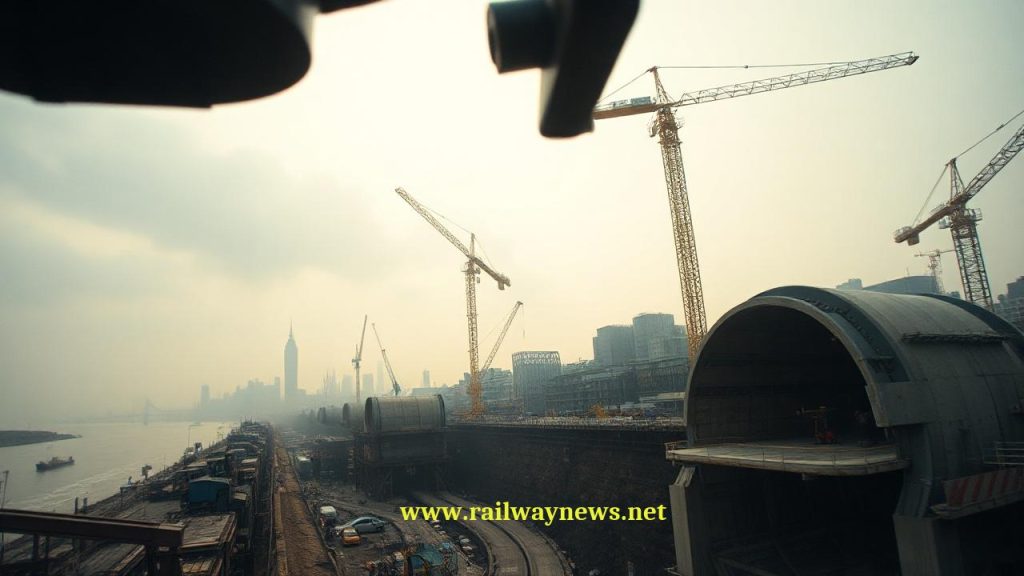
The extension would connect the DLR network from Gallions Reach to Beckton Riverside and Thamesmead Waterfront via a new bored tunnel through chalk strata beneath the Thames, delivering two new stations and creating direct rail access for Thamesmead — the only London postcode area without an existing rail link. TfL projects the scheme will unlock 145 hectares of brownfield land, support up to 30,000 new homes and 10,000 jobs, and generate £15.6bn in economic benefits. Journey times to Stratford would be approximately 25 minutes, London Bridge 30 minutes, and Tottenham Court Road 35 minutes. The tunnel construction approach mirrors the successfully completed DLR extension to Woolwich Arsenal in 2009. A full Environmental Impact Assessment is underway as part of the statutory planning process.
Key Project Data
| Parameter | Value |
|---|---|
| Project / Contract Name | DLR Extension to Beckton Riverside and Thamesmead |
| Total Value | £15.6bn projected economic benefits (capital cost not disclosed at consultation stage) |
| Parties Involved | TfL, Royal Borough of Greenwich, London Borough of Newham, Greater London Authority, Peabody, Lendlease, Aberdeen Investments, Berkeley Homes, Homes England |
| Timeline / Completion | TWAO application early 2027; construction start 2029; opening early 2030s; consultation closes 16 July 2026 |
| Country / Corridor | United Kingdom / East London, Gallions Reach to Thamesmead Waterfront |
How Does This Compare to Similar Projects?
The DLR extension consultation runs in parallel with East West Rail Company’s market engagement for a £300 million consultancy framework, signalling a broader acceleration of UK rail investment programmes in mid-2026. East West Rail, which will connect Oxford, Milton Keynes, Bedford, and Cambridge, is currently shortlisting four to five organisations for a strategic delivery partner role, with engagement questionnaire responses due by 26 June 2026 (Source: Safer Highways, June 2026). Unlike East West Rail — where procurement strategy and contract scope remain under active market discussion — the DLR extension is further advanced in public consultation, with station designs and tunnelling methodology already drafted for community feedback. Separately, Mid Cornwall Metro services recorded a 25% increase in passenger journeys during their first operational week, providing an early indicator of suppressed demand on newly connected corridors (Source: Global Railway Review, 2026). The DLR extension addresses a comparable connectivity gap at Thamesmead, where residential demand has been constrained by the absence of direct rail access for decades.
Editor’s Analysis
The timing of the DLR consultation alongside East West Rail procurement and Mid Cornwall Metro’s early ridership data points to a deliberate sequencing by the UK government — backing schemes that combine infrastructure delivery with large-scale housing delivery on brownfield land. The Autumn Budget 2025 confirmation of support for a DLR funding mechanism, even as final funding arrangements remain subject to agreement, suggests the Treasury views the £15.6bn economic benefit projection as justifying public sector investment in enabling infrastructure. The involvement of five development partners — Peabody, Lendlease, Aberdeen Investments, Berkeley Homes, and Homes England — indicates value-capture mechanisms are likely being structured into the business case, a model increasingly deployed across UK rail projects where beneficiary developers co-fund station and line construction.
FAQ
Q: When would the DLR extension to Thamesmead actually open?
A: TfL states construction could begin in 2029, with services opening in the early 2030s. No specific year or month has been confirmed at this consultation stage.
Q: How will the new tunnel under the Thames be built?
A: TfL proposes a bored tunnel through chalk strata, the same geological formation successfully used for the DLR extension to Woolwich Arsenal in 2009. Detailed construction methodology — including how materials will be transported to and from sites — forms part of the current consultation.
Q: What happens to property prices in Thamesmead and Beckton if the DLR extension goes ahead?
A: TfL has not published property price impact projections as part of the consultation. The scheme’s economic case focuses on unlocking 30,000 new homes on 145 hectares of brownfield land, which would increase housing supply in the corridor.

Adem Kaya is a railway news editor focused on global rail operations, infrastructure developments and freight transportation trends across international railway markets.His coverage includes railway investments, rolling stock projects, metro and urban transit systems, freight rail operations and next-generation transportation infrastructure. With a strong interest in operational efficiency and railway modernization, he follows industry developments from Europe, Asia-Pacific and North America.Through RailwayNews, Adem Kaya contributes industry-focused reporting and accessible analysis designed for railway professionals, transport stakeholders and rail enthusiasts worldwide.
RELATED POSTS

October 8, 2026 1:15 pm
Alstom secured a €1bn contract to build 13 automated trains,...

October 5, 2026 6:12 pm
AECOM and Jacobs secured a contract in September 2026 to...

October 1, 2026 12:13 am
Illinois approved $1.5 billion annually for the Northern Illinois Transit...

October 4, 2026 11:08 pm
Sound Transit confirmed the September 30 opening of Seattle Pinehurst...

October 5, 2026 1:13 pm
New York MTA confirmed a late 2026 DEIS release for...

October 6, 2026 9:17 am
Illinois approved $1.1M in state funds to upgrade two McHenry...