
Comboios de Portugal Launches €584M High-Speed Lisbon Porto
Comboios de Portugal launched a €584 million tender for 12 new high-speed trainsets for the Lisbon–Porto corridor, with deliveries by 2031.
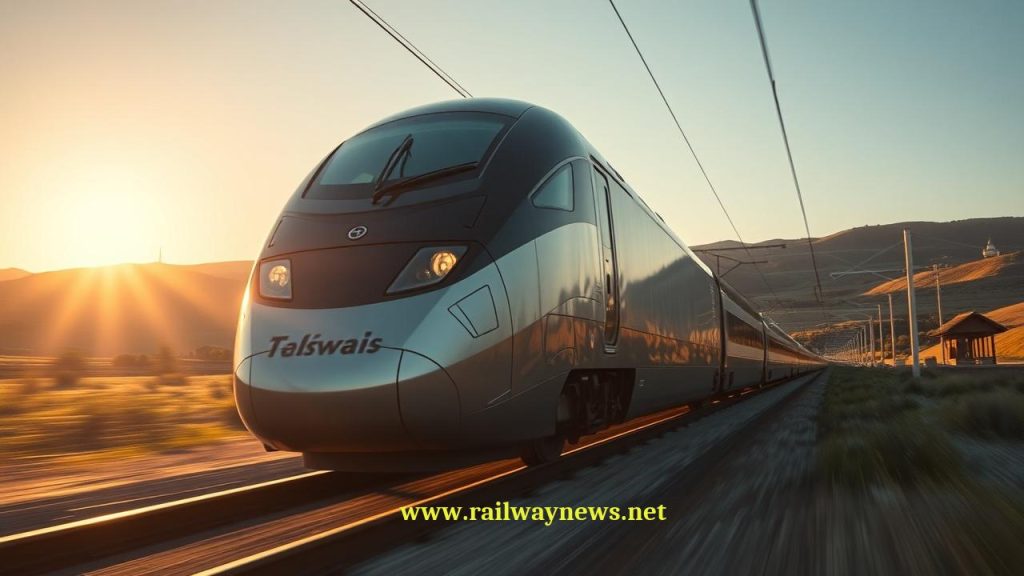
⚡ In Brief: Comboios de Portugal has launched a €584 million international tender to procure 12 high-speed trains for the future Lisbon–Porto rail corridor, with initial deliveries scheduled for 2031.
LISBON, PORTUGAL – National rail operator Comboios de Portugal (CP) officially launched a €584 million tender on May 20, 2026, to acquire 12 high-speed trains. The procurement targets rolling stock capable of speeds exceeding 300 km/h for the future Lisbon–Porto high-speed line. Bidders must submit their proposals by July 2, 2026, with the contract expected to be finalized in early 2027.
What Does This Contract Cover?
The €584 million tender covers the acquisition of 12 high-speed trainsets, an option for eight additional units, spare parts, special equipment, and dedicated workshop facilities. Out of the total package, €539 million is allocated for the trainsets and associated equipment, while €45 million is earmarked for the workshop infrastructure. The trains must feature at least 500 seats, bicycle storage, and compatibility with the 1,668 mm Iberian gauge. To ensure future-proofing for international integration, the specifications mandate that the trains must be easily convertible to the standard European 1,435 mm gauge by replacing the axles.
Key Contract Data
| Parameter | Value |
|---|---|
| Contract Name | High-Speed Rolling Stock Procurement (Lisbon–Porto) |
| Total Value | €584 million (including options/workshops) |
| Parties Involved | Comboios de Portugal (CP), Portuguese Government, Unnamed Bidders |
| Timeline / Completion | Contract award in Q1 2027; first delivery in Q1 2031; full delivery by Q3 2032 |
| Country / Corridor | Portugal / Lisbon–Porto high-speed corridor |
How Does This Compare to Similar Contracts?
Portugal’s high-speed rolling stock procurement represents a highly targeted, smaller-scale entry into high-speed rail compared to larger European neighbors, reflecting the country’s tight fiscal constraints. For comparison, the UK’s High Speed 2 (HS2) project awarded a £1.97 billion (€2.3 billion) contract to an Alstom-Hitachi joint venture in 2021 for 54 high-speed trains, translating to approximately €42.5 million per trainset. (Source: HS2 Ltd, 2021). In contrast, CP’s base order of 12 trains at €539 million (excluding workshops) yields a higher unit cost of approximately €44.9 million per train. This higher unit cost is primarily driven by specialized Iberian-gauge compatibility requirements and the smaller order volume, which limits economies of scale. Additionally, the exact allocation of European Union funding versus domestic sovereign debt to finance this rolling stock contract was not disclosed in the tender documents.
Editor’s Analysis
CP’s insistence on dual-gauge convertibility is a strategic necessity that prepares Portugal for eventual direct integration into the wider trans-European high-speed network via Spain. However, executing this €584 million acquisition alongside a €4.5 billion infrastructure build will test Portugal’s fiscal resilience, especially as economic growth forecasts hover around 2% amid rising climate-induced infrastructure repair costs. (Source: Reuters, 2026). If successful, this corridor will effectively dismantle the domestic aviation market between Lisbon and Porto, establishing rail as the primary business transit mode.
FAQ
Q: What is the maximum speed and capacity of the new Portuguese high-speed trains?
A: The new trains are specified to travel at speeds exceeding 300 km/h and must offer a seating capacity of over 500 passengers. They will also feature modern amenities such as Wi-Fi, USB-C ports, and dedicated bicycle storage.
Q: When will the new Lisbon–Porto high-speed line become operational?
A: The full high-speed corridor is scheduled to be completed in the third quarter of 2032. The first of the 12 trains is expected to be delivered in the first quarter of 2031 to allow for rigorous testing and authorization before passenger operations begin.
Q: Will these trains be able to operate in other European countries like Spain?
A: Yes, the tender requires compatibility with the 1,668 mm Iberian gauge but mandates that the trains must be convertible to the 1,435 mm European standard gauge. Vehicle authorization will be managed through the European Union Agency for Railways (ERA) One-Stop Shop system to facilitate potential international operations.

Railway infrastructure, rolling stock and transport technologies specialist focused on global rail industry developments, high-speed rail systems, signaling technologies and freight transportation. Covering railway investments, public transport modernization, rail operations and international mobility projects across Europe, Asia and North America.
RELATED POSTS

September 6, 2026 5:19 am
Hitachi delivered Taiwan's first N700ST high-speed train from Japan in...

September 5, 2026 4:19 pm
CPK launched formal tender talks with four consortia to design...

September 5, 2026 7:14 pm
HS2 Ltd signed renegotiated civils contracts with EKFB and Align...

September 6, 2026 1:17 am
Hitachi Toshiba Supreme Consortium confirmed the first of 12 N700ST...

September 6, 2026 4:12 am
Alstom delivered the first of 100 new G Class trams...
September 6, 2026 12:20 pm
Indian Railways ordered a probe after a fire destroyed 2...