
Azerbaijan Georgia Completes 5 Million Tonnes BTK Railway
Azerbaijan and Georgia completed the BTK railway modernization, expanding its Middle Corridor annual capacity to 5 million tonnes in May 2026.
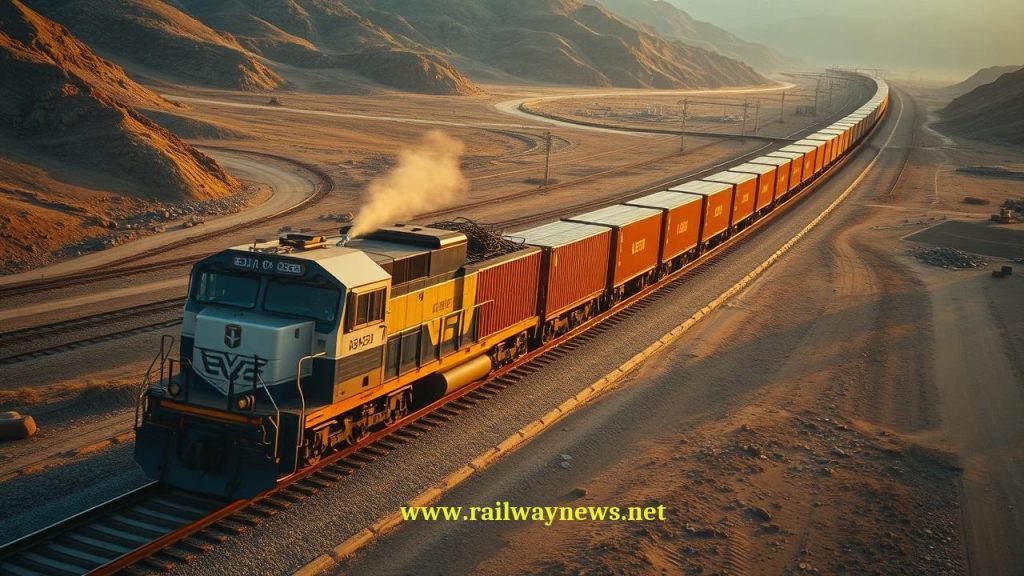
⚡ In Brief: Azerbaijan and Georgia have completed the modernization of the Baku–Tbilisi–Kars railway corridor, increasing its annual transport capacity from 1 million to 5 million tonnes to boost Middle Corridor transit.
TBILISI, GEORGIA – Azerbaijan and Georgia signed a bilateral protocol on May 18, 2026, marking the final acceptance and completion of extensive modernization works along the Baku–Tbilisi–Kars (BTK) rail corridor. The infrastructure upgrade, which focused on a 184-kilometer section crossing Georgia, successfully expanded the route’s annual freight capacity to 5 million tonnes. Azerbaijan’s Minister of Transport and Digital Development, Rashad Nabiyev, and Georgia’s Minister of Economy and Sustainable Development, Mariam Kvrivishvili, finalized the agreement in Tbilisi in the presence of their respective heads of state.
What Is the Full Scope of This Project?
The Baku-Tbilisi-Kars modernization project overhauled 184 kilometers of railway line in Georgia to accommodate higher axle loads and modern freight traffic. The five-phase infrastructure project, executed by Azerbaijan Railways (ADY), involved upgrading 13 railway stations, 55 bridges, eight traction substations, and 320 buildings. Engineering works also included the construction of 30.3 kilometers of entirely new railway track, the rehabilitation of 153.1 kilometers of existing line, and the establishment of a dedicated bogie exchange station at the Georgian-Turkish border to resolve track gauge differences. On the Azerbaijani side, ADY completed major track repairs on the Baku–Boyuk Kasik section and converted the Boyuk Kasik–Hajigabul section to alternating current while upgrading signalling systems.
Key Project Data
| Parameter | Value |
|---|---|
| Project / Contract Name | Baku–Tbilisi–Kars (BTK) Rail Corridor Modernization |
| Total Value | Not disclosed |
| Parties Involved | Azerbaijan Railways (ADY), Marabda–Kartsakhi Railway, BTKI Railways JV |
| Timeline / Completion | Completed May 2026 |
| Country / Corridor | Georgia and Azerbaijan (Middle Corridor) |
How Does This Compare to Similar Projects?
The expansion of the BTK corridor to a 5-million-tonne capacity positions it as the primary overland artery of the Trans-Caspian International Transport Route (TITR), which aims for a total throughput of 10 million tonnes by 2026 (Source: Middle Corridor Multimodal Association, 2025). In comparison, the North-South Transport Corridor (INSTC) western branch via Astara currently handles approximately 3 million tonnes of cargo annually, making the upgraded BTK route significantly more capable of handling East-West transit volumes (Source: Eurasian Development Bank, 2024). Additionally, while the BTK project focuses on heavy freight transit across mountainous terrain up to 2,400 meters, European infrastructure projects are scaling up control centers to handle complex networks; for example, the UK’s High Speed 2 (HS2) program awarded an £856 million ($1.08 billion) contract in May 2026 to construct the Washwood Heath Network Integrated Control Centre to manage its high-density passenger network (Source: Construction News, 2026).
Editor’s Analysis
This modernization shifts the Middle Corridor from a theoretical alternative to Russia’s Northern Route into a highly functional, competitive logistics artery. By establishing the BTKI Railways joint venture, Azerbaijan and Georgia are addressing previous operational bottlenecks through unified management, which will streamline cross-border customs and track-gauge transitions. This alignment directly supports Turkey’s strategic push to modernize its domestic railway signalling and automation systems by 2025 to capture rising trans-Eurasian freight flows (Source: Turkey Railway Signalling Market Report, 2025).
FAQ
Q: What is the primary purpose of the Baku-Tbilisi-Kars railway modernization?
A: The modernization aims to increase the transit capacity of the BTK rail corridor from 1 million tonnes to 5 million tonnes annually. This upgrade positions the route as a highly competitive, shorter overland link for freight moving between China, Central Asia, and Europe.
Q: How much did the BTK modernization project cost to complete?
A: The final total cost for the 2024–2026 modernization works carried out by Azerbaijan Railways in Georgia was not officially disclosed by either government. However, historical financing for the Georgian section was supported by Azerbaijani state loans totaling over $775 million.
Q: How does the BTK railway handle different track gauges between countries?
A: The project included the establishment of a specialized bogie exchange station at the Kartsakhi border crossing. This facility allows trains to transition between the 1,520 mm Russian gauge used in Georgia and Azerbaijan and the 1,435 mm standard gauge used in Turkey and Europe.

Railway infrastructure, rolling stock and transport technologies specialist focused on global rail industry developments, high-speed rail systems, signaling technologies and freight transportation. Covering railway investments, public transport modernization, rail operations and international mobility projects across Europe, Asia and North America.
RELATED POSTS
July 4, 2026 11:41 pm
Eurostar cancelled all direct London–Amsterdam trains through July 2 after...
July 1, 2026 1:37 pm
NRHS awarded $187K to 34 U.S. rail heritage projects in...

July 1, 2026 8:49 am
The Short Line Training Center launched FRA-funded online DSLE and...

July 1, 2026 1:42 am
UK government launched a £30bn Better Connected plan, allocating £15.6bn...

July 1, 2026 6:37 am
Amtrak launched a small-plate dining program for Acela First Class...

July 4, 2026 11:02 pm
Eurostar suspends all direct London–Dutch trains through 2 July after...