
Naples–Bari Line Completes 6.5 km Rocchetta Tunnel
Italy completed the 6.5 km Rocchetta Tunnel on the Naples–Bari high-speed line, reducing travel time to two hours for the TEN-T Corridor.
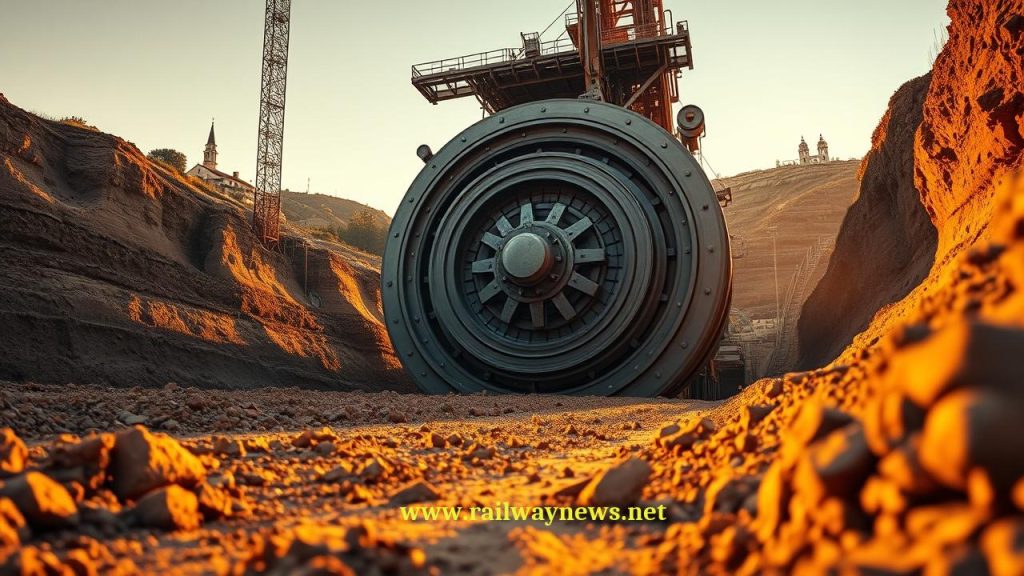
⚡ In Brief: Contractors have completed the 6.5 km Rocchetta Tunnel on the Apice–Hirpinia section of Italy’s Naples–Bari high-speed rail line, a key infrastructure project on the TEN-T Scandinavian–Mediterranean Corridor designed to reduce travel time between the two cities to two hours.
ROME – The completion of excavation work on the 6.5-kilometer Rocchetta Tunnel marks a significant construction milestone for the new Naples–Bari high-speed, high-capacity railway. The tunnel is the longest on the 18.7 km Apice–Hirpinia section and is part of a larger project to build approximately 145 km of new track connecting Southern Italy to Europe’s primary transport corridors.
What Is the Full Scope of This Project?
The overall Naples–Bari line project involves constructing 145 km of new double-track railway suitable for speeds up to 250 km/h. The infrastructure plan includes 15 tunnels, 25 viaducts, and 20 stations, integrating the southern Italian regions of Campania and Puglia into the TEN-T Scandinavian–Mediterranean Corridor. A key segment, the 15 km Naples–Cancello section, has a dedicated budget of approximately €1.1 billion to improve connections with the Naples metropolitan transport network, including the Circumvesuviana lines.
Key Project Data
| Parameter | Value |
|---|---|
| Project / Contract Name | Naples–Bari High-Speed Line (Rocchetta Tunnel Milestone) |
| Total Value | €1.1 billion for Naples–Cancello section; total project value not disclosed. |
| Parties Involved | Approx. 700 employees and over 650 suppliers for the Apice–Hirpinia section. |
| Timeline / Completion | Rocchetta Tunnel excavation took 1.5 years; overall project completion date not disclosed. |
| Country / Corridor | Italy / TEN-T Scandinavian–Mediterranean Corridor |
How Does This Compare to Similar Projects?
The investment in the Naples–Bari line is consistent with a broader European trend of increasing investment in long-distance and high-speed rail to meet growing passenger demand. This trend is evident in the rising popularity of key international routes such as Munich–Zurich and Frankfurt–Paris (Source: Tourism Review). While a direct cost-per-kilometer comparison with other geologically complex high-speed projects like the Brenner Base Tunnel is difficult without full budget disclosure, the strategic goal is the same: enhancing cross-border connectivity. The project’s emphasis on modern infrastructure aligns with other national initiatives, including significant investment in Italy’s urban rail signalling and diagnostics technology, as highlighted by Siemens Mobility’s recent acquisition of businesses from MerMec Group (Source: Railway Gazette).
Editor’s Analysis
The steady progress on the Naples–Bari line is a critical component of Italy’s strategy to bridge the long-standing infrastructure gap between its northern and southern regions. This project is not merely a domestic connection but a vital link to integrate the south’s economic and logistics potential into the wider European market via the TEN-T network. The development runs parallel to a clear uptick in M&A activity within the Italian rail technology sector, suggesting a two-pronged approach: building new physical infrastructure while simultaneously upgrading the digital and signalling systems required to operate a modern, efficient national network.
FAQ
Q: What is the primary objective of the new Naples–Bari line?
A: The main goal is to reduce the rail travel time between Naples and Bari to approximately two hours. It also aims to cut the journey time between Rome and Bari to three hours, significantly improving connectivity for Southern Italy.
Q: What were the key specifications of the machine used for the Rocchetta Tunnel?
A: The tunnel boring machine featured a cutting head over 12 meters in diameter and was powered by 18 motors with a total output of 6.3 MW. It was specifically adapted for the complex geological conditions of the southern Apennines.
Q: How will the new line impact local and regional transport?
A: The project includes sections like Naples–Cancello that will directly integrate with regional transport systems. The line will provide a direct link to the Napoli–Afragola hub station, allowing for transfers to the Circumvesuviana network and other local rail services.

Railway infrastructure, rolling stock and transport technologies specialist focused on global rail industry developments, high-speed rail systems, signaling technologies and freight transportation. Covering railway investments, public transport modernization, rail operations and international mobility projects across Europe, Asia and North America.
RELATED POSTS
September 6, 2026 5:19 am
Hitachi delivered Taiwan's first N700ST high-speed train from Japan in...

September 5, 2026 4:19 pm
CPK launched formal tender talks with four consortia to design...
September 5, 2026 7:14 pm
HS2 Ltd signed renegotiated civils contracts with EKFB and Align...

September 6, 2026 4:12 am
Alstom delivered the first of 100 new G Class trams...
September 6, 2026 1:17 am
Hitachi Toshiba Supreme Consortium confirmed the first of 12 N700ST...
September 6, 2026 8:17 am
DB InfraGO reopened the Nuremberg-Regensburg line in Bavaria on 31...