
Port of Virginia and CSX Launch Daily Rail to Indianapolis
The Port of Virginia and CSX launched daily direct rail service to Indianapolis in August 2026, five-day transit and no Chicago transfer, after $83M expansion.
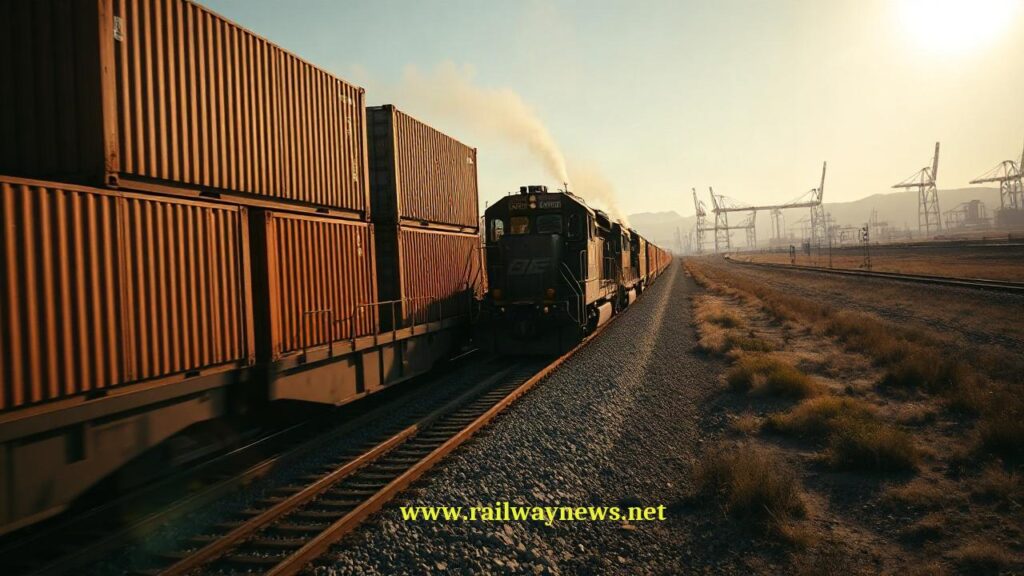
⚡ In Brief: The Port of Virginia and CSX launched daily rail service to Indianapolis in August 2026, with a five-day transit and no Chicago transfer, after an $83 million Central Rail Yard expansion added 455,000 TEUs.
NORFOLK, Va. – The Port of Virginia and CSX inaugurated a daily intermodal rail service to Indianapolis in August 2026, delivering a five-day transit from the port’s East Coast terminals to central Indiana. The route gives shippers a direct rail option that bypasses the traditional Chicago interchange. The parties did not disclose expected container volume for the new service.
What Is the Full Scope of This Project?
The corridor is a scheduled daily product, not a spot service, and is integrated with the expanded Central Rail Yard at Norfolk International Terminals. The port spent $83 million to increase on-dock rail capacity by 455,000 TEUs, providing the physical margin needed to support the new Indianapolis routing. No annual container target has been published by the port or CSX.
Key Project Data
| Parameter | Value |
|---|---|
| Project / Contract Name | Port of Virginia–CSX daily rail service to Indianapolis |
| Total Value | Not disclosed for the service; associated Central Rail Yard expansion totaled $83 million |
| Parties Involved | Port of Virginia; CSX Transportation |
| Timeline / Completion | Service began by August 2026; Central Rail Yard expansion completed before launch (Source: Railway Supply, 2026) |
| Country / Corridor | USA — Norfolk International Terminals to Indianapolis, Indiana, with no Chicago transfer |
How Does This Compare to Similar Projects?
The Port of Virginia’s Indianapolis service belongs to a logistics-hub pattern that also includes Namibia’s Karibib rail-connected facility and the Port of Wilmington, N.C. Karibib anchors a TransNamib–Kaleido freight corridor to Walvis Bay, while Wilmington promotes its East Coast position with superior surface-transport access to inland U.S. markets. Both examples use inland connectivity to reduce port-to-market friction, and Virginia’s direct rail path removes the Chicago interchange in the same way those corridors eliminate a network handoff. No comparable daily-frequency or transit-time figure for Karibib or Wilmington was available at publication. (Source: Business Facilities, 2025; Railway Supply, 2026)
Editor’s Analysis
This launch shifts the competitive test for the Port of Virginia toward volume reliability: a daily Midwest service makes sense only if the Indianapolis market generates a consistent two-way container flow. The absence of a disclosed volume target is a signal that both parties are positioning capacity first and securing cargo commitments later. Global high-speed rail investment rose 24% in 2025, and although that market is passenger-led, it reflects the broader infrastructure trend in which inland connectivity, not just port-side capacity, determines logistics winners. (Source: Market Research Future, 2025)
FAQ
Q: What is the transit time for the Port of Virginia’s new Indianapolis rail service?
A: The CSX-operated service offers a five-day transit between Norfolk International Terminals and Indianapolis. It runs daily and does not require a Chicago transfer.
Q: How much capacity did the $83 million Central Rail Yard expansion add?
A: The expansion at Norfolk International Terminals increased on-dock rail capacity by 455,000 TEUs. That expanded base supports freight services such as the new Indianapolis corridor.
Q: Why is avoiding Chicago an advantage on this route?
A: Chicago is the busiest U.S. rail interchange and can add dwell time for intermodal shipments. The direct Indianapolis routing removes that handoff and provides a more predictable schedule, though the port has not disclosed a specific annual volume expectation.

Railway infrastructure, rolling stock and transport technologies specialist focused on global rail industry developments, high-speed rail systems, signaling technologies and freight transportation. Covering railway investments, public transport modernization, rail operations and international mobility projects across Europe, Asia and North America.
RELATED POSTS

October 1, 2026 7:09 am
United States regulators confirmed a September 30 deadline for the...

October 1, 2026 12:13 am
Illinois approved $1.5 billion annually for the Northern Illinois Transit...

October 1, 2026 6:10 am
Amtrak approved a System Expansion Committee on July 30 to...

October 1, 2026 4:10 am
DART launched two public ridership dashboards in March 2026 to...
October 1, 2026 3:12 am
Greenbrier confirmed Brian Comstock as new president and CEO effective...

October 1, 2026 5:14 am
Siemens confirmed delivery of the first new S200 train to...