
Alstom Delivers First of 50 X’trapolis 2.0 Trains Melbourne
Alstom delivered the first X’trapolis 2.0 electric train, part of a 50-unit order, into service in Melbourne, Australia, featuring 60% local content.
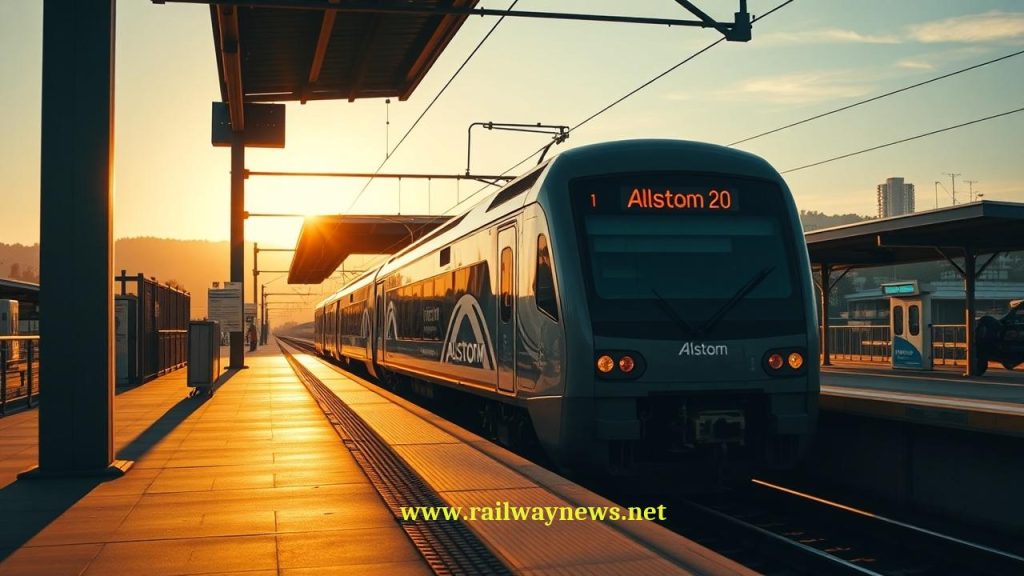
⚡ In Brief: Alstom’s first X’trapolis 2.0 electric train, part of a 50-unit order, has entered service in Melbourne, Australia, featuring a capacity for 1,225 passengers and a mandated minimum of 60% local manufacturing content.
MELBOURNE, AUSTRALIA – The first of 50 new X’trapolis 2.0 electric multiple units (EMUs) manufactured by Alstom has officially entered passenger service. The six-car train is part of an initial EUR 300 million order for 25 units placed by the Victorian state government. The new fleet is being manufactured locally at Alstom’s facilities in Dandenong and Ballarat to serve Melbourne’s metropolitan network.
What Are the Technical Specifications?
The X’trapolis 2.0 is a six-car EMU based on Alstom’s global Adessia commuter train platform, adapted specifically for Melbourne’s network. Each set can carry up to 1,225 passengers and features continuous circulation between cars, wider doors for faster boarding, and 20 dedicated wheelchair spaces. Following stakeholder consultations, 58 distinct design modifications were made to the base platform, including semi-automatic ramps and enhanced hearing assistance technologies.
Key Technical Data
| Parameter | Value |
|---|---|
| Technology / System Name | Alstom X’trapolis 2.0 EMU |
| Total Value | ~EUR 300M (Tranche 1) + ~USD 410M (Tranche 2) |
| Parties Involved | Alstom, Victorian Department of Transport and Planning, Metro Trains Melbourne |
| Timeline / Completion | First unit in service; full delivery schedule for all 50 units not disclosed. |
| Country / Corridor | Australia / Melbourne (Craigieburn, Upfield, Frankston lines) |
Where Does This Technology Stand in the Market?
The Alstom X’trapolis 2.0 is a single-deck, high-capacity EMU, which differentiates it from the double-deck rolling stock used in other major Australian cities. For instance, Sydney’s network operates the Waratah Series 2 trains, a variant of the Siemens Desiro HC platform, which offers higher per-train capacity through its bi-level design (Source: Transport for NSW, 2023). While the X’trapolis 2.0’s 1,225 passenger capacity is substantial, its design prioritizes rapid boarding and continuous internal passenger flow over the maximum density offered by a double-deck configuration. The choice of a single-deck platform is consistent with Melbourne’s legacy network infrastructure, which has historically not been built to accommodate the height and platform requirements of bi-level trains.
Editor’s Analysis
Alstom’s delivery of the X’trapolis 2.0 highlights a dominant trend in Australian public transport procurement: a strong emphasis on local content and sovereign manufacturing capability. The mandated 60% local content secures a regional supply chain and jobs, a political priority that often influences rolling stock selection. This project aligns with the broader national strategy of significant government investment in urban rail modernization to manage population growth and advance sustainable transport goals (Source: Australia Metro Urban Rail Investment Trend Data, 2025). The extensive accessibility modifications also reflect a rising global standard for inclusive public transport design, moving beyond minimum compliance to address specific user feedback.
FAQ
Q: How many X’trapolis 2.0 trains are being delivered in total?
A: The Victorian State Government has funded a total of 50 X’trapolis 2.0 trains from Alstom. The procurement is split into two equal tranches of 25 units each.
Q: What is the total cost of the project?
A: The first 25 trains were part of an initial EUR 300 million order. The second batch of 25 is funded by a separate investment of approximately USD 410 million, but a final consolidated project cost has not been officially disclosed.
Q: Which older trains will the X’trapolis 2.0 replace?
A: The new trains will be introduced on the Craigieburn, Upfield, and Frankston lines to boost capacity and reliability. They are expected to facilitate the phased retirement of the aging Comeng fleet, which has been in service on the Melbourne network for over four decades.

Railway infrastructure, rolling stock and transport technologies specialist focused on global rail industry developments, high-speed rail systems, signaling technologies and freight transportation. Covering railway investments, public transport modernization, rail operations and international mobility projects across Europe, Asia and North America.
RELATED POSTS

October 8, 2026 1:15 pm
Alstom secured a €1bn contract to build 13 automated trains,...

October 1, 2026 7:09 am
United States regulators confirmed a September 30 deadline for the...

October 4, 2026 5:14 pm
Alstom secured a CA$4.7 billion order from VIA Rail Canada...

October 8, 2026 12:18 pm
Siemens Mobility signed an agreement with VinSpeed to supply 350...

October 1, 2026 12:13 am
Illinois approved $1.5 billion annually for the Northern Illinois Transit...

October 5, 2026 6:12 pm
AECOM and Jacobs secured a contract in September 2026 to...