
Alstom Delivers First X’trapolis 2.0 Train Melbourne
Alstom launched its first X’trapolis 2.0 train into service in Melbourne, Australia, supporting 750 local jobs with 60% mandated content.
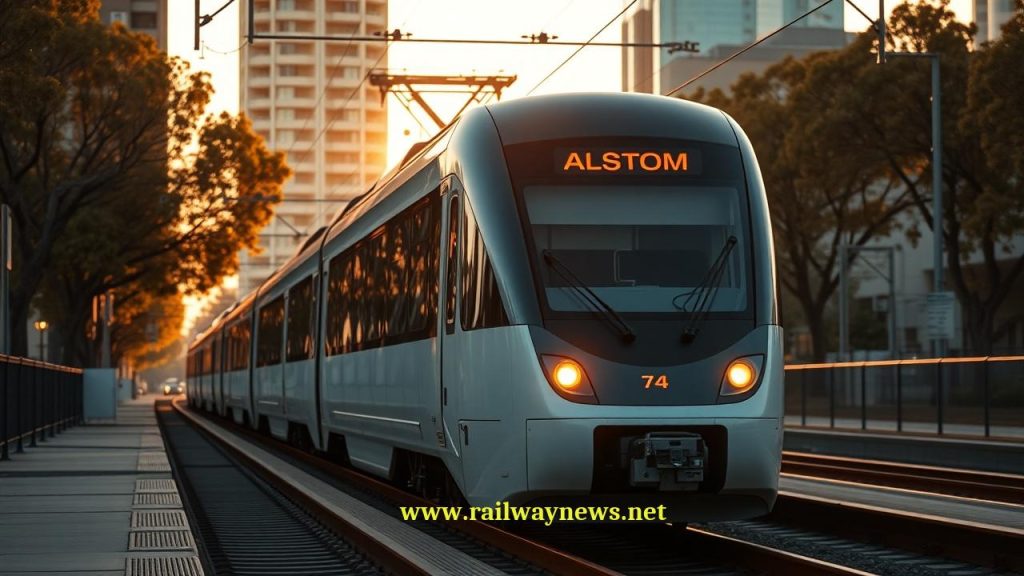
⚡ In Brief: Alstom’s first X’trapolis 2.0 train, part of a 50-unit fleet renewal, has entered service in Melbourne, Australia, with the project mandating at least 60% local content to support approximately 750 manufacturing jobs.
MELBOURNE, AUSTRALIA – The first of Alstom’s new X’trapolis 2.0 electric multiple-units has entered passenger service on Melbourne’s metropolitan network. The train is the first from an initial order of 25 six-car sets valued at EUR 300 million, which is part of a larger 50-train procurement by the Victorian state government. The fleet is being manufactured at Alstom’s facilities in Dandenong and Ballarat, securing a minimum of 60% local content.
What Is the Full Scope of This Project?
The project covers the design, manufacture, and delivery of 50 new six-car electric trains for Melbourne’s wide-gauge network. The procurement is split into two equal tranches of 25 units, with the second batch funded through the Victorian State Budget for 2026/2027. The project places a strong emphasis on local industry, requiring at least 60% local content and supporting an estimated 750 jobs in the state’s supply chain. The new trains, which can carry up to 1,225 passengers, will be progressively introduced on the Craigieburn, Upfield, and Frankston lines.
Key Project Data
| Parameter | Value |
|---|---|
| Project / Contract Name | X’trapolis 2.0 Fleet Procurement |
| Total Value | Phase 1 (25 units): EUR 300 million; Phase 2 (25 units): AUD 673.6 million |
| Parties Involved | Alstom, Victorian Department of Transport and Planning, Metro Trains Melbourne |
| Timeline / Completion | Deliveries ongoing; final completion date not disclosed |
| Country / Corridor | Australia / Melbourne (Craigieburn, Upfield, Frankston lines) |
How Does This Compare to Similar Projects?
While direct cost-per-unit comparisons for recent Australian rolling stock procurements are not publicly available, the X’trapolis 2.0’s underlying Alstom Adessia platform can be benchmarked against other global commuter train platforms. The Adessia platform’s focus on high-capacity, modularity, and accessibility is shared by competitors like Siemens’ Desiro platform and Stadler’s FLIRT. For example, the Siemens Desiro City trains used on London’s Thameslink network also feature open gangways for continuous passenger circulation and high-density layouts designed for rapid passenger exchange in busy urban centres. Stadler’s FLIRT platform is notable for its high degree of customisation, allowing operators to configure trainsets for a wide range of services from commuter to inter-regional routes, a different strategic approach to Alstom’s more standardised platform.
Editor’s Analysis
This project underscores a persistent trend in Australian public procurement: leveraging major transport contracts to bolster local manufacturing capabilities through mandated content quotas. The requirement for 60% local sourcing for the X’trapolis 2.0 fleet is a key political and economic component, not just a technical one. While the investment is significant for Victoria’s rail sector, it exists within a national context where other priorities receive vastly larger funding; for instance, planned defence spending on air combat capabilities is projected between AUD 64 billion and AUD 80 billion. (Source: Janes, 2026). This contrast highlights the scale of transport investment relative to other areas of government expenditure.
FAQ
Q: How many X’trapolis 2.0 trains are being built for Melbourne?
A: A total of 50 new trains are being delivered. This is happening in two separate orders of 25 trains each, fully funded by the Victorian State Government.
Q: What is the total investment in this new train fleet?
A: The initial order for 25 trains is valued at EUR 300 million. The Victorian State Budget has allocated a further AUD 673.6 million for the second batch of 25 trains.
Q: What are the main improvements for passengers on the X’trapolis 2.0?
A: The new trains feature continuous circulation between all six cars, wider doors for faster boarding, and major accessibility upgrades. These include 20 dedicated wheelchair spaces, semi-automatic boarding ramps, and hearing assistance technology.

Railway infrastructure, rolling stock and transport technologies specialist focused on global rail industry developments, high-speed rail systems, signaling technologies and freight transportation. Covering railway investments, public transport modernization, rail operations and international mobility projects across Europe, Asia and North America.
RELATED POSTS

October 1, 2026 7:09 am
United States regulators confirmed a September 30 deadline for the...

October 1, 2026 12:13 am
Illinois approved $1.5 billion annually for the Northern Illinois Transit...
October 1, 2026 5:14 am
Siemens confirmed delivery of the first new S200 train to...

October 1, 2026 6:10 am
Amtrak approved a System Expansion Committee on July 30 to...
October 1, 2026 3:12 am
Greenbrier confirmed Brian Comstock as new president and CEO effective...
October 1, 2026 4:10 am
DART launched two public ridership dashboards in March 2026 to...