
GDC Awards $1.29 Billion Hudson Tunnel Contract
Gateway Development Commission awarded a USD 1.29 billion contract to Traylor/Walsh/Skanska JV for boring two new rail tunnels for the Hudson Tunnel Project between New Jersey and Manhattan.
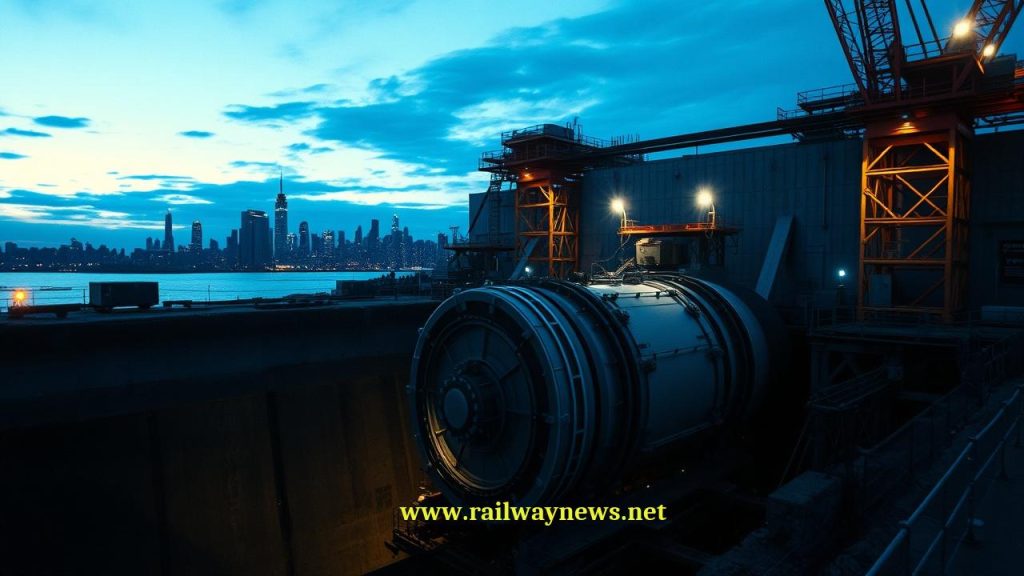
⚡ In Brief: The Gateway Development Commission has awarded a USD 1.29 billion contract to a Traylor/Walsh/Skanska joint venture for the sub-river boring phase (Package 1C) of the Hudson Tunnel Project between New Jersey and Manhattan, a key component of the USD 16 billion program.
NEW YORK, USA – The Gateway Development Commission (GDC) has awarded the main tunneling contract for the Hudson Tunnel Project, valued at USD 1.29 billion, to a joint venture comprising Traylor Bros., Walsh, and Skanska. The contract, designated Package 1C, covers the boring of two new rail tunnels beneath the Hudson River. Work is expected to commence in the coming months.
What Does This Contract Cover?
Package 1C is the primary underwater tunneling section of the overall project and constitutes the final major tunneling contract to be awarded. The scope includes boring two new tunnels, each approximately 7,250 feet (2.2 km) long, connecting an access shaft in Weehawken, New Jersey, to another on 12th Avenue in Manhattan. The work will utilize two new tunnel boring machines (TBMs) specifically designed for the mixed-face geological conditions under the riverbed.
Key Contract Data
| Parameter | Value |
|---|---|
| Contract Name | Hudson Tunnel Project – Package 1C |
| Total Value | USD 1.29 billion |
| Parties Involved | Gateway Development Commission (Client); Traylor/Walsh/Skanska (Contractor JV) |
| Timeline / Completion | Work to begin in the coming months; specific completion date for this package was not disclosed. |
| Country / Corridor | USA / Northeast Corridor (New Jersey-New York) |
How Does This Compare to Similar Contracts?
This single contract represents approximately 8% of the total USD 16 billion estimated cost for the Hudson Tunnel Project. The value of this civil engineering package is comparable to major international defense procurements, underscoring the scale of the investment. For context, Germany’s Bundeswehr recently awarded a USD 1.2 billion contract to Rheinmetall for advanced soldier systems to be delivered over a two-year period (Source: Army Technology, 2026). The contract’s progression follows a period of significant uncertainty after a federal funding freeze earlier this year threatened to halt all work.
Editor’s Analysis
The award of Package 1C marks a critical milestone, moving the Hudson Tunnel Project into its most significant construction phase after overcoming severe political and financial blockades. The project’s cost has escalated nearly 38% since 2020, from USD 11.6 billion to USD 16 billion, reflecting both schedule delays and inflationary pressures common in large-scale infrastructure. This sustained investment in passenger rail resilience on the Northeast Corridor occurs as the broader U.S. rail freight market shows mixed results, with intermodal traffic growing while traditional carloads decline (Source: Association of American Railroads, 2026).
FAQ
Q: Why is the Hudson Tunnel Project considered so urgent?
A: The project is critical because the existing twin tunnels are over 110 years old and sustained significant saltwater damage during Hurricane Sandy in 2012. A failure of one or both tunnels would severely disrupt the Northeast Corridor, which accommodates over 2,200 daily trains and 800,000 passenger trips.
Q: What was the cause of the recent project delays and cost increases?
A: The project’s total estimated cost rose to USD 16 billion by 2026, up from USD 11.6 billion in 2020, due to schedule delays and cost escalation. Earlier in 2026, the project faced a temporary halt after an administration froze over USD 205 million in federal funding, which required a federal court order to release.
Q: What will happen to the old tunnels once the new ones are built?
A: After the two new tunnels are completed and operational, the existing North River Tunnels will be taken out of service one at a time for detailed rehabilitation. This phased approach is designed to ensure that full rail service capacity is maintained throughout the entire construction and renovation program.

Railway infrastructure, rolling stock and transport technologies specialist focused on global rail industry developments, high-speed rail systems, signaling technologies and freight transportation. Covering railway investments, public transport modernization, rail operations and international mobility projects across Europe, Asia and North America.
RELATED POSTS
September 6, 2026 5:19 am
Hitachi delivered Taiwan's first N700ST high-speed train from Japan in...

September 5, 2026 4:19 pm
CPK launched formal tender talks with four consortia to design...
September 5, 2026 7:14 pm
HS2 Ltd signed renegotiated civils contracts with EKFB and Align...

September 6, 2026 4:12 am
Alstom delivered the first of 100 new G Class trams...
September 6, 2026 6:17 am
Hungary ordered a national ban on most freight trains from...
September 6, 2026 1:17 am
Hitachi Toshiba Supreme Consortium confirmed the first of 12 N700ST...