
ČD Orders €143.7M RegioPanter Fleet for Moravia-Silesia
Czech Railways ordered 15 RegioPanter battery-electric trains from Škoda for €143.7 million for Moravia-Silesia’s partially non-electrified lines, starting December 2024.
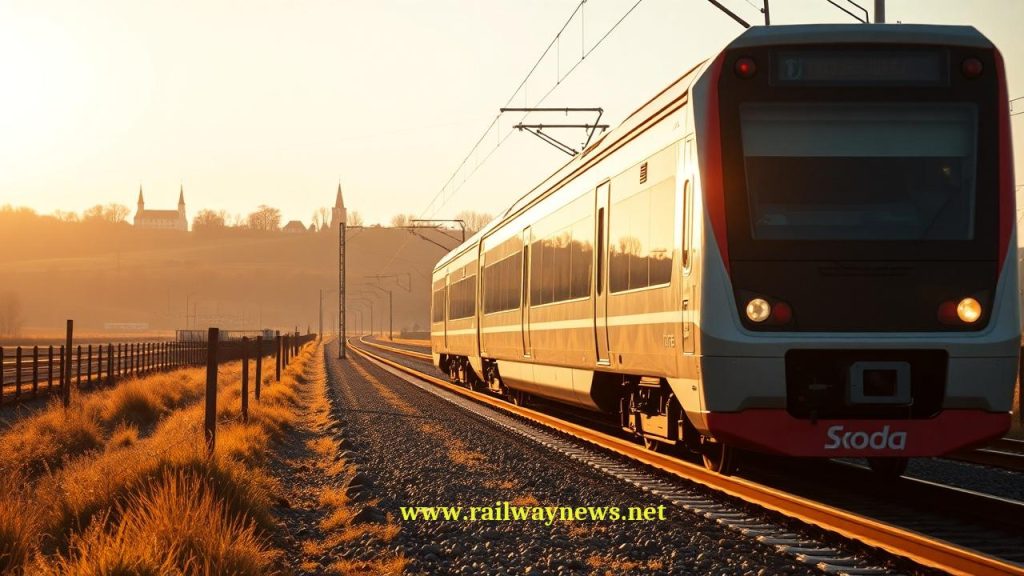
⚡ In Brief: Czech Railways (České dráhy) has contracted Škoda Group for €143.7 million to supply 15 new RegioPanter battery-electric trains and provide 15 years of maintenance for services on partially non-electrified lines in the Moravia-Silesia region starting in December 2024.
VELIM, CZECHIA – Czech Railways (ČD) and Škoda Group are testing new RegioPanter battery-powered electric multiple units (BEMUs) at the VUZ Velim Testing Center. The testing precedes the introduction of 15 new units under a €143.7 million contract signed in June 2024, which will expand ČD’s battery-electric fleet in the Moravia-Silesia region.
What Does This Contract Cover?
The agreement covers the delivery of 15 two-car, 690-series RegioPanter BEMUs and includes full-service maintenance for a period of 15 years. These new trains will join four similar units already in operation, bringing the total regional fleet to 19. The phased deployment will begin in December 2024 on the new S7 line (Ostrava–Český Těšín–Frýdek-Místek) and will be completed by March 2027, serving five distinct routes with some weekend-only services. The procurement is part of a broader strategy, evidenced by a separate ČD tender launched in February for up to 120 additional hybrid trains.
Key Contract Data
| Parameter | Value |
|---|---|
| Contract Name | Škoda RegioPanter BEMU Supply & Maintenance |
| Total Value | €143.7 Million (for 15 units and 15 years maintenance) |
| Parties Involved | Czech Railways (ČD) (Operator), Škoda Group (Supplier) |
| Timeline / Completion | December 2024 – March 2027 |
| Country / Corridor | Czechia / Moravia-Silesia Region |
How Does This Compare to Similar Contracts?
This new-build procurement of BEMUs contrasts with the approach taken in the UK, where Hitachi Rail is retrofitting existing rolling stock with battery technology. In a 2024 trial with Great Western Railway (GWR), Hitachi retrofitted a five-car Class 802 intercity train with batteries, enabling it to travel up to 86 km on battery power alone. While ČD is investing in a purpose-built fleet for regional services, the Hitachi project demonstrates a different capital investment strategy focused on upgrading existing assets for mainline operation. The technical specifications, such as battery range for the RegioPanter units, were not disclosed in the source material. (Source: Hitachi Rail, 2024)
Editor’s Analysis
This order from Czech Railways highlights a key European transport trend: using battery-electric technology to decarbonize regional lines where full, continuous electrification is not economically feasible. By procuring BEMUs, ČD can create seamless, single-seat journeys that traverse both electrified mainlines and non-electrified branch lines, eliminating the need for polluting diesel units and inconvenient passenger transfers. This investment reflects a pragmatic approach to meeting EU climate targets, focusing on targeted fleet upgrades rather than waiting for massive infrastructure overhauls, a strategy being adopted by multiple national operators across the continent. (Source: European Union Agency for Railways, 2023)
FAQ
Q: What is the primary purpose of these battery-powered trains?
A: Their main purpose is to operate on routes that are only partially electrified. They run as standard electric trains under overhead wires, charging their batteries, and then switch to battery power to serve non-electrified branch lines, eliminating the need for diesel locomotives.
Q: How many total battery trains will ČD operate in this region?
A: Following the delivery of these 15 units by March 2027, Czech Railways will operate a total of 19 RegioPanter battery-electric trains in the Moravia-Silesia region.
Q: Will this contract impact passenger services?
A: Yes, it will enable direct connections on several routes without requiring passengers to change trains. It also introduces modern amenities such as air conditioning, Wi-Fi, and improved accessibility for passengers with reduced mobility.

Railway infrastructure, rolling stock and transport technologies specialist focused on global rail industry developments, high-speed rail systems, signaling technologies and freight transportation. Covering railway investments, public transport modernization, rail operations and international mobility projects across Europe, Asia and North America.
RELATED POSTS
September 6, 2026 5:19 am
Hitachi delivered Taiwan's first N700ST high-speed train from Japan in...
September 6, 2026 6:17 am
Hungary ordered a national ban on most freight trains from...
September 6, 2026 1:17 am
Hitachi Toshiba Supreme Consortium confirmed the first of 12 N700ST...

September 5, 2026 4:19 pm
CPK launched formal tender talks with four consortia to design...

September 6, 2026 4:12 am
Alstom delivered the first of 100 new G Class trams...

September 5, 2026 7:14 pm
HS2 Ltd signed renegotiated civils contracts with EKFB and Align...