
Vancouver Fraser Port Authority Signs Roberts Bank Terminal 2 MOU
Vancouver Fraser Port Authority signed a one-year MOU with GCT Global Container Terminals to develop Roberts Bank Terminal 2, increasing Port of Vancouver container capacity.
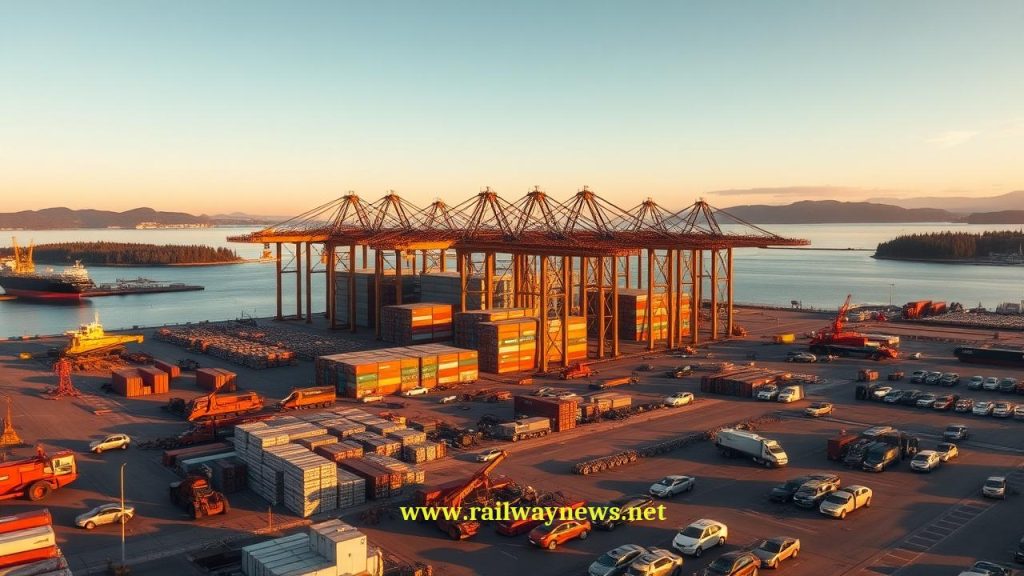
⚡ In Brief: The Vancouver Fraser Port Authority and GCT Global Container Terminals have signed a one-year memorandum of understanding to jointly develop the Roberts Bank Terminal 2, a project designed to increase container capacity at the Port of Vancouver in British Columbia.
VANCOUVER, BC – The Vancouver Fraser Port Authority (VFPA) has entered into a one-year memorandum of understanding (MOU) with GCT Global Container Terminals to explore a partnership for the Roberts Bank Terminal 2 (RBT2) project. The agreement positions GCT as the potential builder and operator of the new container terminal. This partnership consolidates efforts after GCT agreed to withdraw its separate application for an expansion project at the port.
What Is the Full Scope of This Project?
The proposed partnership divides responsibilities for the development of the new terminal. The VFPA will continue to lead the development of the terminal landmass and retain responsibility for all permitting and engagement with Indigenous communities. GCT Global Container Terminals will focus on negotiating a joint development agreement to become the primary builder and operator of the terminal infrastructure, leveraging its focus on sustainable logistics.
Key Project Data
| Parameter | Value |
|---|---|
| Project / Contract Name | Roberts Bank Terminal 2 (RBT2) Development |
| Total Value | Not disclosed |
| Parties Involved | Vancouver Fraser Port Authority, GCT Global Container Terminals |
| Timeline / Completion | 1-year MOU for negotiation; project completion date not disclosed |
| Country / Corridor | Canada / Port of Vancouver |
How Does This Compare to Similar Projects?
Comparable data for similar port-rail terminal development contracts in Canada for the 2024-2025 period was not publicly available at the time of publication. The project’s structure, where a port authority develops the landmass while a private operator builds and runs the terminal, is a common model globally, but specific financial details for recent, similar Canadian projects are not available for a direct comparison. Further details may emerge if the MOU leads to a definitive joint development agreement.
Editor’s Analysis
This partnership solidifies the development path for RBT2, creating significant future demand for rail freight capacity on Canada’s west coast. The project’s focus on expanding container throughput underscores the critical role of freight infrastructure in the national supply chain. This investment in freight capacity contrasts with the renewed national focus on passenger rail, particularly the re-escalation of plans for a high-speed rail corridor between Québec City and Toronto, which targets a different segment of the rail industry (Source: CleanTechnica, 2024).
FAQ
Q: What is the main goal of the Roberts Bank Terminal 2 project?
A: The primary goal is to significantly increase the Port of Vancouver’s container handling capacity to meet projected future trade demand. This expansion is intended to bolster Canada’s supply-chain resilience and maintain its global trade competitiveness.
Q: What is the timeline for this development?
A: The initial memorandum of understanding between the Vancouver Fraser Port Authority and GCT is for one year to negotiate a final agreement. A specific timeline for the construction and completion of the terminal has not been disclosed.
Q: How will this terminal impact rail freight operators?
A: The new terminal will substantially increase container volumes moving through the port, which will directly increase demand for rail services. Rail operators will be essential for moving containers from the terminal to inland destinations across Canada and the United States.

Railway infrastructure, rolling stock and transport technologies specialist focused on global rail industry developments, high-speed rail systems, signaling technologies and freight transportation. Covering railway investments, public transport modernization, rail operations and international mobility projects across Europe, Asia and North America.
RELATED POSTS

September 6, 2026 5:19 am
Hitachi delivered Taiwan's first N700ST high-speed train from Japan in...

September 5, 2026 4:19 pm
CPK launched formal tender talks with four consortia to design...

September 5, 2026 7:14 pm
HS2 Ltd signed renegotiated civils contracts with EKFB and Align...

September 6, 2026 6:17 am
Hungary ordered a national ban on most freight trains from...

September 6, 2026 1:17 am
Hitachi Toshiba Supreme Consortium confirmed the first of 12 N700ST...
September 6, 2026 8:17 am
DB InfraGO reopened the Nuremberg-Regensburg line in Bavaria on 31...