
Freeport East Reports 14 Priority Projects for East England Ports
Freeport East and Transport East published a masterplan outlining 14 priority projects to boost rail, road, and digital connectivity for East England ports.
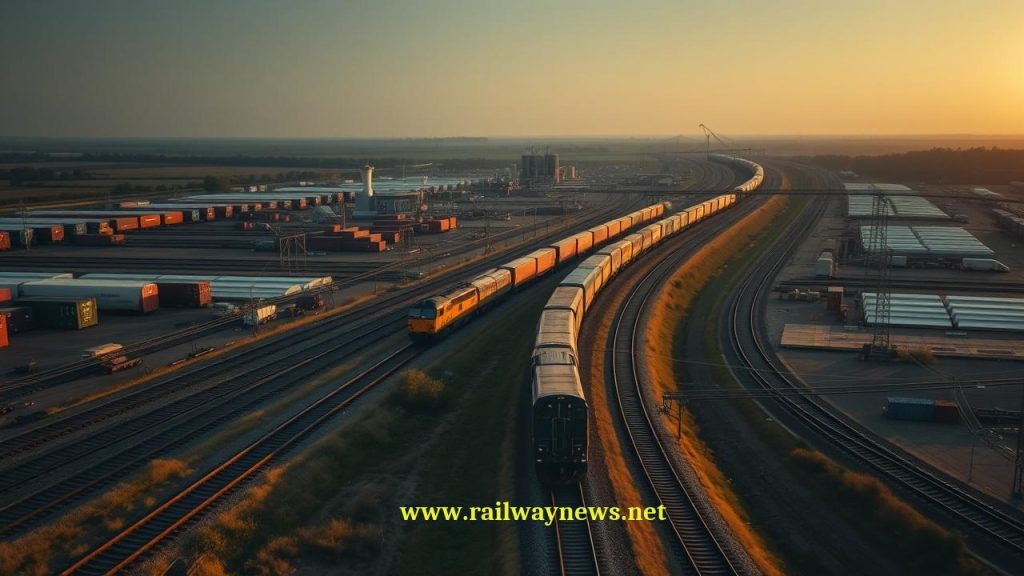
⚡ In Brief: Freeport East, in partnership with Transport East, has published a transport masterplan outlining 14 priority projects to support the Ports of Felixstowe, Harwich, and Ipswich, building on £250 million in investment already secured for the initiative.
LONDON, UK – Freeport East and its partner Transport East have released a new transport masterplan for the East of England. The plan identifies 14 priority infrastructure projects across rail, road, and digital systems designed to boost connectivity for the region’s key ports. The announcement confirms the broader Freeport initiative has already attracted over £250 million in investment and supported 1,800 jobs to date.
What Does This Masterplan Prioritise?
The masterplan outlines 14 strategic transport interventions across multiple modes to support economic growth linked to the Ports of Felixstowe, Harwich, and Ipswich. It covers improvements to road, rail, bus services, active travel, and digital integration. While key industry partners like Hutchison Ports and Greater Anglia have endorsed the plan, the specific list of the 14 projects and their individual costs were not detailed in the initial announcement.
Key Masterplan Data
| Parameter | Value |
|---|---|
| Plan / Policy Name | Freeport East Transport Masterplan |
| Total Value | Not disclosed (for the 14 projects); £250m secured to date for wider Freeport initiative. |
| Parties Involved | Freeport East, Transport East, Hutchison Ports (Ports of Felixstowe & Harwich), Greater Anglia, local authorities |
| Timeline / Completion | Not disclosed |
| Country / Corridor | United Kingdom / East of England |
How Does This Compare to Other Strategic Investment Plans?
While the Freeport East masterplan sets out priorities, it does not yet attach a total public funding figure for the 14 schemes. This contrasts with other strategic investment frameworks, such as the European Union’s recent allocation of over $1.26 billion (€1.16 billion) for 57 specific defense R&D projects, which provides clear financial backing from the outset (Source: Defense News, 2026). The scale of individual projects within such masterplans can vary significantly; for instance, a single rolling stock procurement, like the Gornergrat Bahn’s recent order for Stadler trains in Switzerland, is valued at approximately CHF 30 million (£26.5 million), demonstrating the high capital cost of even discrete rail investments (Source: Global Railway Review, 2026).
Editor’s Analysis
This masterplan serves as a critical lobbying document, aiming to align regional priorities with national funding streams and emerging devolution deals. Its success will depend entirely on securing financing for these 14 currently unfunded priorities, moving them from a strategic list to a deliverable construction programme. The stated emphasis on “digital integration” for rail strongly suggests that any proposed network enhancements will need to align with the UK’s broader, and often delayed, transition to the European Train Control System (ETCS) to ensure long-term network compatibility and unlock future capacity benefits (Source: Market Context Data).
FAQ
Q: What specific rail projects are included in the masterplan?
A: The announcement did not list the specific 14 projects, but it confirms a focus on improving both passenger and freight rail services. The involvement of operator Greater Anglia and port owner Hutchison Ports indicates a focus on enhancing existing network capacity and service quality for the region.
Q: What is the total investment required for the 14 projects?
A: The total required investment value for the 14 priority projects was not disclosed in the masterplan’s publication. The plan is intended to guide future funding bids, building on the £250 million in private and public investment already secured by the wider Freeport initiative.
Q: How does this plan affect the Port of Felixstowe’s rail freight operations?
A: While specific interventions are not yet detailed, the plan’s core goal is to enhance strategic connections for the UK’s busiest container port. This will almost certainly involve proposals for upgrades to the Felixstowe branch line and associated network capacity to accommodate more and longer freight trains.

Railway infrastructure, rolling stock and transport technologies specialist focused on global rail industry developments, high-speed rail systems, signaling technologies and freight transportation. Covering railway investments, public transport modernization, rail operations and international mobility projects across Europe, Asia and North America.
RELATED POSTS

October 8, 2026 1:15 pm
Alstom secured a €1bn contract to build 13 automated trains,...

October 1, 2026 7:09 am
United States regulators confirmed a September 30 deadline for the...

October 4, 2026 5:14 pm
Alstom secured a CA$4.7 billion order from VIA Rail Canada...

October 1, 2026 12:13 am
Illinois approved $1.5 billion annually for the Northern Illinois Transit...

October 5, 2026 6:12 pm
AECOM and Jacobs secured a contract in September 2026 to...

October 1, 2026 6:10 am
Amtrak approved a System Expansion Committee on July 30 to...