
GATX Rail Europe Introduces Rotating Platform Railcar for Europe’s
GATX Rail Europe launched a rotating platform railcar to serve Europe’s 400 million-tonne waste market with crane-free unloading.
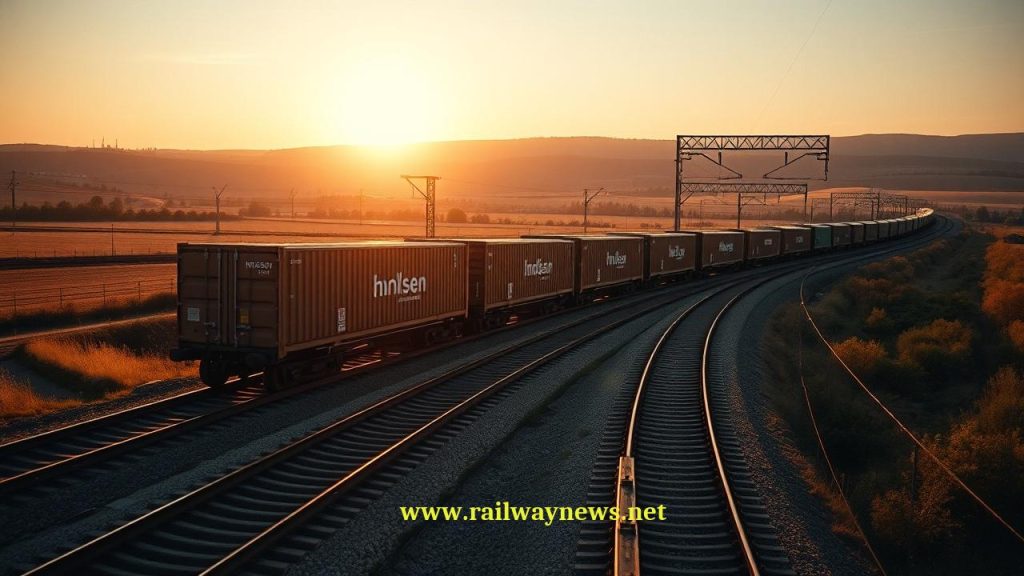
⚡ In Brief: GATX Rail Europe is introducing a new intermodal railcar with rotating platforms to capture a larger share of Europe’s 400 million-tonne annual waste transport market, where rail currently holds less than a 10% share.
[EUROPE] – GATX Rail Europe has introduced a new intermodal railcar solution designed to increase freight handling flexibility for sectors like waste management and industrial logistics. The system, which features rotating platforms for unloading without terminal cranes, has completed initial real-world tests transporting waste to an incineration facility. This development aims to increase rail’s sub-10% share of the 400 million tonnes of waste transported annually in Europe.
What Are the Technical Specifications?
The core of the solution is an intermodal flatcar equipped with specially adapted rotating platforms for handling system-specific containers and ISO hybrid containers. These platforms enable horizontal unloading using truck-mounted systems, eliminating the need for cranes or reach stackers typically found at intermodal terminals. The design is intended to handle light bulk materials such as municipal waste, industrial waste, and biomass. While the concept has been proven, specific figures for the wagon’s dead weight and total load capacity were not disclosed in the announcement.
Key Technical Data
| Parameter | Value |
|---|---|
| Technology / System Name | Intermodal Railcar with Rotating Platforms |
| Total Value | Not disclosed |
| Parties Involved | GATX Rail Europe |
| Timeline / Completion | Testing complete; large-scale expansion depends on market conditions |
| Country / Corridor | Europe |
Where Does This Technology Stand in the Market?
The GATX system enters a competitive market for non-terminal bulk handling solutions, aiming to simplify the road-rail interface. Its key feature is the rotating platform enabling horizontal unloading by a standard truck, reducing dependency on fixed infrastructure. This approach competes with established systems like Innofreight’s RockTainer, which typically uses specialized stationary unloading machines for high-volume throughput, and VTG’s SWS-PowerBox, which often employs a side-tipping mechanism for rapid discharge. GATX’s solution appears to prioritize maximum flexibility for customers without rail-side handling equipment, directly targeting logistics chains where first- and last-mile operations occur at undeveloped sites.
Editor’s Analysis
GATX’s introduction of this flexible railcar is strategically timed to capitalize on worsening road freight economics. With dry van contract rates forecast to rise by 8% and spot rates by 12%, shippers are actively seeking more cost-effective and environmentally sustainable alternatives (Source: Dat iQ). By engineering a solution that bypasses the capital-intensive requirement of traditional intermodal terminals, GATX is lowering the barrier to entry for modal shift, particularly for the high-volume waste and biomass sectors. This technology directly addresses a key logistical bottleneck, potentially unlocking new rail freight flows from locations previously considered inaccessible.
FAQ
Q: What specific problem does GATX’s new railcar solve?
A: It solves the problem of needing heavy infrastructure like cranes to transfer bulk goods from rail to truck. The rotating platform allows for horizontal unloading using truck-mounted equipment, opening up rail transport to customers with basic siding access.
Q: What is the load capacity of the new wagon?
A: GATX has not publicly disclosed the specific dead weight or maximum payload for the wagon or the containers. The initial announcement focused on the operational flexibility and market potential of the system.
Q: How does this technology affect the broader logistics market?
A: It makes rail a more viable competitor to road transport for bulk materials, especially as road freight costs rise. By reducing the need for specialized terminals, the solution could help shift a portion of the 400 million tonnes of European waste transport from trucks to trains, aligning with EU emission reduction goals.

Railway infrastructure, rolling stock and transport technologies specialist focused on global rail industry developments, high-speed rail systems, signaling technologies and freight transportation. Covering railway investments, public transport modernization, rail operations and international mobility projects across Europe, Asia and North America.
RELATED POSTS
September 6, 2026 5:19 am
Hitachi delivered Taiwan's first N700ST high-speed train from Japan in...

September 5, 2026 4:19 pm
CPK launched formal tender talks with four consortia to design...
September 5, 2026 7:14 pm
HS2 Ltd signed renegotiated civils contracts with EKFB and Align...
September 6, 2026 4:12 am
Alstom delivered the first of 100 new G Class trams...
September 6, 2026 6:17 am
Hungary ordered a national ban on most freight trains from...
September 6, 2026 1:17 am
Hitachi Toshiba Supreme Consortium confirmed the first of 12 N700ST...