
Colorado Connector Launches Denver-Fort Collins 2029
Front Range Passenger Rail District confirmed Colorado Connector’s 2029 launch for Denver-Fort Collins service on BNSF and Union Pacific tracks.
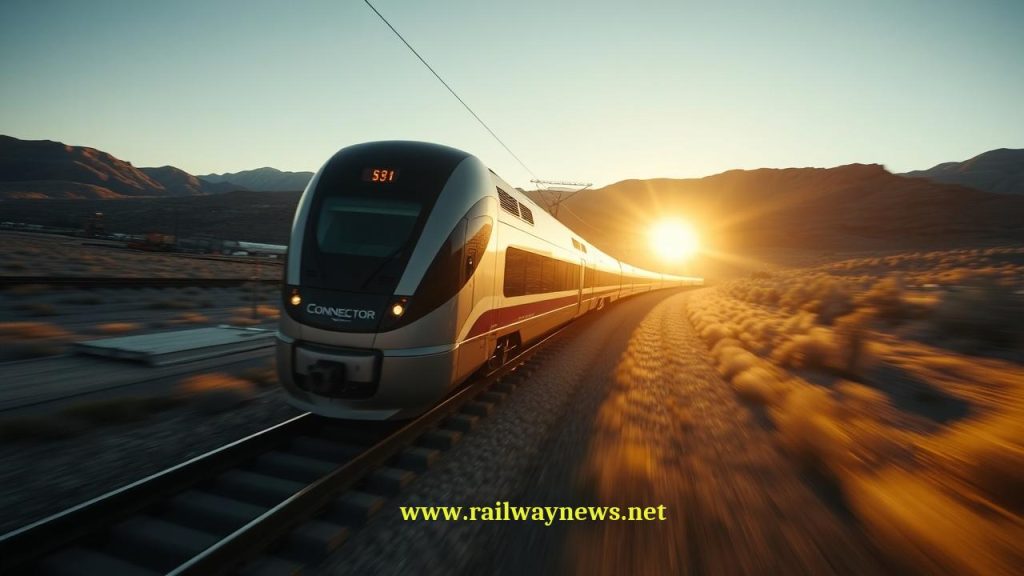
⚡ In Brief: Colorado’s Front Range Passenger Rail District has named its planned Fort Collins-to-Pueblo intercity service the “Colorado Connector” (CoCo), with the first phase slated for a 2029 launch on trackage owned by BNSF and Union Pacific.
DENVER, USA – Colorado’s planned intercity passenger rail service has been named the Colorado Connector, or “CoCo,” following a public vote that drew nearly 26,000 participants. The Front Range Passenger Rail District (FRPRD) is targeting a 2029 launch for the initial Denver to Fort Collins segment. The full service, extending south to Pueblo, is anticipated by 2032.
What Is the Full Scope of This Project?
The project establishes a new intercity passenger rail service along Colorado’s Front Range corridor, primarily using existing right-of-way owned by BNSF Railway and Union Pacific Railroad. The service will be developed in phases, with the northern segment between Denver and Fort Collins planned for 2029. The southern extension to Pueblo is scheduled for completion by 2032, contingent on funding and negotiations with the host freight railroads.
Key Project Data
| Parameter | Value |
|---|---|
| Project / Contract Name | Colorado Connector (CoCo) / Front Range Passenger Rail |
| Total Value | Not disclosed |
| Parties Involved | Front Range Passenger Rail District, BNSF Railway, Union Pacific Railroad, Regional Transportation District |
| Timeline / Completion | 2029 (Phase 1: Denver-Fort Collins), 2032 (Full service to Pueblo) |
| Country / Corridor | USA / Colorado Front Range (Fort Collins-Pueblo) |
How Does This Compare to Similar Projects?
The Colorado Connector project is similar in scope to other US initiatives aiming to expand passenger service on freight-owned corridors. For example, Virginia’s “Transforming Rail in Virginia” program is a $3.7 billion investment to purchase right-of-way and build dedicated passenger tracks along corridors owned by CSX. This approach, which separates passenger and freight traffic, was deemed necessary to ensure reliability and is a significant step beyond the track-sharing model currently proposed for the Colorado Connector (Source: Virginia Passenger Rail Authority, 2023). The total cost for the Colorado project has not yet been finalized.
Editor’s Analysis
The primary challenge for the Colorado Connector will be negotiating track access agreements with BNSF and Union Pacific, the corridor’s owners. With freight rates forecast to rise by 8-12% and capacity tightening, the host railroads have significant leverage to demand substantial investment for any new passenger service that could impede lucrative freight movements (Source: Dat iQ, 2024). The project’s 2029/2032 timeline is highly dependent on securing these agreements, which historically prove to be complex and costly.
FAQ
Q: Who will operate the Colorado Connector service?
A: The operator has not yet been selected. The Front Range Passenger Rail District is leading the planning, but a partner like Amtrak is a likely candidate for future operations.
Q: What is the estimated cost of the full project?
A: The total project cost has not been publicly disclosed. Funding is expected to come from a mix of state, local, and federal sources, with a potential funding measure appearing on a future statewide ballot.
Q: Will the new service impact existing freight rail operations?
A: Yes, adding passenger trains to the BNSF and Union Pacific mainlines will require significant coordination and potential infrastructure upgrades to avoid freight delays. The terms of this shared access are a critical, yet-to-be-finalized component of the project’s development.

Railway infrastructure, rolling stock and transport technologies specialist focused on global rail industry developments, high-speed rail systems, signaling technologies and freight transportation. Covering railway investments, public transport modernization, rail operations and international mobility projects across Europe, Asia and North America.
RELATED POSTS

September 6, 2026 5:19 am
Hitachi delivered Taiwan's first N700ST high-speed train from Japan in...

September 5, 2026 4:19 pm
CPK launched formal tender talks with four consortia to design...

September 5, 2026 7:14 pm
HS2 Ltd signed renegotiated civils contracts with EKFB and Align...

September 6, 2026 1:17 am
Hitachi Toshiba Supreme Consortium confirmed the first of 12 N700ST...

September 6, 2026 6:17 am
Hungary ordered a national ban on most freight trains from...
September 6, 2026 8:17 am
DB InfraGO reopened the Nuremberg-Regensburg line in Bavaria on 31...