
Serbia Hungary North Macedonia Sign 2000s Traffic Budapest-Belgrade
Hungary, Serbia, and North Macedonia rail operators signed an MoU to restore early 2000s freight volumes on the Budapest–Belgrade corridor.
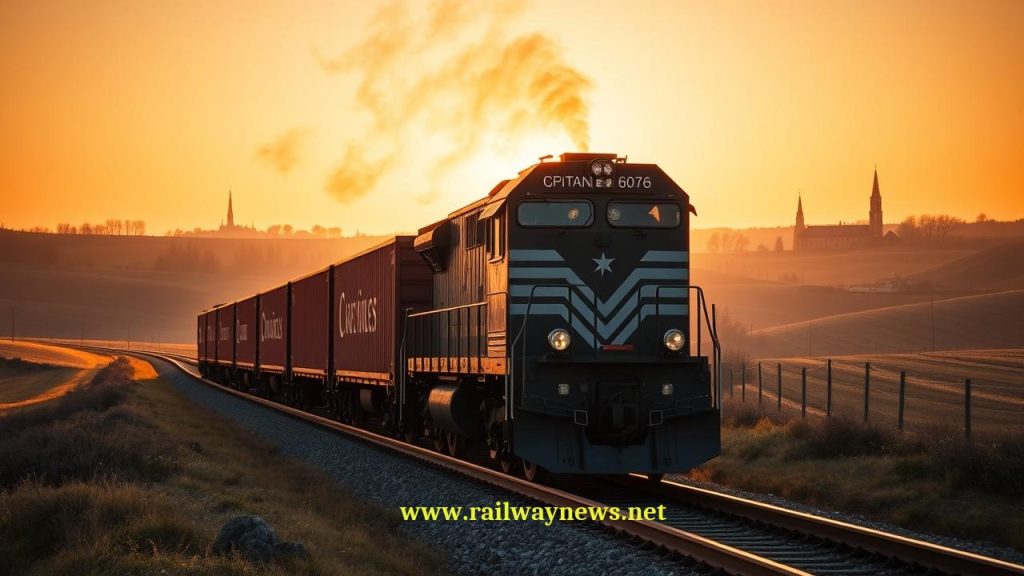
⚡ In Brief: Serbia Cargo, Rail Cargo Hungary, and ŽRSM Transport have signed an MoU to boost rail freight volumes on the recently reopened Budapest–Belgrade corridor, aiming to recapture traffic levels not seen since the early 2000s.
BUDAPEST, HUNGARY – National rail freight operators from Serbia, Hungary, and North Macedonia have signed a memorandum of understanding (MoU) to establish a coordinated transport offering. The agreement focuses on increasing freight capacity and efficiency on the Budapest–Belgrade route, a key north-south corridor which was reopened for freight traffic in late February. The stated goal is to restore freight volumes to levels last seen in the first decade of the 2000s.
What Is the Full Scope of This Project?
The trilateral agreement aims to create a more integrated rail freight service connecting Central Europe with the Western Balkans and, by extension, the Greek port of Piraeus. This initiative is designed to shorten transit times, lower costs, and reduce the environmental impact of logistics chains in the region. The cooperation will focus on developing intermodal transport for containers and semi-trailers, improving technical interoperability between the national networks, and expanding market presence across Europe.
Key Project Data
| Parameter | Value |
|---|---|
| Project / Contract Name | Budapest–Belgrade Rail Freight Corridor Enhancement Initiative |
| Total Value | Not disclosed |
| Parties Involved | Serbia Cargo (Serbia), Rail Cargo Hungary (Hungary), ŽRSM Transport (North Macedonia) |
| Timeline / Completion | No specific target date disclosed for volume goals |
| Country / Corridor | Hungary, Serbia, North Macedonia (linking Central Europe to the Balkans/Port of Piraeus) |
How Does This Compare to Similar Projects?
While the MoU itself does not commit capital, it strategically positions the operators to benefit from significant market shifts. The initiative is launched amid forecasts of rising freight rates in the region; the Serbian market alone is projected to see an 8% increase in dry van contract rates and a 12% rise in spot rates by 2025 (Source: Dat iQ). This economic pressure creates a strong incentive to shift volume from road to a more efficient, coordinated rail service. The Budapest-Belgrade line is also a flagship project of China’s Belt and Road Initiative (BRI) in Europe, and this operational agreement is a crucial step to capitalize on that infrastructure investment, which aims to create a primary trade artery from the COSCO-operated Port of Piraeus into the EU.
Editor’s Analysis
This agreement is less about new investment and more about operational alignment to maximize the return on prior infrastructure spending on the Budapest-Belgrade line. By coordinating services, the three national operators can present a unified, more competitive product against road haulage, particularly as freight rates are forecast to climb. The success of this MoU will serve as a critical test for the viability of the Balkan corridor as a primary channel for Asian goods entering Central and Eastern Europe via maritime routes.
FAQ
Q: What is the main goal of this MoU?
A: The primary goal is to increase rail freight traffic between Central Europe and the Balkans via the Budapest-Belgrade route. The signatories, Serbia Cargo, Rail Cargo Hungary, and ŽRSM Transport, aim to restore freight volumes to levels last seen in the early 2000s.
Q: What specific types of freight are being targeted?
A: The cooperation places a special emphasis on developing and promoting intermodal transport. This includes a focus on improving logistics for shipping containers and semi-trailers by rail to better integrate with other transport modes.
Q: Why is the Port of Piraeus important to this agreement?
A: The Port of Piraeus in Greece is a major entry point for Chinese and other Asian cargo into Europe. This rail corridor provides a direct and recently upgraded inland route for that freight to travel north through North Macedonia and Serbia to markets in Central Europe.

Railway infrastructure, rolling stock and transport technologies specialist focused on global rail industry developments, high-speed rail systems, signaling technologies and freight transportation. Covering railway investments, public transport modernization, rail operations and international mobility projects across Europe, Asia and North America.
RELATED POSTS

October 8, 2026 1:15 pm
Alstom secured a €1bn contract to build 13 automated trains,...

October 1, 2026 7:09 am
United States regulators confirmed a September 30 deadline for the...

October 4, 2026 5:14 pm
Alstom secured a CA$4.7 billion order from VIA Rail Canada...

October 1, 2026 12:13 am
Illinois approved $1.5 billion annually for the Northern Illinois Transit...

October 1, 2026 6:10 am
Amtrak approved a System Expansion Committee on July 30 to...
October 5, 2026 1:13 pm
New York MTA confirmed a late 2026 DEIS release for...