
Caldwell Approves Union Pacific Seven-Crossing Quiet Zone Idaho
Caldwell, Idaho, approved a seven-crossing quiet zone for Union Pacific Railroad in late March to reduce noise and enhance safety.
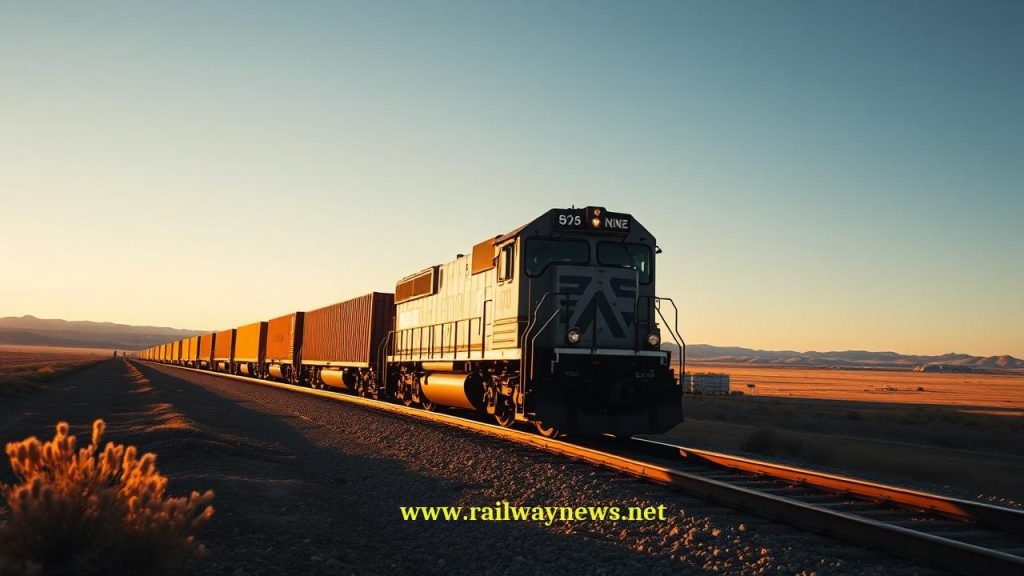
⚡ In Brief: The city of Caldwell, Idaho, approved a plan in late March to establish a quiet zone across seven Union Pacific Railroad grade crossings to reduce noise pollution and enhance local safety.
CALDWELL, ID – In late March, municipal authorities in Caldwell, Idaho, formally approved a plan to advance a quiet zone project affecting seven grade crossings on the Union Pacific Railroad network. This initiative aims to eliminate the requirement for routine train horn blasts by implementing supplementary safety measures. The project’s total cost and expected completion date were not specified in the approval.
What Is the Full Scope of This Project?
The project encompasses seven distinct railroad grade crossings within the city of Caldwell. The primary objective is to upgrade these crossings with safety enhancements that meet Federal Railroad Administration (FRA) standards for a quiet zone, thereby allowing trains to pass without sounding their horns under normal operating conditions. The specific engineering solutions for each of the seven crossings have not been detailed, but typically include measures like four-quadrant gates, non-traversable medians, or other approved supplementary safety measures (SSMs).
Key Project Data
| Parameter | Value |
|---|---|
| Project / Contract Name | Caldwell Quiet Zone Project |
| Total Value | Not disclosed |
| Parties Involved | City of Caldwell, Union Pacific Railroad |
| Timeline / Completion | Not disclosed |
| Country / Corridor | USA / Caldwell, Idaho |
How Does This Compare to Similar Projects?
The Caldwell quiet zone is a localized, municipal-level infrastructure project, typical of community-led efforts to mitigate the impacts of rail operations. In contrast, larger regional infrastructure projects often face significantly greater complexity and cost escalation. For example, the I-5 bridge replacement project between Washington and Oregon has seen its projected cost increase more than fourfold to $14 billion over several decades of planning, delays, and scope changes (Source: Axios, 2026). While the Caldwell project operates on a much smaller scale, the I-5 case serves as a cautionary example of how transport infrastructure projects are susceptible to major cost overruns and extended timelines.
Editor’s Analysis
This project in Caldwell reflects a persistent demand in communities across North America for quality-of-life improvements along active freight corridors. While modest in scope, it is part of a wider pattern of public investment in transport infrastructure, seen globally in initiatives like Kenya’s Standard Gauge Railway expansion (Source: Soko Directory, 2026). However, the success of such projects, large or small, depends on strict budget and timeline management, challenges that can be compounded by industry-wide issues such as the skilled labor shortages seen in other capital-intensive sectors (Source: Energy Voice, 2026).
FAQ
Q: What is a railroad quiet zone?
A: A quiet zone is a segment of a rail line where the Federal Railroad Administration (FRA) has authorized railroads to cease the routine sounding of train horns at public grade crossings. This is only permitted after specific supplementary or alternative safety measures have been installed at the crossings.
Q: What is the estimated cost or timeline for the Caldwell project?
A: The city of Caldwell has not publicly disclosed the estimated total cost or the completion timeline for the seven-crossing quiet zone project. Costs for these projects can vary significantly depending on the existing infrastructure and the required safety upgrades.
Q: How does a quiet zone affect railroad operations?
A: A quiet zone does not change the frequency or speed of train traffic. It only alters the requirement for the routine sounding of the horn, which Union Pacific engineers will no longer be mandated to do in the designated area, though they retain the discretion to sound the horn in emergencies.

Railway infrastructure, rolling stock and transport technologies specialist focused on global rail industry developments, high-speed rail systems, signaling technologies and freight transportation. Covering railway investments, public transport modernization, rail operations and international mobility projects across Europe, Asia and North America.
RELATED POSTS

October 8, 2026 1:15 pm
Alstom secured a €1bn contract to build 13 automated trains,...

October 1, 2026 7:09 am
United States regulators confirmed a September 30 deadline for the...

October 8, 2026 12:18 pm
Siemens Mobility signed an agreement with VinSpeed to supply 350...

October 4, 2026 5:14 pm
Alstom secured a CA$4.7 billion order from VIA Rail Canada...

October 5, 2026 6:12 pm
AECOM and Jacobs secured a contract in September 2026 to...

October 1, 2026 12:13 am
Illinois approved $1.5 billion annually for the Northern Illinois Transit...