
Czech Republic’s Central Bohemia Launches Nine Modernized Stadler RS1
České dráhy launched nine modernized Stadler RS1 railcars for regional service in Czech Republic’s Central Bohemia on April 1.
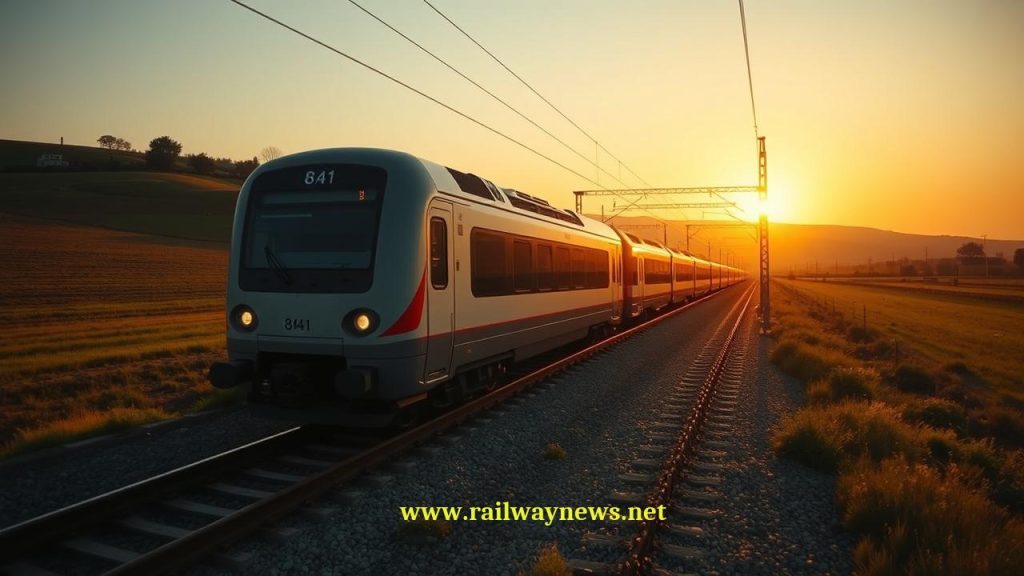
⚡ In Brief: The Czech national operator has deployed nine modernized Stadler Regio-Shuttle RS1 railcars on regional lines in the Central Bohemia region, replacing 1970s-era Class 810 units to improve service quality and accessibility.
PRAGUE, CZECH REPUBLIC – As of April 1, modernized diesel railcars have entered service on three regional routes in the Benešov area, operated by national carrier České dráhy (ČD). The nine refurbished Stadler-built units provide enhanced passenger comfort and performance on non-electrified lines, marking a step in the operator’s ongoing fleet renewal program for the Central Bohemia region.
What Are the Technical Specifications?
The newly introduced vehicles are Stadler Regio-Shuttle RS1 models, which will operate in the Czech Republic as Class 841. These single-car diesel-mechanical units offer a maximum speed of 120 km/h and feature traction on all four axles, providing superior acceleration and performance on challenging gradients compared to the outgoing models. The engine power is over three times greater than the 1970s-era Class 810 railcars they replace, which were built at the Vagonka Studénka plant. Key passenger-facing upgrades include low-floor accessibility, air conditioning, Wi-Fi, a modern audio-visual information system, and an interior configured for approximately 70 seated passengers with additional space for bicycles and wheelchairs.
Key Technical Data
| Parameter | Value |
|---|---|
| Technology / System Name | Stadler Regio-Shuttle RS1 (Czech Designation: Class 841) |
| Total Value | Not disclosed |
| Parties Involved | České dráhy (Operator), Stadler (Original Manufacturer) |
| Timeline / Completion | In service since April 1 |
| Country / Corridor | Czech Republic / Central Bohemia (Benešov – Vlašim, Benešov – Sedlčany, Olbramovice – Tábor) |
Where Does This Technology Stand in the Market?
The procurement of second-hand Stadler RS1 units is a common strategy for cost-effective fleet modernization on low-density regional lines across Central Europe. Although the RS1 design dates to the mid-1990s, its features represent a generational leap over the legacy Class 810 railcars. In a market context, the RS1 competes with other widely available second-hand German DMUs, such as the Siemens Desiro Classic, which typically offers higher capacity in a two-car formation. Compared to new-build options like the Pesa LINK or Alstom Coradia LINT, the modernized RS1 provides essential amenities like accessibility and air conditioning at a fraction of the capital cost, making it a pragmatic choice for subsidised regional services. This trend of acquiring refurbished German rolling stock is driven by widespread fleet renewals in Germany, creating a robust secondary market. (Source: European Railway Review, 2023)
Editor’s Analysis
This deployment by České dráhy underscores a strategic approach to fleet management, balancing investment in new rolling stock for key corridors with the pragmatic upgrade of regional services using the European second-hand market. By acquiring and modernizing proven assets like the Stadler RS1, the operator can significantly improve the passenger experience and operational efficiency on lines where new-build purchases are not economically viable. This model allows for a faster and more widespread elevation of service standards across the network, addressing pressing needs for accessibility and comfort within tight budgetary frameworks. This approach mirrors similar strategies by operators in Poland and Romania to bridge the quality gap between primary and secondary routes. (Source: International Union of Railways, 2023)
FAQ
Q: What specific train model is being introduced?
A: The model is the Stadler Regio-Shuttle RS1, which is being designated as Class 841 by the operator, České dráhy. A total of nine modernized units have been deployed in the Benešov area.
Q: Why are the old trains being replaced?
A: The previous Class 810 railcars, dating from the 1970s, lack modern features such as low-floor access for passengers with reduced mobility, air conditioning, and sufficient power for reliable operation on hilly routes. The replacement is part of a wider regional transport modernization program.
Q: Where did these “new” trains operate before coming to the Czech Republic?
A: These railcars were previously in service on local railway lines in Germany. They were purchased second-hand and underwent a detailed refurbishment and modernization process before entering service with České dráhy.

Railway infrastructure, rolling stock and transport technologies specialist focused on global rail industry developments, high-speed rail systems, signaling technologies and freight transportation. Covering railway investments, public transport modernization, rail operations and international mobility projects across Europe, Asia and North America.
RELATED POSTS

September 6, 2026 5:19 am
Hitachi delivered Taiwan's first N700ST high-speed train from Japan in...

September 5, 2026 4:19 pm
CPK launched formal tender talks with four consortia to design...

September 6, 2026 4:12 am
Alstom delivered the first of 100 new G Class trams...
September 6, 2026 6:17 am
Hungary ordered a national ban on most freight trains from...

September 6, 2026 1:17 am
Hitachi Toshiba Supreme Consortium confirmed the first of 12 N700ST...
September 6, 2026 8:17 am
DB InfraGO reopened the Nuremberg-Regensburg line in Bavaria on 31...