
China High Speed Rail Expands to 50,000 km by 2025
China expanded its high-speed rail network to 50,000 km by 2025, now connecting 97% of cities over 500,000.
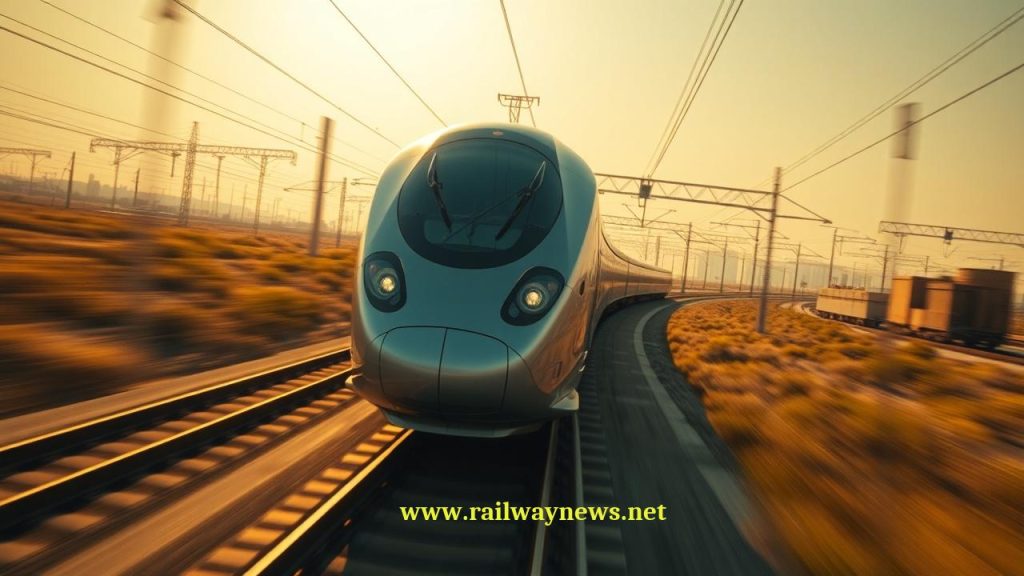
⚡ In Brief: China’s high-speed rail network reached 50,000 km by the end of 2025, serving 4.28 billion passengers that year and connecting 97% of cities with over 500,000 inhabitants as part of a national strategy supported by 3.93 trillion yuan in R&D spending.
BEIJING – China’s national high-speed rail (HSR) network reached 50,000 km by the end of 2025, solidifying its position as the world’s largest by a significant margin. The network recorded 4.28 billion passenger trips in 2025, an annual increase of 6.6%, following the commissioning of key lines including the Xi’an–Yan’an and Wuhan–Yichang routes. This expansion is part of a multi-decade national infrastructure strategy to enhance economic integration and technological sovereignty.
What Is the Full Scope of This Project?
The project encompasses the ongoing construction and long-term planning of China’s HSR system, which forms the majority of the world’s 65,000 km of operational high-speed lines. As of early 2026, China has 8,656 km of new lines under active construction and an additional 3,754 km approved for development. The long-term plan includes a further 7,134 km, with a strategic focus on lines operating at 250 km/h and 350 km/h. A key engineering component of the current expansion is a new 14km underwater tunnel beneath the Yangtze River, demonstrating advanced construction capabilities. (Source: Xinhua, SCMP, 2026).
Key Project Data
| Parameter | Value |
|---|---|
| Project / Contract Name | China National High-Speed Rail Network Expansion |
| Total Value | Not disclosed; supported by national R&D spending of 3.93 trillion yuan (2025) |
| Parties Involved | China State Railway Group Co., Ltd. (National Operator) |
| Timeline / Completion | Ongoing; 12,000 km added during 2021-2025 Five-Year Plan |
| Country / Corridor | China (Nationwide) |
How Does This Compare to Similar Projects?
China’s HSR network development outpaces all other global efforts combined, with its 50,000 operational kilometers far exceeding the total network length in Europe. The pace of construction is also unparalleled; China added 12,000 km of HSR lines between 2021 and 2025 alone. For context on the scale of investment, the national government provided over 2.8 trillion yuan in tax relief to support technological innovation and manufacturing, a sum that dwarfs individual infrastructure contracts in other countries, such as the US Army’s $726.9 million Mission Test Support Services contract awarded to TRAX. (Source: Army Technology, 2025). The total global HSR network outside of China is less than 20,000 km.
Editor’s Analysis
This massive investment in HSR is a strategic pillar of China’s dual-circulation economic model, aimed at boosting domestic consumption and integrating regional economies. The network’s efficiency in passenger transport creates capacity on conventional lines for freight, which is critical as China-Europe rail freight gains prominence as a key e-commerce artery. (Source: IATA, 2026). This state-driven investment in electrified rail aligns with a broader push for sustainable transport, complementing parallel policies promoting battery-electric and hydrogen trucks for domestic logistics.
FAQ
Q: What is the main purpose of China’s HSR expansion?
A: The primary goal is to foster economic integration by connecting major urban hubs with less developed regions, reducing travel times to stimulate investment, tourism, and labour mobility. The network now reaches 97% of Chinese cities with populations over 500,000.
Q: How does this HSR network support China’s technological goals?
A: The project drives high-end manufacturing and innovation, with breakthroughs in areas like advanced tunnelling, evidenced by the 14km underwater Yangtze River tunnel. The government supported this push with 3.93 trillion yuan in R&D spending in 2025. (Source: Global Times, 2026).
Q: What is the impact on other transport modes like air travel?
A: The HSR network provides a competitive alternative to air and road travel for distances up to 1,000 km, which can be covered in about 4 hours. This has shifted a significant volume of domestic travel to rail, aiming to reduce pollution and dependency on fossil fuels.

Railway infrastructure, rolling stock and transport technologies specialist focused on global rail industry developments, high-speed rail systems, signaling technologies and freight transportation. Covering railway investments, public transport modernization, rail operations and international mobility projects across Europe, Asia and North America.
RELATED POSTS

October 1, 2026 7:09 am
United States regulators confirmed a September 30 deadline for the...

October 1, 2026 12:13 am
Illinois approved $1.5 billion annually for the Northern Illinois Transit...

October 1, 2026 6:10 am
Amtrak approved a System Expansion Committee on July 30 to...
October 1, 2026 4:10 am
DART launched two public ridership dashboards in March 2026 to...
October 1, 2026 3:12 am
Greenbrier confirmed Brian Comstock as new president and CEO effective...

October 1, 2026 5:14 am
Siemens confirmed delivery of the first new S200 train to...