
Hitachi Rail Secures Fine Dining Train Vies Contract Japan
Hitachi Rail secured a contract to manufacture Seibu Railway’s Fine Dining Train vies for service in Japan by March 2028.
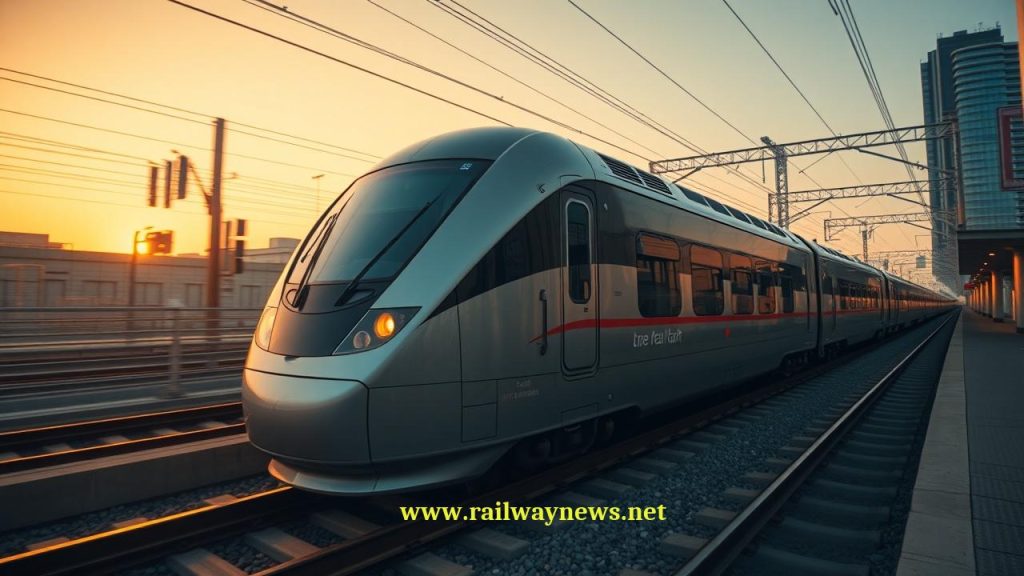
⚡ In Brief: Hitachi Rail will manufacture the new ‘Fine Dining Train vies’ for Japanese operator Seibu Railway, which is based on the Laview express model and scheduled to enter service in March 2028.
TOKYO, JAPAN – Seibu Railway has contracted Hitachi Rail to design and manufacture its new premium dining car, the Fine Dining Train “vies”. The new rolling stock will be based on the operator’s flagship Laview (001 series) express train and is scheduled to begin operations in March 2028, succeeding the current “Fifty Two Seats of Happiness” dining service.
What Does This Contract Cover?
The contract tasks Hitachi Rail with the design and construction of a new multiple unit for premium dining services. Hitachi will adapt the design of Seibu Railway’s 001 series “Laview” express train, focusing on spacious interiors with large windows and passenger comfort. Beyond manufacturing the rolling stock, Hitachi will also supply its expertise in control systems and operational technologies to ensure safe and stable operation. The total number of trainsets and the configuration of cars per set were not specified in the announcement.
Key Contract Data
| Parameter | Value |
|---|---|
| Contract Name | Fine Dining Train “vies” Rolling Stock Manufacture |
| Total Value | Not disclosed |
| Parties Involved | Seibu Railway (operator), Hitachi Rail (manufacturer) |
| Timeline / Completion | Scheduled to enter service March 2028 |
| Country / Corridor | Japan / Seibu Railway Network |
How Does This Compare to Similar Contracts?
This project reflects a strategic shift from modifying existing rolling stock to commissioning purpose-built luxury trains. Seibu’s current dining car, “Fifty Two Seats of Happiness,” is a refurbished 4000 series train with a capacity of 52, which entered service in 2016. The new “vies” train, being a new build based on a flagship express model, represents a significantly higher capital investment, though the contract value has not been made public. This aligns with a broader trend among Japanese rail operators, including the JR Group companies, which have introduced numerous “Joyful Trains” dedicated to tourism. For example, JR East’s “Tohoku Emotion” is a dedicated restaurant train, while JR Kyushu’s “Seven Stars in Kyushu” cruise train offers multi-day luxury packages costing over $10,000 per person, setting the upper benchmark for the market. (Source: Japan National Tourism Organization, 2023).
Editor’s Analysis
Seibu Railway’s investment in the “vies” train underscores the increasing importance of experiential tourism in the Japanese domestic rail market. By commissioning a new-build luxury train from Hitachi, Seibu is elevating its premium offering to compete more directly with high-end products from larger operators and attract high-value tourism. This move from a refurbished model to a purpose-built flagship suggests a strategy focused on brand enhancement and revenue diversification beyond standard passenger fares, a trend that has proven successful for numerous private and JR-group railways in post-pandemic Japan. (Source: Japan Railway & Transport Review).
FAQ
Q: What train is the new ‘vies’ dining car based on?
A: It will be based on Seibu Railway’s flagship 001 series “Laview” express train, also built by Hitachi Rail and introduced in 2019. This leverages the Laview’s distinctive large windows and comfortable interior design concepts.
Q: How many passengers will the ‘vies’ train accommodate?
A: The passenger capacity for the Fine Dining Train ‘vies’ has not been disclosed. However, the operator stated it aims for a more exclusive and refined experience than its current “Fifty Two Seats of Happiness” train, which has a capacity of 52 passengers.
Q: What is the significance of the name ‘vies’?
A: ‘Vie’ is French for ‘life’, reflecting themes of nature and food. The plural ‘vies’ suggests enriching the lives of passengers, and read backward, ‘vies’ becomes ‘Seib’ (approximating Seibu), creating a subtle link to the operator’s name.

Railway infrastructure, rolling stock and transport technologies specialist focused on global rail industry developments, high-speed rail systems, signaling technologies and freight transportation. Covering railway investments, public transport modernization, rail operations and international mobility projects across Europe, Asia and North America.
RELATED POSTS
August 4, 2026 1:11 pm
Hitachi Rail Canada secured a $407.7M contract to install CBTC...
August 11, 2026 11:13 am
Hungary confirmed the €2.5B Hungarian rail upgrade will not see...
August 4, 2026 11:12 am
MBTA confirmed a $150.8 million overhaul of the 85-year-old Green...
August 1, 2026 7:14 pm
€205 billion funding shortfall threatens the TEN-T rail network's completion...
August 1, 2026 7:56 am
BMZ delivered two new TEM18DM diesel shunting locos to RZD...
August 5, 2026 7:11 pm
JR Central secured Shizuoka governor approval July 7, 2026 for...