
Akiem Orders 50 Siemens Battery-Electric Locomotives Europe
Akiem ordered 50 new Siemens battery-electric hybrid locomotives, capable of 2,400 kW output, for European rail decarbonization efforts starting 2029.
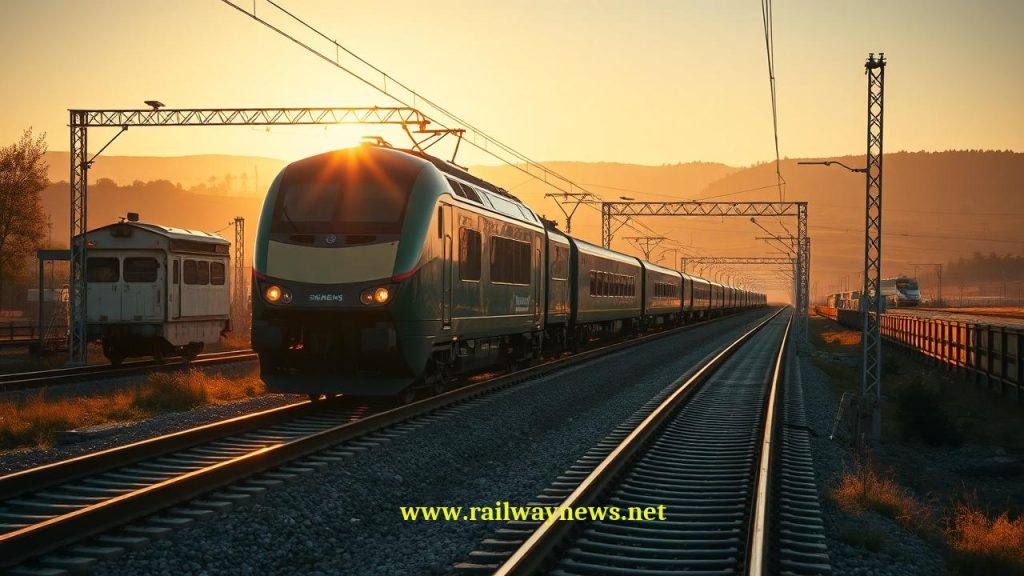
⚡ In Brief: Siemens Mobility and Akiem signed a framework for 80 locomotives, including a firm order for 50 new battery-electric hybrids capable of 2,400 kW output, with first deliveries scheduled for 2029 to support rail decarbonization.
MUNICH, GERMANY – Siemens Mobility and rolling stock leasing company Akiem have finalized a framework agreement for up to 80 locomotives. The deal includes a firm order for 50 units of a new battery-electric hybrid model designed to operate on both electrified and non-electrified track, with initial deliveries starting in 2029.
What Are the Technical Specifications?
The new hybrid locomotive features a modular traction battery system with a capacity of over 2 MWh, allowing it to operate without an overhead power supply. It is designed to deliver a continuous power output of up to 2,400 kW to the wheels in both battery-only and electric catenary modes. The unit has a maximum speed of 160 km/h, a starting tractive effort of 300 kN, and an approximate weight of 90 tons.
Key Technical Data
| Parameter | Value |
|---|---|
| Technology / System Name | Siemens Battery-Electric Hybrid Locomotive |
| Total Value | Not disclosed |
| Parties Involved | Siemens Mobility (manufacturer), Akiem (customer) |
| Timeline / Completion | First deliveries from 2029/2030 |
| Country / Corridor | Europe (Pan-European leasing) |
Where Does This Technology Stand in the Market?
The Siemens battery-electric model enters a market with established bi-mode solutions aimed at eliminating diesel on routes that are not fully electrified. Compared to diesel-electric hybrids, such as the Stadler EURODUAL which can deliver over 6,000 kW under catenary and 2,800 kW in diesel mode, the Siemens model’s 2,400 kW output is lower but offers a zero-emission alternative for non-catenary sections. (Source: Stadler Rail, 2023). Its direct competitor, the Vossloh Modula EBB, is a battery-electric hybrid providing up to 2,500 kW from catenary but typically around 1,200 kW in battery-only mode. The Siemens locomotive’s ability to deliver a full 2,400 kW in battery mode represents a significant operational advantage for hauling heavy freight on non-electrified main lines. (Source: Vossloh, 2022). This capability also distinguishes it from electric locomotives with smaller “last mile” battery modules, like Alstom’s Traxx platform, whose auxiliary power units are designed for low-speed shunting rather than mainline service.
Editor’s Analysis
This order from Akiem, a major European lessor, signals strong market confidence in mainline-capable battery-electric technology as a viable alternative to diesel. The move aligns with the broader trend of decarbonizing rail freight, which is projected to see steady intermodal volume growth of around 1.25% annually (Source: Logistics Management, 2024). This investment in flexible, zero-emission assets positions Akiem to serve freight operators facing increasing environmental regulations and network access restrictions for diesel locomotives across Europe.
FAQ
Q: What is the main advantage of this new locomotive?
A: Its primary advantage is the ability to haul heavy freight trains at up to 2,400 kW of power using only its battery system on non-electrified lines. This eliminates the need for a separate diesel engine for “last mile” or bridging operations.
Q: How many locomotives has Akiem ordered from Siemens in total?
A: Including this new firm order for 50 units, Akiem has placed firm orders for a total of 170 locomotives with Siemens Mobility since 2021.
Q: Will this locomotive replace existing diesel locomotives?
A: Yes, the intended application is to replace diesel locomotives on routes that are not fully electrified. This allows operators to reduce carbon emissions, noise pollution, and reliance on fossil fuels in rail freight operations.

Railway infrastructure, rolling stock and transport technologies specialist focused on global rail industry developments, high-speed rail systems, signaling technologies and freight transportation. Covering railway investments, public transport modernization, rail operations and international mobility projects across Europe, Asia and North America.
RELATED POSTS

October 4, 2026 5:14 pm
Alstom secured a CA$4.7 billion order from VIA Rail Canada...
October 1, 2026 3:12 am
Greenbrier confirmed Brian Comstock as new president and CEO effective...
October 1, 2026 7:09 pm
FRA ordered US rail operators to obey 5 restricted speed...
October 1, 2026 10:14 am
HS2 installed a 55-metre steel span in Birmingham, completing phase...
October 1, 2026 5:14 am
Siemens confirmed delivery of the first new S200 train to...
October 1, 2026 11:13 am
Norfolk Southern expanded its 3B Corridor in Alabama in 2025,...