
Alstom Upgrades Houston IAH Skyway with €380M 15-Year Contract
Alstom secured a €380 million contract to upgrade and maintain Houston IAH Skyway’s automated people mover for 15 years.
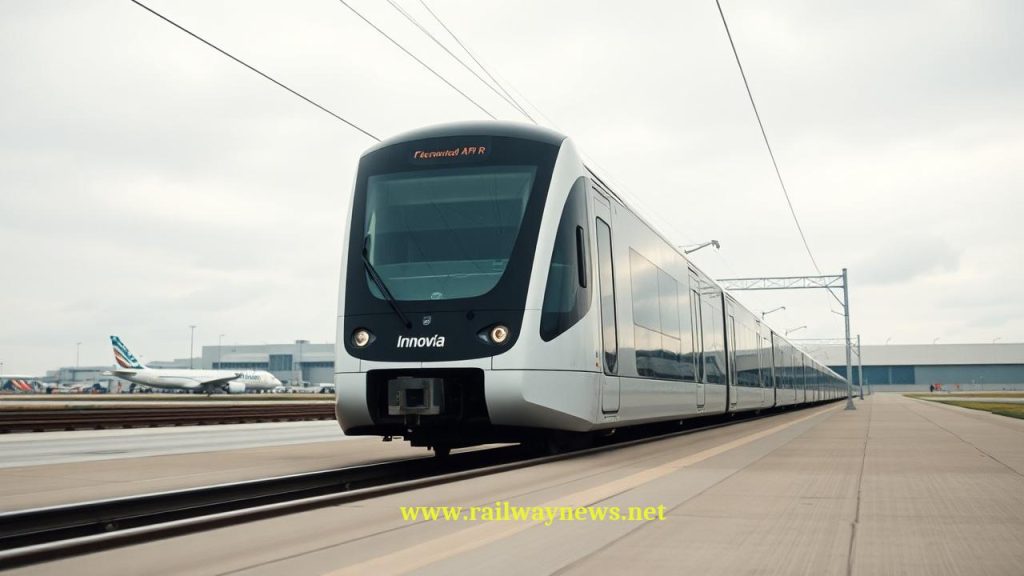
⚡ In Brief: Alstom has secured a €380 million contract to modernize and maintain the Skyway automated people mover at Houston’s George Bush Intercontinental Airport for 15 years, including the delivery of 16 new Innovia vehicles and an upgraded signalling system.
HOUSTON, USA – Alstom has been awarded a contract valued at approximately €380 million to upgrade the Skyway automated people mover (APM) at Houston’s George Bush Intercontinental Airport (IAH). The agreement includes a 15-year extension for operations and maintenance (O&M) services for the system, which serves an airport with passenger traffic exceeding 48 million travelers last year. The project is part of a wider expansion program at the airport.
What Does This Contract Cover?
The contract is a detailed modernization and long-term service agreement for the airport’s inter-terminal transit system. It encompasses the replacement of the existing vehicle fleet with 16 new Innovia APM R models, a complete overhaul of the train control system to Alstom’s Urbalis solution, and the installation of new digital communications and monitoring systems. The scope also includes replacing platform doors across all terminals and constructing a new operations control center, with Alstom continuing its O&M role with a dedicated 48-person team.
Key Contract Data
| Parameter | Value |
|---|---|
| Contract Name | IAH Skyway Modernization and Operations & Maintenance |
| Total Value | Approx. €380 million |
| Parties Involved | Alstom, Houston Airport System |
| Timeline / Completion | 15-year O&M period; modernization completion date not disclosed |
| Country / Corridor | USA / George Bush Intercontinental Airport (IAH) |
How Does This Compare to Similar Contracts?
Direct value comparisons for recent airport APM modernization contracts are not consistently published, making a like-for-like analysis difficult. However, the focus on increasing reliability from an already high 99.63% availability in 2024 highlights the airport’s strategy to mitigate internal operational risks. This internal focus on system uptime contrasts with external pressures impacting the airport’s passenger experience, such as increased security wait times caused by TSA staffing shortages during recent government shutdowns (Source: AP News). The investment in automated systems seeks to control variables within the airport’s direct authority.
Editor’s Analysis
This investment in the Skyway’s reliability and capacity is a critical move by Houston Airport to manage its significant growth in passenger volume. The upgrade to the digital Urbalis train control system aligns with a broader market trend toward automation and digitalization in rail signalling to enhance operational efficiency and safety (Source: Market Context Data). While modernizing its internal transit infrastructure, the airport’s overall passenger flow efficiency remains exposed to external factors beyond its control, such as federal staffing levels at security checkpoints, which can create bottlenecks that even a highly efficient APM system cannot bypass.
FAQ
Q: What specific technologies are being upgraded?
A: The modernization includes Alstom’s Urbalis automatic train control system, 16 new Innovia APM R vehicles, new platform doors, and upgraded digital communications and monitoring systems.
Q: Will the Skyway be shut down during the modernization?
A: The system will be taken out of service during specific maintenance and upgrade periods. During these times, the airport will provide bus transportation between terminals for passengers.
Q: How does this upgrade affect airport passengers?
A: The project aims to increase capacity and reduce service disruptions, improving passenger flow between terminals. However, passengers at IAH may still face delays at other points, such as security screening, due to unrelated issues like TSA staffing shortages.

Railway infrastructure, rolling stock and transport technologies specialist focused on global rail industry developments, high-speed rail systems, signaling technologies and freight transportation. Covering railway investments, public transport modernization, rail operations and international mobility projects across Europe, Asia and North America.
RELATED POSTS

October 1, 2026 7:09 am
United States regulators confirmed a September 30 deadline for the...

October 1, 2026 12:13 am
Illinois approved $1.5 billion annually for the Northern Illinois Transit...

October 1, 2026 6:10 am
Amtrak approved a System Expansion Committee on July 30 to...
October 1, 2026 4:10 am
DART launched two public ridership dashboards in March 2026 to...

October 1, 2026 3:12 am
Greenbrier confirmed Brian Comstock as new president and CEO effective...
October 1, 2026 5:14 am
Siemens confirmed delivery of the first new S200 train to...