
U.S. Rail Freight Reports Volume Rebound February March 2026
United States rail freight volumes confirmed annual gains in February 2026, fueled by intermodal shipments and retail forecasts.
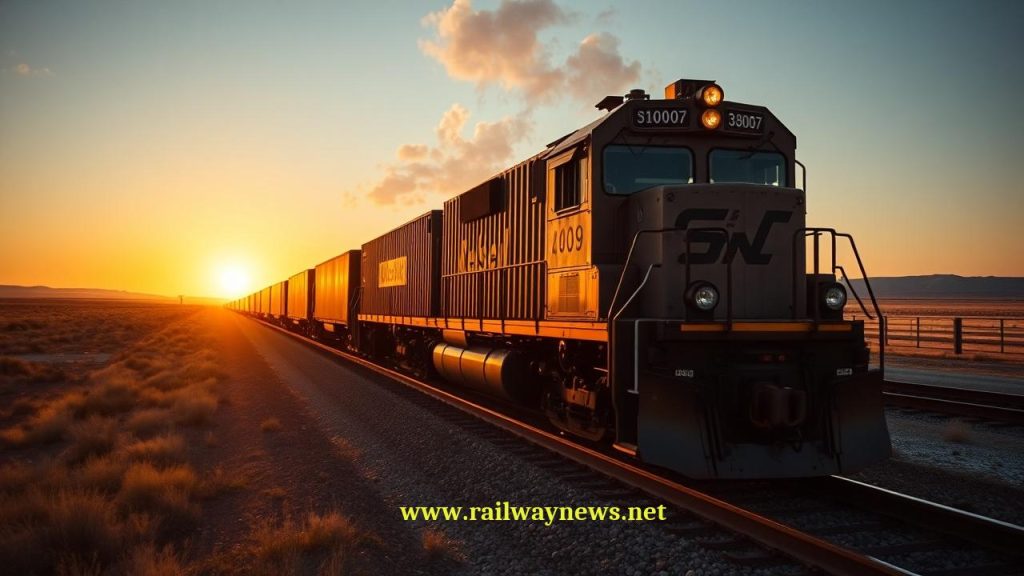
⚡ In Brief: U.S. rail freight volumes saw annual gains in February and mid-March 2026, driven by a rebound in intermodal shipments and a positive retail sales forecast, according to reports from the Intermodal Association of North America and the Association of American Railroads.
WASHINGTON D.C. – The U.S. rail freight sector is showing strong signs of recovery in early 2026, with key industry bodies reporting positive volume growth. The Intermodal Association of North America (IANA) confirmed that intermodal volumes bounced back in February, while the Association of American Railroads (AAR) reported annual gains for carload and intermodal traffic for the week ending March 14, 2026. This momentum is further supported by a positive 2026 retail sales forecast issued by the National Retail Federation (NRF), suggesting sustained demand for goods movement.
What Is the Full Scope of This Development?
The market recovery is based on several converging data points indicating broad strength. IANA’s February report highlighted annual gains in both freight shipments and associated expenditures, signaling a return to growth after a period of softer demand. This is corroborated by the AAR’s weekly data, which provides a more granular, near-real-time confirmation of the trend. Additionally, geopolitical factors, such as the ongoing conflict in Iran, are expected to tighten capacity in the trucking sector, potentially increasing intermodal’s overall market share as shippers seek more reliable and cost-effective alternatives.
Key Development Data
| Parameter | Value |
|---|---|
| Company / Organisation | Intermodal Association of North America (IANA), Association of American Railroads (AAR), National Retail Federation (NRF) |
| Key Metrics | Annual gains in intermodal volumes, freight shipments, and expenditures; Positive retail sales forecast. Specific percentage gains were not disclosed in the provided summary. |
| Parties Involved | North American Class I Railroads, Shippers, Logistics Providers |
| Timeline / Completion | February 2026 and Week Ending March 14, 2026 |
| Country / Corridor | United States |
How Does This Compare to Industry Trends?
The positive outlook in the freight sector contrasts sharply with significant financial challenges facing the U.S. passenger rail and transit sector. While freight benefits from consumer spending and supply chain dynamics, public transit projects are grappling with major funding gaps. For instance, in 2025, Seattle’s Sound Transit began exploring options to shorten, phase, or delay major light rail expansions to address a projected $34.5 billion long-term funding shortfall in its ST3 plan (Source: KOMO News, 2025). This divergence highlights the different economic models and pressures affecting the two primary segments of the rail industry.
Editor’s Analysis
The current freight rebound, amplified by geopolitical pressures on competing transport modes, reinforces intermodal’s strategic value for supply chain resilience. Shippers are increasingly looking to rail to mitigate risks associated with trucking capacity constraints and fuel price volatility. The NRF’s optimistic retail forecast provides a solid demand-side foundation, suggesting this modal shift to rail has the potential for sustained growth throughout 2026.
FAQ
Q: What specific factors are driving the intermodal volume rebound?
A: The rebound is driven by a combination of increased freight shipments and expenditures, as reported by IANA for February 2026, and a positive retail sales forecast from the NRF, which indicates strong consumer demand. Geopolitical events impacting trucking are also increasing rail’s attractiveness.
Q: How does the Iran conflict affect U.S. domestic rail?
A: The conflict can disrupt global supply chains and increase fuel prices, which disproportionately affects the trucking industry. This makes rail intermodal a more cost-effective and stable option for long-haul domestic freight, potentially driving a shift in volume from road to rail.
Q: Is this positive financial trend seen across the entire U.S. rail industry?
A: No, the positive trend is concentrated in the freight sector. In contrast, the passenger and public transit sector is facing significant financial headwinds, with agencies like Sound Transit in Seattle considering project delays and cuts to manage multi-billion-dollar budget shortfalls.

Railway infrastructure, rolling stock and transport technologies specialist focused on global rail industry developments, high-speed rail systems, signaling technologies and freight transportation. Covering railway investments, public transport modernization, rail operations and international mobility projects across Europe, Asia and North America.
RELATED POSTS

October 1, 2026 7:09 am
United States regulators confirmed a September 30 deadline for the...

October 1, 2026 12:13 am
Illinois approved $1.5 billion annually for the Northern Illinois Transit...

October 4, 2026 5:14 pm
Alstom secured a CA$4.7 billion order from VIA Rail Canada...

October 1, 2026 6:10 am
Amtrak approved a System Expansion Committee on July 30 to...

October 1, 2026 3:12 am
Greenbrier confirmed Brian Comstock as new president and CEO effective...

October 6, 2026 2:14 am
Union Pacific launched export rail shipments with Ferromex to deliver...