
Alstom Expands Portugal Train Order to €1.03 Billion for 153 Units
Alstom expanded its Portugal train order to €1.03 billion for 153 Adessia Stream units for Comboios de Portugal.
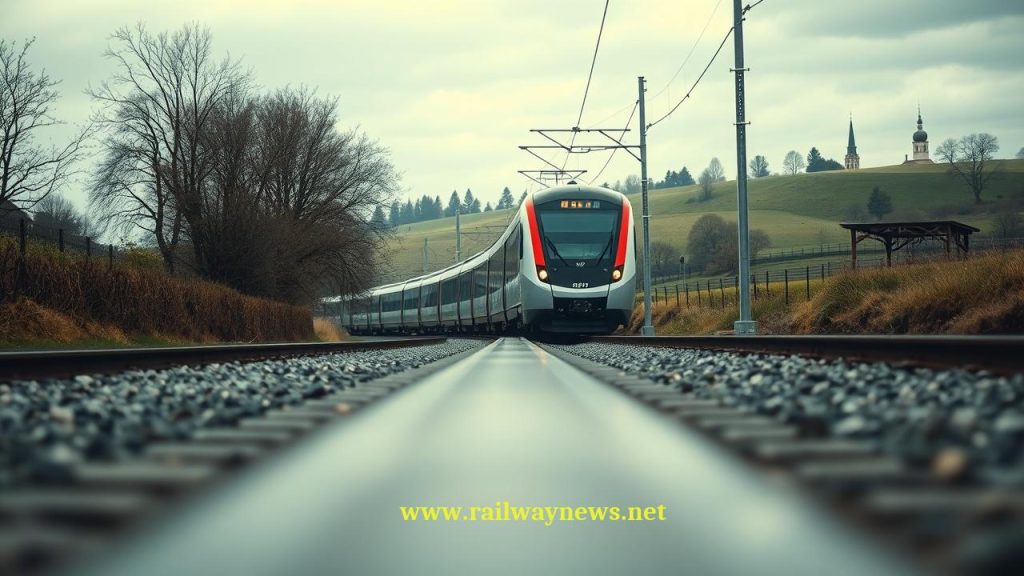
⚡ In Brief: Alstom has won an expanded €1.03 billion contract to supply 153 Adessia Stream trains to Comboios de Portugal (CP), representing the country’s largest-ever train acquisition to modernize its suburban and regional fleet and build a new factory in Matosinhos.
LISBON, PORTUGAL] – Alstom has secured a €1.03 billion contract with national operator Comboios de Portugal (CP) to supply 153 Adessia Stream trains. The agreement, an expansion of a base contract from October 2025, is the largest train acquisition in Portuguese history. The first new trains are scheduled to enter service in 2029 to renew the country’s ageing fleet.
What Does This Contract Cover?
The contract includes the design, manufacture, and supply of 153 Adessia Stream electric multiple units, with an accelerated delivery schedule. The order is split between 98 three-car commuter trains for Lisbon, Porto, and Cascais routes, and 55 units for regional services. The agreement also mandates the construction of a new 20,000 square metre manufacturing facility in Matosinhos, in partnership with DST Group, which is expected to create approximately 300 direct jobs. The specific financing structure for the procurement was not disclosed.
Key Contract Data
| Parameter | Value |
|---|---|
| Contract Name | CP Fleet Renewal & Expansion |
| Total Value | €1.03 billion |
| Parties Involved | Alstom, Comboios de Portugal (CP), DST Group |
| Timeline / Completion | First trains in service 2029; full delivery schedule not disclosed |
| Country / Corridor | Portugal / National (Lisbon, Porto, Cascais suburban & regional routes) |
How Does This Compare to Similar Contracts?
This contract’s scale is significant within the European context for regional and suburban rolling stock. For comparison, Italy’s Trenitalia signed a framework agreement with Alstom for 150 Coradia Stream trains, a similar platform, for approximately €900 million, highlighting a comparable per-unit cost structure. The €1.03 billion value is also on par with major contracts Alstom secures in other high-technology sectors, such as a recent €1.1 billion agreement to supply electric motors for hybrid aircraft engines (Source: Collins Aerospace, 2026). The creation of a dedicated local manufacturing plant is a common feature in large national procurement deals to secure local economic benefits, a strategy also seen in Alstom’s contracts in South Africa and the UK.
Editor’s Analysis
This investment marks a critical step in Portugal’s public transport modernization, directly addressing a fleet that is in some cases over 30 years old. By localizing production in Matosinhos, Alstom and the Portuguese government are embedding industrial capacity and skills development directly into the procurement, a key trend in large European public contracts. The fleet expansion also aligns with Portugal’s economic strategy, where a booming tourism sector, valued at over $21.0 billion in 2024, increases pressure on existing infrastructure to provide reliable, high-capacity transport (Source: Hotel News Resource, 2026).
FAQ
Q: What specific train models are being replaced?
A: The new Adessia Stream fleet is primarily intended to replace Comboios de Portugal’s ageing Series 2300 and 2400 electric multiple units, which have been in service since the early 1990s on the Lisbon and Porto suburban networks.
Q: What is the approximate cost per train?
A: Based on the total contract value of €1.03 billion for 153 trainsets, the average cost is approximately €6.73 million per train. This figure likely includes not only the rolling stock but also covers design, support, and costs associated with establishing the new manufacturing facility.
Q: Will this project impact Portugal’s railway signalling systems?
A: The contract announcement does not specify any accompanying upgrades to the national signalling infrastructure, though the trains will have modern digital systems. Deploying a modern fleet often acts as a catalyst for future ETCS (European Train Control System) rollouts to maximize operational efficiency.

Railway infrastructure, rolling stock and transport technologies specialist focused on global rail industry developments, high-speed rail systems, signaling technologies and freight transportation. Covering railway investments, public transport modernization, rail operations and international mobility projects across Europe, Asia and North America.
RELATED POSTS

October 1, 2026 7:09 am
United States regulators confirmed a September 30 deadline for the...
October 1, 2026 3:12 am
Greenbrier confirmed Brian Comstock as new president and CEO effective...
October 1, 2026 4:10 am
DART launched two public ridership dashboards in March 2026 to...

October 1, 2026 12:13 am
Illinois approved $1.5 billion annually for the Northern Illinois Transit...
October 1, 2026 5:14 am
Siemens confirmed delivery of the first new S200 train to...
October 1, 2026 1:10 am
Georgia Ports Authority confirmed a $181 billion economic impact for...