
FRMCS-based TACN Launches 60% Capacity Increase in Africa
A Chinese firm launched Africa’s first FRMCS-based TACN, increasing annual freight capacity by 60% to 100 million tons.
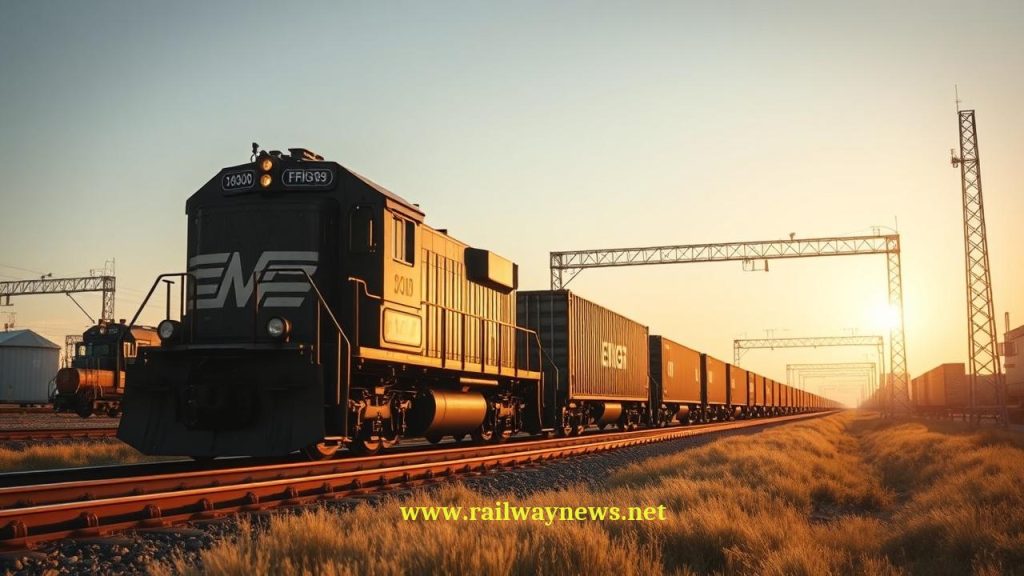
⚡ In Brief: A Chinese firm and a railway integrator have launched the first FRMCS-based Train Autonomous Control Network (TACN) on an African freight line, reportedly increasing annual transport capacity by approximately 60% to 100 million tons.
[AFRICA] – A Chinese technology company, in partnership with a railway integrator, has announced the operational launch of the first Train Autonomous Control Network (TACN). The system, based on the European Future Railway Mobile Communication System (FRMCS) standard, has been deployed on a freight railway line in Africa, increasing its annual capacity to approximately 100 million tons.
What Are the Technical Specifications?
The TACN system utilizes high-speed wireless communications, aligned with the 5G technologies underpinning the FRMCS standard, to enable advanced train control features. It incorporates multi-source fusion location, including satellite positioning, to support moving block operations and automatic train integrity monitoring. This technology allows the headway between trains to be reduced to less than three minutes, directly increasing the capacity of the railway line by an estimated 60%.
Key Technical Data
| Parameter | Value |
|---|---|
| Technology / System Name | Train Autonomous Control Network (TACN) |
| Total Value | Not disclosed |
| Parties Involved | Unnamed Chinese company, unnamed railway integrator |
| Timeline / Completion | Implemented (Operational date not specified) |
| Country / Corridor | Unspecified freight railway in Africa |
Where Does This Technology Stand in the Market?
This deployment represents a notable entry into the FRMCS market, which has been dominated by European incumbents focused on extensive testing and pilot projects. Major European suppliers like Siemens Mobility and Alstom are actively developing their FRMCS-compliant systems. For instance, Siemens is testing 5G-based applications for its Trainguard ETCS portfolio, while Alstom is a key participant in European research projects developing FRMCS components for its Atlas signalling platform. (Source: Siemens Mobility, Alstom, 2023). While these European firms are deeply involved in trials within the EU, this Chinese-led implementation in Africa marks one of the first live commercial deployments of an FRMCS-based system globally. Comparable data for freight capacity increase contracts was not publicly available at time of publication.
Editor’s Analysis
The deployment of an FRMCS-compliant system by a Chinese firm outside of Europe is a significant strategic move, demonstrating an ability to export next-generation technology before it achieves widespread adoption in its home market. This could challenge the market position of established European suppliers, particularly in developing rail networks seeking to leapfrog legacy systems. As the global rail freight sector faces a mixed outlook with potential shipper challenges, technologies that demonstrably boost asset efficiency and increase line capacity will be highly sought after. (Source: ShipMatrix, 2024).
FAQ
Q: What is FRMCS and why is it important?
A: FRMCS, the Future Railway Mobile Communication System, is the 5G-based successor to the GSM-R standard used on European railways. It provides the high-speed, reliable data communication required for advanced signalling like moving block and autonomous train operation.
Q: How does this system increase capacity?
A: The system uses “moving block” signalling, which allows trains to run safely at closer intervals—less than three minutes apart—than traditional fixed-block systems. This allows more trains to operate on the same line within the same timeframe, directly increasing total transport capacity.
Q: Has this TACN system been certified for use in Europe?
A: The announcement does not state whether this specific system has received certification for use on the European Union’s rail network. The initial implementation and performance claims are based on its deployment on a freight line in Africa.

Railway infrastructure, rolling stock and transport technologies specialist focused on global rail industry developments, high-speed rail systems, signaling technologies and freight transportation. Covering railway investments, public transport modernization, rail operations and international mobility projects across Europe, Asia and North America.
RELATED POSTS
September 6, 2026 5:19 am
Hitachi delivered Taiwan's first N700ST high-speed train from Japan in...

September 5, 2026 4:19 pm
CPK launched formal tender talks with four consortia to design...

September 5, 2026 7:14 pm
HS2 Ltd signed renegotiated civils contracts with EKFB and Align...
September 6, 2026 6:17 am
Hungary ordered a national ban on most freight trains from...
September 6, 2026 1:17 am
Hitachi Toshiba Supreme Consortium confirmed the first of 12 N700ST...
September 6, 2026 8:17 am
DB InfraGO reopened the Nuremberg-Regensburg line in Bavaria on 31...