
Huawei CASCO Launches 60% Capacity Increase in Africa
Huawei CASCO launched an FRMCS-based train control system, increasing African freight corridor capacity by 60% November 11, 2025.
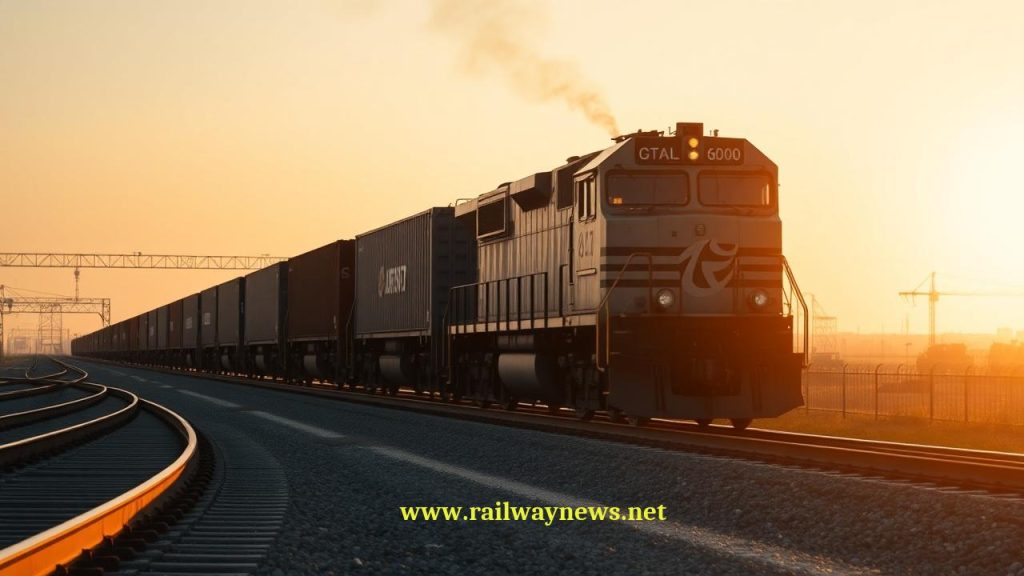
⚡ In Brief: Huawei and CASCO’s new FRMCS-based train control system, deployed on a freight corridor in Africa, has increased transport capacity by 60% by enabling moving block operations with headways of under 3 minutes.
[AFRICA] – Technology provider Huawei and signalling specialist CASCO have launched and deployed a new train control system based on the Future Railway Mobile Communication System (FRMCS) and a Train-centric Autonomous Control Network (TACN). The system is now operational on an undisclosed African freight railway, where it has increased annual transport capacity to 100 million tons. The system was officially commissioned on November 11, 2025.
What Are the Technical Specifications?
The solution combines a high-bandwidth communication network with an autonomous train control system to enable moving block operations. The FRMCS component provides train-to-ground communications with 20 Mbps of bandwidth, low latency, and 99.999% reliability through dual-network redundancy. The TACN component uses multi-source fusion location, incorporating satellite positioning and autonomous train integrity monitoring, to manage train movements without extensive trackside equipment.
Key Technical Data
| Parameter | Value |
|---|---|
| Technology / System Name | FRMCS-based Train-centric Autonomous Control Network (TACN) |
| Total Value | Not disclosed |
| Parties Involved | Huawei, CASCO, unnamed African railway customer |
| Timeline / Completion | Commissioned November 11, 2025 |
| Country / Corridor | An unnamed freight corridor in Africa |
Where Does This Technology Stand in the Market?
The Huawei/CASCO TACN system enters a market dominated by established signalling standards, primarily competing with ETCS Level 3 for mainline applications and CBTC for high-density urban rail. ETCS Level 3, the European standard for moving block, also relies on radio communication but its widespread deployment has been slow due to a focus on achieving cross-border interoperability. In contrast, the TACN solution appears to be a vertically integrated system for a dedicated customer, potentially allowing for faster implementation on specific corridors.
While TACN’s sub-3-minute headways are a major improvement for freight, they are not as short as those achieved by mature Communications-Based Train Control (CBTC) systems in the metro sector, which regularly operate at headways of 90 seconds or less. In the North American market, competitors like Wabtec are focused on evolving Positive Train Control (PTC) systems and deploying scalable automation strategies to increase capacity on existing freight infrastructure. Comparable data for similar contract awards was not publicly available at time of publication.
Editor’s Analysis
This deployment represents a significant proof of concept for 5G-based (FRMCS) moving block technology on a heavy-haul freight line, a sector where capacity is a critical economic driver. The launch aligns with projections of strong growth in the global railway signalling market, which is driven by the need for modernization to improve efficiency and safety (Source: Market Context Analysis, 2026). By successfully implementing this system in Africa, Huawei and CASCO may establish a foothold in developing markets, challenging the traditional dominance of European suppliers by offering a solution that minimizes costly trackside infrastructure.
FAQ
Q: What is “moving block” signalling?
A: Moving block is a train control system that continuously calculates a safe “braking distance” zone around each moving train. This allows trains to run much closer together than in traditional fixed-block systems, which use track circuits, thereby increasing the total capacity of a railway line.
Q: How does this differ from ETCS?
A: Both TACN and ETCS Level 3 are moving block systems, but ETCS is a European-wide standard focused on interoperability between different national networks. The TACN system, as described, is a proprietary solution from Huawei and CASCO deployed for a specific customer, which may allow for a more tailored and rapid implementation.
Q: Which railway in Africa is using this system?
A: The primary source documentation has not disclosed the name of the specific railway operator or the country where the system has been deployed, referring only to “a railway customer in Africa.”

Railway infrastructure, rolling stock and transport technologies specialist focused on global rail industry developments, high-speed rail systems, signaling technologies and freight transportation. Covering railway investments, public transport modernization, rail operations and international mobility projects across Europe, Asia and North America.
RELATED POSTS

October 8, 2026 1:15 pm
Alstom secured a €1bn contract to build 13 automated trains,...

October 1, 2026 7:09 am
United States regulators confirmed a September 30 deadline for the...

October 4, 2026 5:14 pm
Alstom secured a CA$4.7 billion order from VIA Rail Canada...

October 1, 2026 12:13 am
Illinois approved $1.5 billion annually for the Northern Illinois Transit...

October 5, 2026 6:12 pm
AECOM and Jacobs secured a contract in September 2026 to...

October 4, 2026 11:08 pm
Sound Transit confirmed the September 30 opening of Seattle Pinehurst...