
Deutsche Bahn Upgrades S-Bahn Management Berlin Munich Stuttgart
Deutsche Bahn overhauled S-Bahn management teams for 2.5 million daily passengers in Berlin, Munich, and Stuttgart under a restructuring plan.
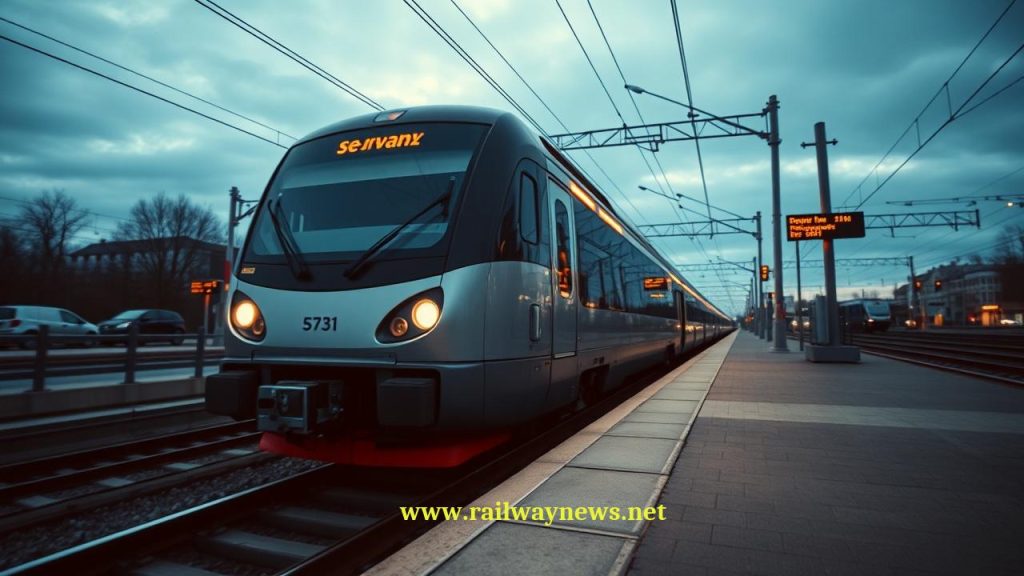
⚡ In Brief: Deutsche Bahn has replaced the management teams at its S-Bahn subsidiaries in Berlin, Munich, and Stuttgart, affecting services for 2.5 million daily passengers, as part of a new corporate restructuring plan under CEO Evelyn Palla.
BERLIN, GERMANY – Deutsche Bahn (DB) is overhauling the leadership of its S-Bahn networks in Berlin, Munich, and Stuttgart, which collectively transport around two and a half million passengers daily. The appointments are part of a new restructuring plan initiated by DB Regio CEO Evelyn Palla. The new CEO for S-Bahn Berlin, Heiko Büttner, will officially take up his post on April 1, 2026.
What Is the Full Scope of This Development?
The leadership change affects three of Germany’s largest urban rail networks and key regional management positions within the DB Regio Schiene division. Heiko Büttner will move from S-Bahn Munich to become CEO of S-Bahn Berlin; Matthias Glaub will transfer from Stuttgart to lead S-Bahn Munich; and Nina Hutwagner will become the new head of S-Bahn Stuttgart. Additionally, Heike Junge-Latz and Markus Kaupper will take over regional management for Baden-Württemberg and North Rhine-Westphalia, respectively. This corporate reshuffle aligns with a broader strategy to streamline operations and improve efficiency across DB subsidiaries to ensure long-term competitiveness.
Key Development Data
| Parameter | Value |
|---|---|
| Company / Organisation | Deutsche Bahn (DB Regio / S-Bahn) |
| Total Value | Not applicable |
| Parties Involved | S-Bahn Berlin, S-Bahn Munich, S-Bahn Stuttgart, DB Regio Schiene |
| Timeline / Completion | Key appointment effective April 1, 2026; other changes are ongoing |
| Country / Corridor | Germany (Berlin, Munich, Stuttgart, Baden-Württemberg, North Rhine-Westphalia) |
How Does This Compare to Industry Trends?
Deutsche Bahn’s strategy of internal leadership rotation to drive modernization contrasts with the approach of other national operators like the UK’s Network Rail. To enhance its network, Network Rail recently awarded a major consultancy contract to Amey for the Leeds-Sheffield corridor as part of its Development and Design Partnership Framework (DDPF), relying on external partners to deliver key projects (Source: Rail UK, 2024). DB’s focus on appointing leaders with specific experience in digital systems, such as Nina Hutwagner’s expertise in ETCS for the Digital Stuttgart Node, is a direct response to a rapidly growing global railway signalling market. This market is projected to expand at a CAGR of 5.46%, reaching USD 89.43 billion by 2031, driven by the push for autonomous and digital train operations (Source: Mordor Intelligence, 2024).
Editor’s Analysis
This is more than a standard management shuffle; it is a strategic placement of technical and operational specialists to accelerate Deutsche Bahn’s digital transformation. By appointing leaders with direct experience in ETCS and large-scale traffic management, DB is signalling its intent to prioritize the rollout of digital train control systems across its most vital metropolitan networks. This in-house expertise-led approach aims to equip DB to compete in a global rail market that is increasingly defined by technological capability and operational efficiency.
FAQ
Q: Why are these leadership changes happening now?
A: The changes are part of a new, broader restructuring plan initiated by DB Regio CEO Evelyn Palla. The plan aims to streamline operations and improve efficiency across Deutsche Bahn’s various subsidiaries.
Q: What are the key technological challenges these new leaders face?
A: The new leaders are tasked with overseeing critical milestones like the introduction of new vehicles and the implementation of digital train operations. A specific priority is the transition to the European Train Control System (ETCS), particularly for the Digital Stuttgart Node (DKS).
Q: What happens to the outgoing management?
A: The primary source article does not specify the future roles or departure details for the replaced management team members. The focus is solely on the incoming appointees and their qualifications for the new roles.

Railway infrastructure, rolling stock and transport technologies specialist focused on global rail industry developments, high-speed rail systems, signaling technologies and freight transportation. Covering railway investments, public transport modernization, rail operations and international mobility projects across Europe, Asia and North America.
RELATED POSTS

September 6, 2026 5:19 am
Hitachi delivered Taiwan's first N700ST high-speed train from Japan in...

September 5, 2026 4:19 pm
CPK launched formal tender talks with four consortia to design...
September 6, 2026 6:17 am
Hungary ordered a national ban on most freight trains from...
September 6, 2026 1:17 am
Hitachi Toshiba Supreme Consortium confirmed the first of 12 N700ST...
September 5, 2026 5:17 pm
Chiltern Railways completed the Banbury Station ticket office and main...
September 5, 2026 6:17 pm
Universal Signalling won a deal to install its U-Cross system...