
Slovak Railways Completes EUR 318M Zilina Junction Upgrade
Slovak Railways completed a EUR 318 million modernization of the Zilina railway junction, upgrading 16.3 km of track.
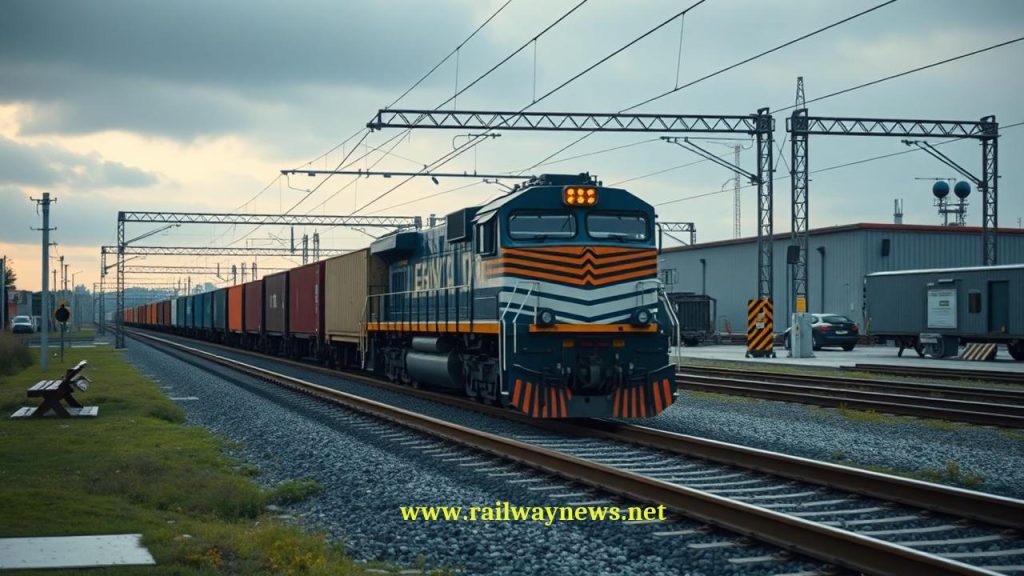
⚡ In Brief: Slovak Railways has completed the EUR 318 million modernization of the Zilina railway junction, upgrading 16.3 km of track and installing ETCS Level 2 signalling as part of a strategic upgrade on the EU’s Baltic-Adriatic TEN-T corridor.
ŽILINA, SLOVAKIA – The railway infrastructure portion of the Zilina junction modernization project has been completed, according to Slovak Railways (ŽSR). Valued at EUR 318 million, the project involved upgrading 14 km of east-west and 2.3 km of north-south lines and was co-financed by the EU’s Connecting Europe Facility (CEF). The work was executed by the Združenie pod Dubňom consortium, with OHLA ŽS serving as a key subcontractor.
What Is the Full Scope of This Project?
The project involved a detailed modernization of track, signalling, and station facilities to meet European interoperability standards. Key technical upgrades include the installation of the ETCS Level 2 signalling system and the transition to a 25 kV, 50 Hz AC traction power system. For passengers, the project delivered six renovated platforms with barrier-free access provided by new underground passages equipped with escalators and elevators. In addition to the main station, the project also covered the modernization of four other stations, including the local marshalling yard. While the rail work is finished, associated road infrastructure, including a new overpass to reduce city traffic congestion, is scheduled for completion by the end of 2026.
Key Project Data
| Parameter | Value |
|---|---|
| Project / Contract Name | Modernization of the Zilina Railway Junction |
| Total Value | EUR 318 million |
| Parties Involved | Slovak Railways (ŽSR), Združenie pod Dubňom (contractor), OHLA ŽS (subcontractor), Connecting Europe Facility (funder) |
| Timeline / Completion | Railway work complete; associated road overpass due by end of 2026. Project start date not disclosed. |
| Country / Corridor | Slovakia / Baltic-Adriatic TEN-T Corridor |
How Does This Compare to Similar Projects?
The EUR 318 million Zilina project is a significant regional investment, though smaller in scale than the detailed reconstruction of the Brno railway junction in the neighboring Czech Republic. The Brno project, a central node on the Czech network, involves a complete rebuilding of the main station with an estimated cost exceeding EUR 1.7 billion (CZK 43 billion), demonstrating the higher capital cost for hub modernizations in larger metropolitan areas. (Source: Správa železnic, 2023). Both projects, however, rely heavily on EU co-financing via programs like CEF, highlighting a consistent strategy across Central Europe to use EU funds for upgrading critical infrastructure along the TEN-T corridors.
Editor’s Analysis
The installation of ETCS Level 2 at Zilina is a critical step in achieving the network-wide interoperability mandated by the EU, moving beyond a simple infrastructure refresh. This investment aligns with the significant growth projected for the global railway signalling market, which is expected to expand to USD 89.43 billion by 2031, driven by such digital modernization efforts. (Source: Mordor Intelligence, 2024). This upgrade solidifies Zilina’s role as a strategic freight and passenger hub on the Baltic-Adriatic corridor, improving transit efficiency between Poland, the Czech Republic, and Austria.
FAQ
Q: What specific technical standards does the new Zilina junction meet?
A: The modernized infrastructure complies with the European Agreement on Main International Railway Lines (AGC), the European Agreement on Important International Combined Transport Lines (AGTC), and the EU’s Technical Specifications for Interoperability (TSI). It also involved a transition to 25 kV, 50 Hz AC traction power.
Q: How was the EUR 318 million project funded?
A: The project was co-financed by the Slovak government and the European Union’s Connecting Europe Facility (CEF). The specific percentage of CEF co-financing against the total contract value was not disclosed.
Q: What is the impact on passengers and regional connectivity?
A: Passengers now have barrier-free access to six renovated platforms via new underground passages with elevators and escalators. The project also improves connections for travelers from the Kysuce region and aims to ease road traffic congestion with a new overpass scheduled for 2026.

Railway infrastructure, rolling stock and transport technologies specialist focused on global rail industry developments, high-speed rail systems, signaling technologies and freight transportation. Covering railway investments, public transport modernization, rail operations and international mobility projects across Europe, Asia and North America.
RELATED POSTS
July 4, 2026 11:41 pm
Eurostar cancelled all direct London–Amsterdam trains through July 2 after...

July 1, 2026 1:37 pm
NRHS awarded $187K to 34 U.S. rail heritage projects in...

July 1, 2026 1:42 am
UK government launched a £30bn Better Connected plan, allocating £15.6bn...

July 1, 2026 6:37 am
Amtrak launched a small-plate dining program for Acela First Class...

July 4, 2026 11:02 pm
Eurostar suspends all direct London–Dutch trains through 2 July after...

July 1, 2026 8:49 am
The Short Line Training Center launched FRA-funded online DSLE and...