
LTG Link Tests 15 Battery Electric FLIRT Trains in Lithuania
LTG Link commenced testing 15 Stadler FLIRT electric and battery-electric trains from a €226.5 million contract in Lithuania.
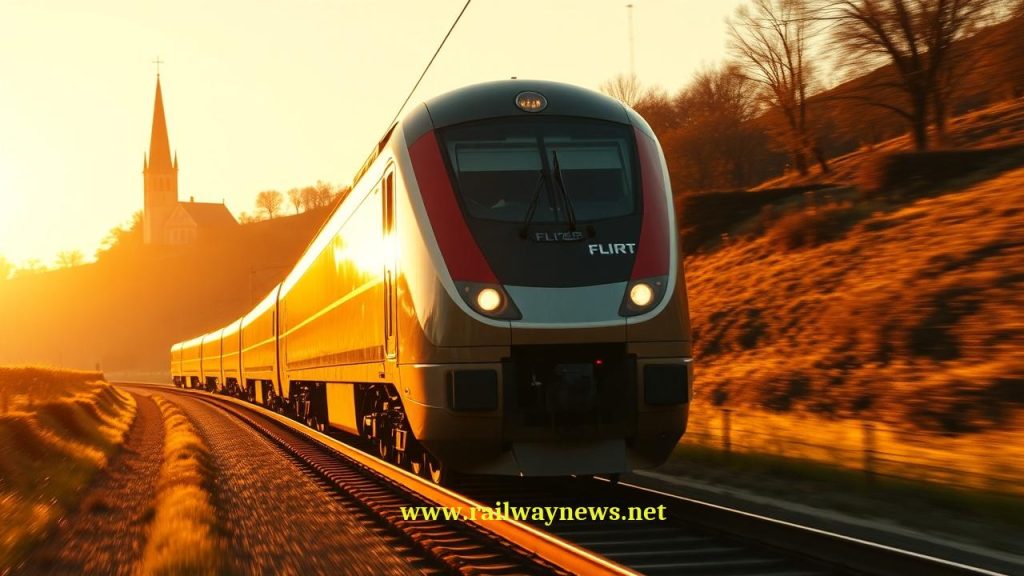
⚡ In Brief: Lithuanian operator LTG Link is testing 15 new Stadler electric and battery-powered FLIRT trains from a €226.5 million contract, with the first six units undergoing dynamic trials at speeds of 160 km/h ahead of a planned H2 2026 service launch.
VILNIUS, LITHUANIA – LTG Link has commenced static and dynamic testing of new electric (EMU) and battery-electric (BEMU) trains manufactured by Stadler Rail. Six of the 15 units from a €226.5 million contract are now in Lithuania for evaluation, with commercial service scheduled for the second half of 2026. The EMU units have already achieved test speeds of 160 km/h on public infrastructure.
What Does This Contract Cover?
The agreement, signed in 2023, covers the supply of 15 Stadler FLIRT multiple units, including both standard electric and battery-electric variants. The scope includes initial testing at Stadler’s facility in Siedlce, Poland, followed by dynamic trials in Lithuania to evaluate performance, braking, energy transfer, and electromagnetic compatibility. The trains feature 128 seats, coffee and snack vending machines, and facilities for passengers with reduced mobility.
Key Contract Data
| Parameter | Value |
|---|---|
| Contract Name | LTG Link FLIRT EMU/BEMU Procurement |
| Total Value | EUR 226.5 million |
| Parties Involved | LTG Link (operator), Stadler Rail (manufacturer) |
| Timeline / Completion | Commercial service entry in H2 2026 |
| Country / Corridor | Lithuania |
How Does This Compare to Similar Contracts?
The LTG Link contract, valued at approximately €15.1 million per train, is a specialized procurement focused on introducing BEMU technology. In contrast, Alstom recently secured a much larger contract in March 2026 to supply 153 trains to Comboios de Portugal for €1.03 billion, averaging around €6.73 million per unit (Source: Alstom SA, 2026). The higher per-unit cost for the Lithuanian order likely reflects the inclusion of advanced battery systems and the smaller production volume, which limits economies of scale. The specific breakdown of EMU vs. BEMU units in the full 15-train order was not disclosed.
Editor’s Analysis
This BEMU investment aligns with a broader European trend of deploying bi-mode and battery trains to decarbonize non-electrified secondary lines without the high capital cost of full electrification. The manufacturing of these units at Stadler’s Siedlce plant is strategically significant, placing the company at the heart of a region undergoing massive rail investment, exemplified by Poland’s Port Polska high-speed rail initiative (Source: FlightGlobal, 2026). This positions Stadler to capitalize on growing regional demand for modern rolling stock.
FAQ
Q: What is the maximum speed of the new Lithuanian trains?
A: The electric (EMU) versions are already being tested at speeds of 160 km/h. The operational speed for the battery-powered (BEMU) units in autonomous mode has not been specified by the operator.
Q: What is the range of the battery-powered trains?
A: The specific autonomous range on a single charge has not been disclosed by LTG Link or Stadler. However, a charging station is planned for the Varėna route to support operations on longer non-electrified sections.
Q: How many of the 15 trains will be battery-powered?
A: The exact split between standard electric and battery-electric units within the total 15-train order has not been officially confirmed. So far, three EMUs and three BEMUs have been delivered for the testing phase.

Railway infrastructure, rolling stock and transport technologies specialist focused on global rail industry developments, high-speed rail systems, signaling technologies and freight transportation. Covering railway investments, public transport modernization, rail operations and international mobility projects across Europe, Asia and North America.
RELATED POSTS

October 1, 2026 7:09 am
United States regulators confirmed a September 30 deadline for the...

October 1, 2026 12:13 am
Illinois approved $1.5 billion annually for the Northern Illinois Transit...

October 1, 2026 6:10 am
Amtrak approved a System Expansion Committee on July 30 to...

October 4, 2026 5:14 pm
Alstom secured a CA$4.7 billion order from VIA Rail Canada...
October 1, 2026 4:10 am
DART launched two public ridership dashboards in March 2026 to...
October 1, 2026 5:14 am
Siemens confirmed delivery of the first new S200 train to...