
Hitachi Rail completes SEPTA’s Media-Sharon Hill LRT SelTrac CBTC
Hitachi Rail completed its 12-mile SelTrac CBTC digital signaling system on SEPTA’s Media–Sharon Hill light-rail line.
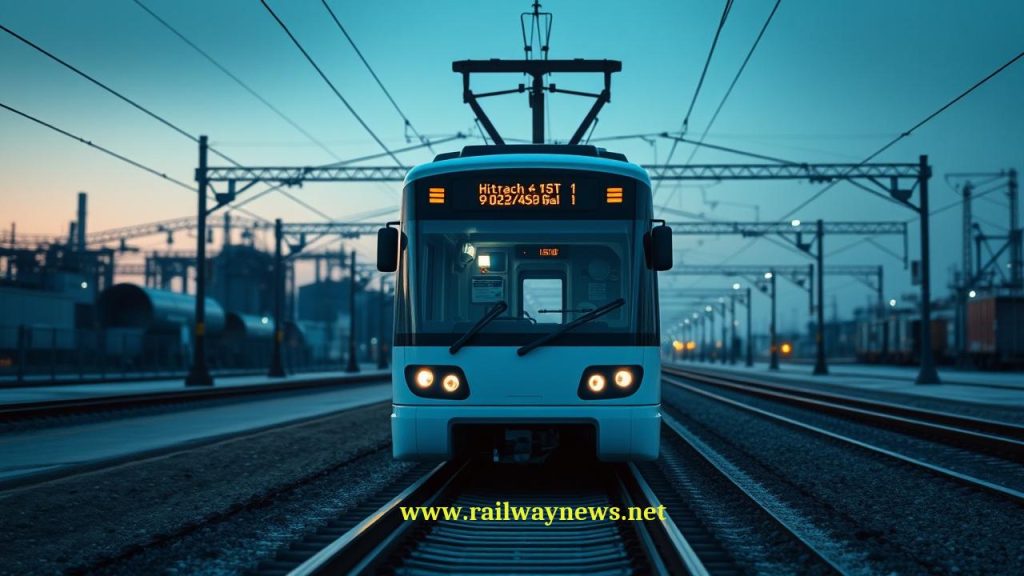
⚡ In Brief: Hitachi Rail has deployed its SelTrac™ CBTC digital signaling system on the Southeastern Pennsylvania Transportation Authority’s 12-mile Media–Sharon Hill light-rail line near Philadelphia, modernizing one of the last remaining interurban trolley systems in the United States.
PHILADELPHIA, USA – Hitachi Rail’s communications-based train control (CBTC) digital signaling system is now in full revenue service on the Southeastern Pennsylvania Transportation Authority (SEPTA) network. The upgrade covers nearly 12 miles of the Media–Sharon Hill Line, a light-rail trolley service connecting the 69th Street Transportation Center with suburban communities. The new system replaces aging signal infrastructure on the trolley-gauge, overhead-electrified line.
What Are the Technical Specifications?
The core of the project is the implementation of Hitachi Rail’s SelTrac™ CBTC technology, a moving block signaling system designed to increase line capacity and improve operational safety. While the primary source focuses on the signaling upgrade, a parallel industry trend sees freight operators like CSX also undertaking major digital modernizations, using platforms from Infosys and Microsoft to consolidate fragmented legacy data systems into unified cloud environments. The SEPTA project specifically targets the replacement of legacy wayside signals with modern, in-cab digital controls for its trolley fleet.
Key Technical Data
| Parameter | Value |
|---|---|
| Technology / System Name | Hitachi Rail SelTrac™ CBTC |
| Total Value | Not disclosed |
| Parties Involved | Hitachi Rail, Southeastern Pennsylvania Transportation Authority (SEPTA) |
| Timeline / Completion | Now in revenue service |
| Country / Corridor | USA / Media–Sharon Hill Line |
Where Does This Technology Stand in the Market?
Hitachi’s SelTrac™ is a globally recognized CBTC platform, competing directly with systems from other major rail technology suppliers. Its primary competitors include Siemens Mobility’s Trainguard MT, which is deployed on high-density metro lines such as London’s Victoria Line and Paris’s Line 14, and Alstom’s Urbalis 400, used on networks in Singapore and Amsterdam. While all three systems provide moving block capabilities to reduce train headways, SelTrac has a long history, with early versions deployed on systems like the Vancouver SkyTrain and parts of the London Underground. The SEPTA deployment is notable for its application to a historic light-rail interurban line rather than a heavy metro system.
Editor’s Analysis
This modernization by SEPTA is indicative of a critical trend among North American transit authorities: addressing decades of deferred maintenance on legacy infrastructure with targeted digital upgrades. The recent service disruption on SEPTA’s Market-Frankford Line caused by a transformer fire underscores the vulnerability of these aging systems and the operational imperative for such investments. This project aligns with a global expansion in the rail signaling market, where major suppliers are increasing investment to meet demand for enhanced safety and efficiency. (Source: Business Standard, 2024).
FAQ
Q: What is CBTC and why is it important for SEPTA?
A: Communications-Based Train Control is a digital signaling system that uses real-time data to track train positions, allowing for shorter, safer distances between vehicles. For SEPTA, it replaces a decades-old system on the 12-mile Media–Sharon Hill Line, aiming to improve service reliability and capacity.
Q: What was the cost of the Hitachi signaling project?
A: The total contract value for this specific SEPTA modernization project was not publicly disclosed by Hitachi Rail or the transit authority.
Q: Will this upgrade prevent incidents like the recent transformer fire on another SEPTA line?
A: The CBTC system modernizes train control and trackside signaling, which is separate from the electrical power distribution network. While this project does not directly replace power infrastructure like transformers, it is part of a wider agency effort to improve the overall resilience of its network.

Railway infrastructure, rolling stock and transport technologies specialist focused on global rail industry developments, high-speed rail systems, signaling technologies and freight transportation. Covering railway investments, public transport modernization, rail operations and international mobility projects across Europe, Asia and North America.
RELATED POSTS
September 6, 2026 5:19 am
Hitachi delivered Taiwan's first N700ST high-speed train from Japan in...

September 5, 2026 4:19 pm
CPK launched formal tender talks with four consortia to design...
September 6, 2026 1:17 am
Hitachi Toshiba Supreme Consortium confirmed the first of 12 N700ST...
September 6, 2026 6:17 am
Hungary ordered a national ban on most freight trains from...

September 6, 2026 4:12 am
Alstom delivered the first of 100 new G Class trams...
September 5, 2026 7:14 pm
HS2 Ltd signed renegotiated civils contracts with EKFB and Align...