
EU Confirms 50% ERTMS Target Miss on TEN-T Network
The European Union confirmed its ERTMS deployment on the TEN-T core network will miss the 2030 target by 50%.
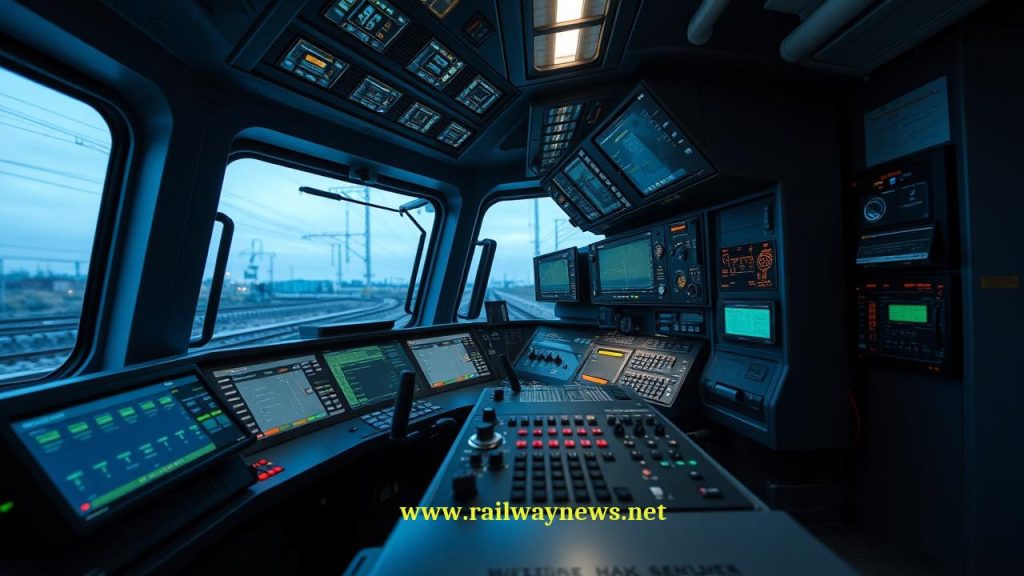
⚡ In Brief: The European Union’s third ERTMS work plan reveals that deployment is critically behind schedule, with only 17% of the TEN-T core network equipped, projecting that the 2030 target will be missed by approximately 50% based on current member state planning.
BRUSSELS, BELGIUM – The European Coordinator for ERTMS has released its third work plan, confirming that the deployment of the standardised European Rail Traffic Management System remains uneven and significantly slower than mandated. As of 2024, only 10,600 km of the TEN-T core network (17%) and 8,730 vehicles (19% of the fleet) are equipped, jeopardising the EU’s rail modernisation and interoperability goals.
What Does This Regulation Cover?
The plan assesses progress against the TEN-T Regulation, which mandates the deployment of ERTMS to create a single, interoperable railway area across Europe. The regulation requires ERTMS to be installed on the TEN-T core network by 2030 and the wider detailed network by 2050, aiming to phase out over 20 national “Class B” signalling systems. The report’s key actions focus on accelerating this transition, although specific details of the proposed nine-point plan were not fully disclosed in the initial summary. It should be noted that references to ‘SMR Valleys’ or a ‘Regulatory Coalition’ for Small Modular Reactors in connection with this plan are incorrect, as they pertain to a separate EU nuclear energy strategy (Source: Nucnet, 2026).
Key Regulatory Data
| Parameter | Value |
|---|---|
| Regulation / Policy Name | European ERTMS Coordinator’s Third Work Plan |
| Total Value | Not applicable |
| Parties Involved | European ERTMS Coordinator, EU Member States, Infrastructure Managers, Railway Undertakings |
| Timeline / Completion | Core Network Target: 2030; Detailed Network Target: 2050 |
| Country / Corridor | European Union (Trans-European Transport Network) |
How Does This Compare to Global Standards?
The ERTMS initiative is unique in its multinational scope, contrasting sharply with national systems like North America’s Positive Train Control (PTC). While PTC was federally mandated primarily as a safety overlay to prevent collisions and overspeed incidents, its implementation was a national-level challenge. ERTMS aims for full operational interoperability across more than two dozen countries with legacy systems, making its political, technical, and financial complexity an order of magnitude greater than any other advanced train control project globally. The report’s findings of a 50% shortfall against the 2030 target highlight the immense difficulty of coordinating sovereign infrastructure and private rolling stock investment on a continental scale.
Editor’s Analysis
This report confirms that ERTMS deployment is trapped in a classic synchronisation problem: infrastructure managers and fleet owners are hesitant to commit massive capital investments without the other moving in tandem. The projected 50% failure to meet the 2030 core network target is a direct consequence of this fragmented, slow-moving investment cycle. While the global railway signalling market is expanding, with major suppliers like ABB and Alstom scaling up manufacturing (Source: Business Standard, 2026), industrial capacity is clearly not the primary bottleneck. The core issue remains a lack of binding, synchronised, and adequately funded national deployment plans that align trackside and onboard upgrades, a challenge this new work plan aims to address but has yet to solve.
FAQ
Q: What are “Class B” systems?
A: “Class B” is the official term for the 20+ different legacy national train control and signalling systems across Europe, such as KVB in France or PZB in Germany. The core purpose of ERTMS is to replace these incompatible systems with a single, interoperable standard.
Q: Why is ERTMS deployment so far behind schedule?
A: The delays are caused by the high cost and complexity of upgrading both trackside infrastructure and thousands of locomotives, coupled with the difficulty of coordinating timelines between national agencies and private rail operators. Securing consistent, long-term funding remains a significant barrier for many Member States.
Q: What is the financial scale of the required vehicle upgrades?
A: The cost is substantial, with large-scale fleet renewals often exceeding a billion euros. For context, Alstom’s recent contract to supply 153 new trains in Portugal was valued at €1.03 billion, illustrating the level of investment required by operators to acquire ERTMS-compatible rolling stock (Source: GlobeNewswire, 2026).

Railway infrastructure, rolling stock and transport technologies specialist focused on global rail industry developments, high-speed rail systems, signaling technologies and freight transportation. Covering railway investments, public transport modernization, rail operations and international mobility projects across Europe, Asia and North America.
RELATED POSTS

October 1, 2026 7:09 am
United States regulators confirmed a September 30 deadline for the...

October 8, 2026 1:15 pm
Alstom secured a €1bn contract to build 13 automated trains,...

October 4, 2026 5:14 pm
Alstom secured a CA$4.7 billion order from VIA Rail Canada...

October 1, 2026 12:13 am
Illinois approved $1.5 billion annually for the Northern Illinois Transit...
October 6, 2026 2:14 am
Union Pacific launched export rail shipments with Ferromex to deliver...

October 1, 2026 6:10 am
Amtrak approved a System Expansion Committee on July 30 to...