
Network Rail Cuts 58% Dangerous Driving Investigations Hilton Crossing
Network Rail reduced dangerous driving investigations by 58% at Hilton crossing in Derbyshire with CCTV.
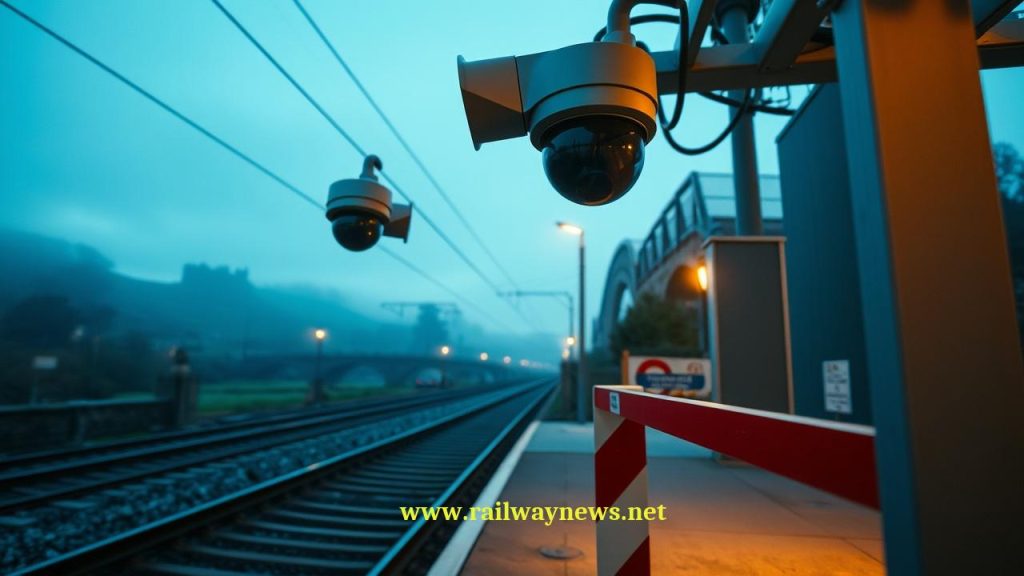
⚡ In Brief: Network Rail’s installation of CCTV at the Hilton level crossing in Derbyshire, UK, has reduced dangerous driving investigations by 58% in 2025, though emerging risks from autonomous vehicle systems present new safety challenges for rail infrastructure.
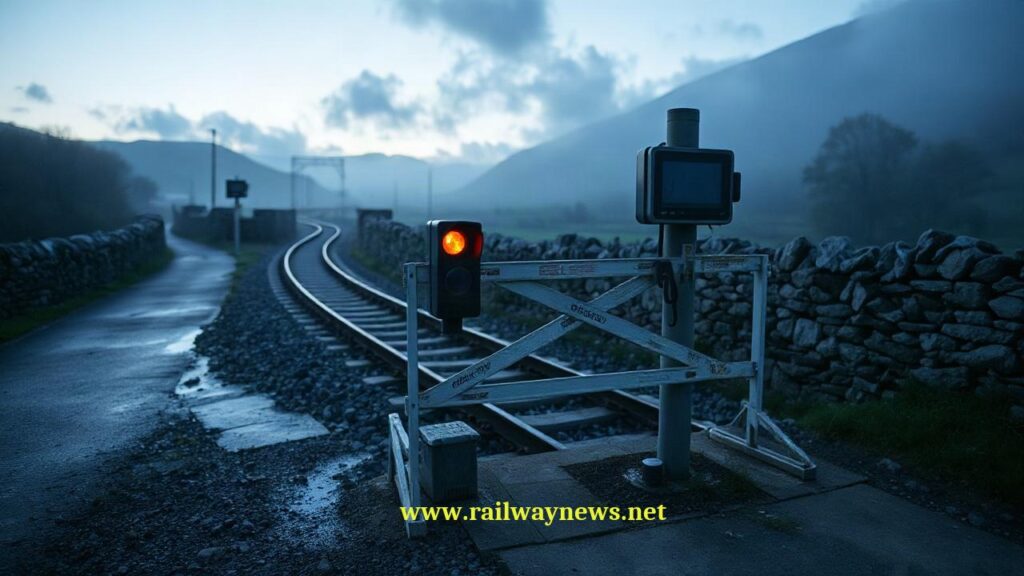
DERBYSHIRE, UK – Network Rail has confirmed that the installation of CCTV at the Hilton level crossing on the A5132 has led to a significant decrease in safety violations. Following the late 2024 deployment, British Transport Police investigations fell by 58% from 26 in 2024 to 11 in 2025. Total enforcement actions were also nearly halved, from 17 down to nine over the same period.
What Are the Technical Specifications?
The intervention involved the installation of a dedicated CCTV surveillance system designed to deter and record instances of unsafe driving. While specific technical details of the camera hardware and software were not disclosed, its primary function is to provide evidence for British Transport Police enforcement against motorists who fail to obey red light signals. The system supports actions including fixed penalty notices and referrals to safety awareness courses.
Key Technical Data
| Parameter | Value |
|---|---|
| Technology / System Name | Level Crossing CCTV Enforcement System |
| Total Value | Not disclosed |
| Parties Involved | Network Rail, British Transport Police (BTP) |
| Timeline / Completion | Installed late 2024; data comparison 2024 vs. 2025 |
| Country / Corridor | United Kingdom / Derbyshire |
Where Does This Technology Stand in the Market?
The use of CCTV for level crossing enforcement is a proven method for mitigating risks associated with deliberate human error or violation. However, the technology’s effectiveness is limited to influencing human driver behaviour and does not address new risks posed by automated vehicle systems. Recent incidents, such as a Tesla Model 3 operating in Full Self-Driving mode crashing through a lowered crossing barrier it failed to detect, highlight a growing category of risk that surveillance alone cannot prevent. This demonstrates a divergence in safety challenges: deterring human violations versus engineering fail-safes for autonomous system failures.
Editor’s Analysis
The success at Hilton demonstrates the high return on investment available from targeted, low-cost safety schemes, which remain critical even as national focus turns to major capital projects. This localised success, however, is juxtaposed with the systemic challenge of integrating autonomous vehicles into legacy infrastructure. As the UK advances its £718 billion Infrastructure Pipeline, asset owners like Network Rail must develop strategies that account for both human and machine-based failure modes to ensure network safety. (Source: UK Government, 2025).
FAQ
Q: What was the main reason for installing CCTV at Hilton crossing?
A: The installation was a direct response to a pattern of repeated incidents where motorists ran red lights, creating a danger to themselves and railway staff. In 2024 alone, British Transport Police launched 26 investigations into unsafe behaviour at this specific site.
Q: How significant was the reduction in safety incidents?
A: The reduction was substantial, with BTP investigations dropping by 58% in the year following installation. More significantly, court prosecutions were eliminated entirely in 2025, and total enforcement actions fell from 17 to nine.
Q: Does CCTV solve all safety problems at level crossings?
A: No, it primarily addresses deliberate violations by human drivers. It is not designed to prevent incidents caused by autonomous vehicle system failures, which represent a new and distinct class of risk for rail infrastructure safety.

Railway infrastructure, rolling stock and transport technologies specialist focused on global rail industry developments, high-speed rail systems, signaling technologies and freight transportation. Covering railway investments, public transport modernization, rail operations and international mobility projects across Europe, Asia and North America.
RELATED POSTS
September 6, 2026 5:19 am
Hitachi delivered Taiwan's first N700ST high-speed train from Japan in...

September 5, 2026 4:19 pm
CPK launched formal tender talks with four consortia to design...

September 5, 2026 7:14 pm
HS2 Ltd signed renegotiated civils contracts with EKFB and Align...
September 6, 2026 1:17 am
Hitachi Toshiba Supreme Consortium confirmed the first of 12 N700ST...
September 6, 2026 6:17 am
Hungary ordered a national ban on most freight trains from...
September 5, 2026 6:17 pm
Universal Signalling won a deal to install its U-Cross system...