
ČD Launches 200 km/h Pendolino Service in Czech Republic 2025
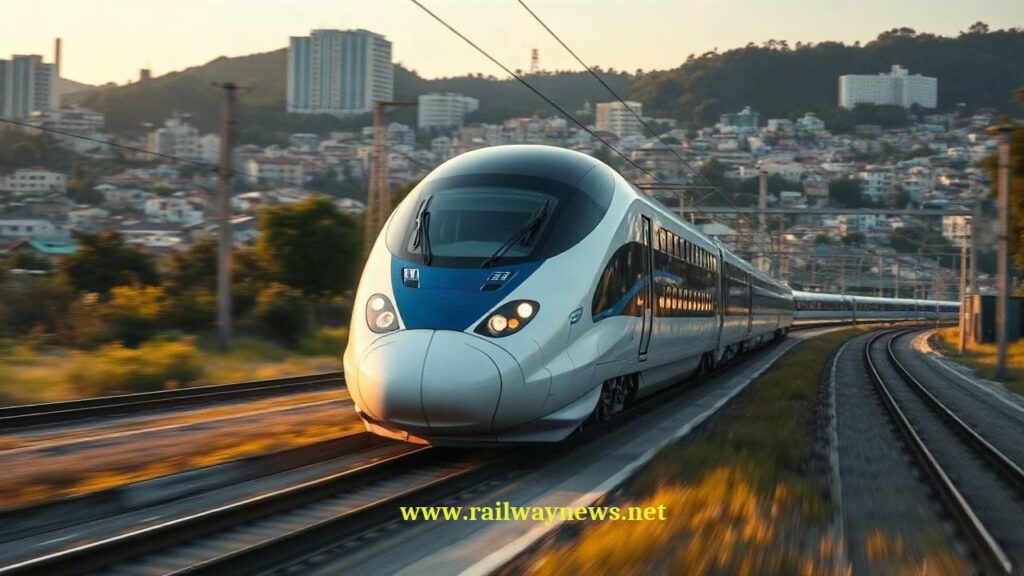
České dráhy launched its first 200 km/h domestic Class 680 Pendolino service in the Czech Republic in August 2025.

⚡ In Brief: Czech national operator České dráhy has expanded its 160 km/h service from eight daily trains in 2001 to over one thousand today, while launching its first domestic 200 km/h commercial service in August 2025 using its Pendolino fleet.
PRAGUE, CZECH REPUBLIC – National operator České dráhy (ČD) launched its first commercial 200 km/h service within the Czech Republic on August 31, 2025, marking a new speed milestone for the network. This development comes 25 years after the initial introduction of 160 km/h services, which have grown from just eight trains per day in 2001 to over 1,000 today. The current fleet capable of 160 km/h or higher includes over 100 locomotives and nearly 1,000 passenger cars.
What Are the Technical Specifications?
České dráhy’s high-speed capable fleet has grown substantially to support over 1,000 daily services at 160 km/h and the introduction of 200 km/h operations. The fleet for speeds of 160 km/h or higher now comprises over 100 locomotives, nearly 200 electric multiple units (EMUs), and close to 1,000 non-powered passenger cars. For international services into Germany and Austria, a significant portion of this rolling stock is approved for speeds up to 230 km/h, while the domestic 200 km/h service is operated by the Class 680 Pendolino units.
Key Technical Data
| Parameter | Value |
|---|---|
| Technology / System Name | ČD High-Speed Fleet (160-230 km/h) |
| Total Value | Not disclosed |
| Parties Involved | České dráhy, Siemens-MSV Studénka (historical rolling stock) |
| Timeline / Completion | 160 km/h (2001), 200 km/h (2025) |
| Country / Corridor | Czech Republic, with cross-border services to Germany, Austria, Hungary, Slovakia |
Where Does This Technology Stand in the Market?
The introduction of 200 km/h commercial service brings the Czech Republic’s domestic network capabilities in line with neighbouring Poland, which also operates its Pendolino fleet at up to 200 km/h on the Central Rail Line. However, this speed is still below the top-tier high-speed services in adjacent countries like Germany and Austria, where speeds of 250-300 km/h are common on dedicated high-speed lines. The Czech strategy focuses on upgrading existing conventional corridors, an incremental approach that differs from the new-build high-speed networks seen in France or Spain. This positions the Czech network as an effective “higher-speed” system rather than a true high-speed one by current European standards.
Editor’s Analysis
The growth from eight to over a thousand 160 km/h trains demonstrates a successful long-term strategy of standardizing higher speeds across the conventional network, moving it from a premium feature to a baseline service level. The launch of 200 km/h operations is a critical first step towards better integration with the wider European high-speed system, even if it remains behind the speeds of its Western neighbours. This incremental investment in infrastructure aligns with a broader European focus on bolstering rail capabilities, which in turn generates significant demand for a specialised infrastructure workforce. (Source: UK Infrastructure and Projects Authority, 2024)
FAQ
Q: Which train model is used for the new 200 km/h service in the Czech Republic?
A: The first 200 km/h commercial service is operated by České dráhy’s Class 680 Pendolino tilting trains. These units were already part of the operator’s fleet and have now been deployed on newly upgraded domestic infrastructure sections.
Q: What was the total investment cost to upgrade the network for 200 km/h speeds?
A: The primary source article does not disclose the specific investment figures for the infrastructure modernization required to achieve 200 km/h. These upgrades are typically bundled within larger, long-term national railway corridor modernization programs.
Q: How does the number of ČD’s 160 km/h trains today compare to a decade ago?
A: České dráhy now operates over a thousand trains capable of 160 km/h, which is approximately five times more than the 200 trains (130 long-distance, 70 regional) it operated at this speed around 2015.

Railway infrastructure, rolling stock and transport technologies specialist focused on global rail industry developments, high-speed rail systems, signaling technologies and freight transportation. Covering railway investments, public transport modernization, rail operations and international mobility projects across Europe, Asia and North America.
RELATED POSTS

September 6, 2026 5:19 am
Hitachi delivered Taiwan's first N700ST high-speed train from Japan in...

September 5, 2026 4:19 pm
CPK launched formal tender talks with four consortia to design...

September 6, 2026 4:12 am
Alstom delivered the first of 100 new G Class trams...

September 5, 2026 7:14 pm
HS2 Ltd signed renegotiated civils contracts with EKFB and Align...

September 6, 2026 6:17 am
Hungary ordered a national ban on most freight trains from...
September 6, 2026 1:17 am
Hitachi Toshiba Supreme Consortium confirmed the first of 12 N700ST...