
California Approves $590 Million Loan for Bay Area Transit
California approves $590 million bridge loan for Bay Area transit (BART, Muni, Caltrain, AC Transit) to prevent service cuts, signed by Governor Gavin Newsom as a bridge to a 2026 ballot measure.
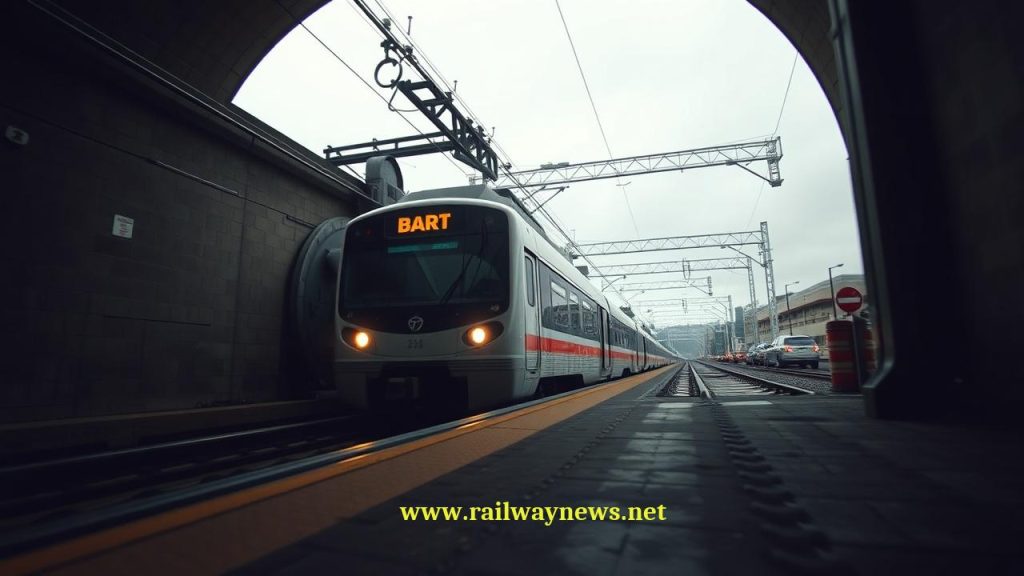
⚡ In Brief: California’s state transportation agency will loan $590 million to the San Francisco Bay Area’s Metropolitan Transportation Commission to stabilize transit operations facing post-pandemic budget deficits, acting as a bridge to a potential 2026 regional tax measure.
SACRAMENTO, USA – California Governor Gavin Newsom has signed a bill authorizing a $590 million loan from the Transit and Intercity Rail Capital Program to the Metropolitan Transportation Commission (MTC). The funding aims to stabilize the finances of major San Francisco Bay Area transit operators, including BART and the SFMTA Muni system. The loan is designed as a temporary solution while the region pursues a long-term funding fix through a proposed November 2026 ballot measure.
How Is the Funding Structured?
The financing is structured as an emergency bridge loan to cover operating deficits, not for new capital projects. It reallocates funds from the state’s capital investment program to address the immediate operational shortfalls faced by Bay Area transit agencies as they continue to recover from pandemic-related ridership losses. If a proposed regional sales tax is approved by voters in 2026, it would create a new, stable operating fund beginning in July 2027, at which point the loan’s purpose as a stopgap would be fulfilled.
Key Funding Data
| Parameter | Value |
|---|---|
| Fund / Programme Name | Transit and Intercity Rail Capital Program (TIRCP) Bridge Loan |
| Total Value | $590 million |
| Parties Involved | California State Transportation Agency (CalSTA), Metropolitan Transportation Commission (MTC), BART, SFMTA, Caltrain, AC Transit |
| Timeline / Completion | Bridge funding to November 2026; potential new tax funding from July 2027 |
| Country / Corridor | USA / San Francisco Bay Area |
How Does This Compare to Similar Funding Programs?
The Bay Area’s ridership and funding challenges reflect a broader North American trend. For comparison, Minneapolis-St. Paul’s Metro Transit reported a 3% system-wide ridership decline in 2025, with a more severe 14% drop on its light rail lines, despite opening new rapid transit routes (Source: Axios, 2026). This indicates that even with new infrastructure, attracting riders back to pre-pandemic levels remains a systemic challenge for major US cities. The use of a bridge loan in California contrasts with large-scale capital procurements in Europe, where Portugal recently finalized a €1.03 billion contract with Alstom for 153 new trains, the largest in its history (Source: GlobeNewswire, 2026).
Editor’s Analysis
This loan highlights a critical shift in public transit finance, where funds designated for capital expansion are being repurposed to ensure basic operational survival. This is a reactive measure to a systemic crisis in farebox-dependent funding models that have proven vulnerable in the post-pandemic era. While the loan prevents immediate service collapse, it underscores the urgent need for new, resilient operating subsidy models, as seen in the dependence on a future, and uncertain, voter-approved tax initiative.
FAQ
Q: Why is this loan necessary for Bay Area transit?
A: The loan is required to cover large operating budget deficits resulting from a slow recovery in passenger ridership since the pandemic. Agencies like BART depend heavily on fares for revenue, and without this funding, they would likely face deep service cuts.
Q: What are the specific repayment terms of the $590 million loan?
A: The interest rate and a detailed repayment schedule for the loan were not disclosed in the official announcement. The financing is intended as a temporary bridge until a permanent regional funding source is potentially approved by voters in 2026.
Q: Is this a permanent fix for the financial problems at BART and Muni?
A: No, this is a temporary stopgap measure. A long-term solution hinges on the passage of a regional sales tax measure in the November 2026 election, which would provide a new, stable source of operating funds beginning in mid-2027.

Transport and railway industry editor covering global rail infrastructure, sustainable mobility, urban transit systems and next-generation railway technologies with a focus on accessible and industry-focused reporting.
RELATED POSTS

October 1, 2026 7:09 am
United States regulators confirmed a September 30 deadline for the...

October 1, 2026 12:13 am
Illinois approved $1.5 billion annually for the Northern Illinois Transit...

October 1, 2026 6:10 am
Amtrak approved a System Expansion Committee on July 30 to...

October 1, 2026 5:14 am
Siemens confirmed delivery of the first new S200 train to...

October 1, 2026 4:10 am
DART launched two public ridership dashboards in March 2026 to...

October 1, 2026 3:12 am
Greenbrier confirmed Brian Comstock as new president and CEO effective...