
Hitachi Rail Completes L90-5 Interlocking at Hove Norway
Hitachi Rail commissioned an L90-5 electronic interlocking system integrating 42 point machines and 43 signals at Hove, Norway by February 2026.
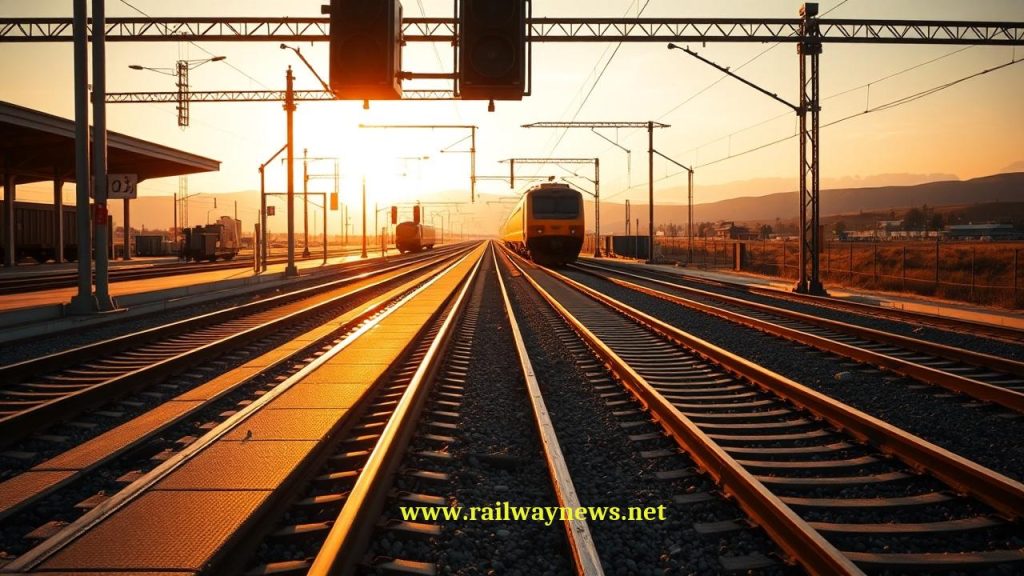
⚡ In Brief: Hitachi Rail and Bane NOR have commissioned a new L90-5 electronic interlocking system at Hove, Norway, integrating 42 point machines and 43 signals to enhance operational capacity and reliability on the Dovre Line.
OSLO, NORWAY – Hitachi Rail and Norway’s rail infrastructure manager, Bane NOR, have commissioned an L90-5 electronic interlocking system at the Hove stabling facility near Lillehammer. The project, completed by February 17, 2026, digitises the management of 42 point machines, three level crossings, and numerous signals to improve train operations. This installation is a component of Norway’s national rail network digitalisation program.
What Is the Full Scope of This Project?
The project provides a modern electronic interlocking solution to replace legacy control systems at a key stabling facility on the Dovre Line. The installation includes one interlocking module, one local operator place, 42 point machines, three level crossings, 15 main signals, 28 dwarf signals, and 59 axle counter detection points. The total contract value for this specific installation was not disclosed by either party.
Key Project Data
| Parameter | Value |
|---|---|
| Project / Contract Name | L90-5 Electronic Interlocking at Hove |
| Total Value | Not disclosed |
| Parties Involved | Hitachi Rail (supplier), Bane NOR (operator) |
| Timeline / Completion | Commissioned by February 2026 |
| Country / Corridor | Norway / Dovre Line |
How Does This Compare to Similar Projects?
The undisclosed value of this targeted signalling upgrade contrasts with the scale of recent major European rail investments focused on rolling stock. For example, Alstom secured a €1.03 billion contract in Portugal to supply 153 trains, representing the country’s largest-ever train procurement (Source: Alstom SA, 2025). While different in scope, the comparison highlights how operators are allocating capital between large-scale fleet renewals and more focused, incremental infrastructure projects like the Hove interlocking, which are essential for maximizing network capacity and reliability.
Editor’s Analysis
The commissioning at Hove represents a necessary, granular step in Bane NOR’s broader strategy to modernise its network infrastructure. These targeted digital upgrades are critical for improving operational resilience ahead of larger traffic management system enhancements. However, the pace of future nationwide projects may be influenced by Norway’s macroeconomic conditions, as the government recently trimmed its 2026 non-oil GDP growth forecast from 2.1% to 1.8%, potentially tightening public infrastructure funding (Source: Reuters, 2026).
FAQ
Q: What specific equipment was installed at Hove?
A: The installation included one interlocking module, one operator station, 42 point machines, 15 main signals, 28 dwarf signals, three level crossings, and 59 detection points.
Q: What was the total value of the Hitachi Rail contract for this project?
A: The total financial value of the contract for the Hove interlocking project was not publicly disclosed by Hitachi Rail or Bane NOR.
Q: How does this project impact train services on the Dovre Line?
A: The new system is designed to increase capacity and improve operational reliability at the Hove stabling facility, leading to more punctual passenger journeys and more efficient maintenance planning on the network.

Railway infrastructure, rolling stock and transport technologies specialist focused on global rail industry developments, high-speed rail systems, signaling technologies and freight transportation. Covering railway investments, public transport modernization, rail operations and international mobility projects across Europe, Asia and North America.
RELATED POSTS

September 6, 2026 5:19 am
Hitachi delivered Taiwan's first N700ST high-speed train from Japan in...

September 5, 2026 4:19 pm
CPK launched formal tender talks with four consortia to design...

September 6, 2026 6:17 am
Hungary ordered a national ban on most freight trains from...

September 6, 2026 1:17 am
Hitachi Toshiba Supreme Consortium confirmed the first of 12 N700ST...
September 5, 2026 6:17 pm
Universal Signalling won a deal to install its U-Cross system...
September 6, 2026 8:17 am
DB InfraGO reopened the Nuremberg-Regensburg line in Bavaria on 31...