
10 EU States Awarded For Joint High-Speed Rail & Military Mobility
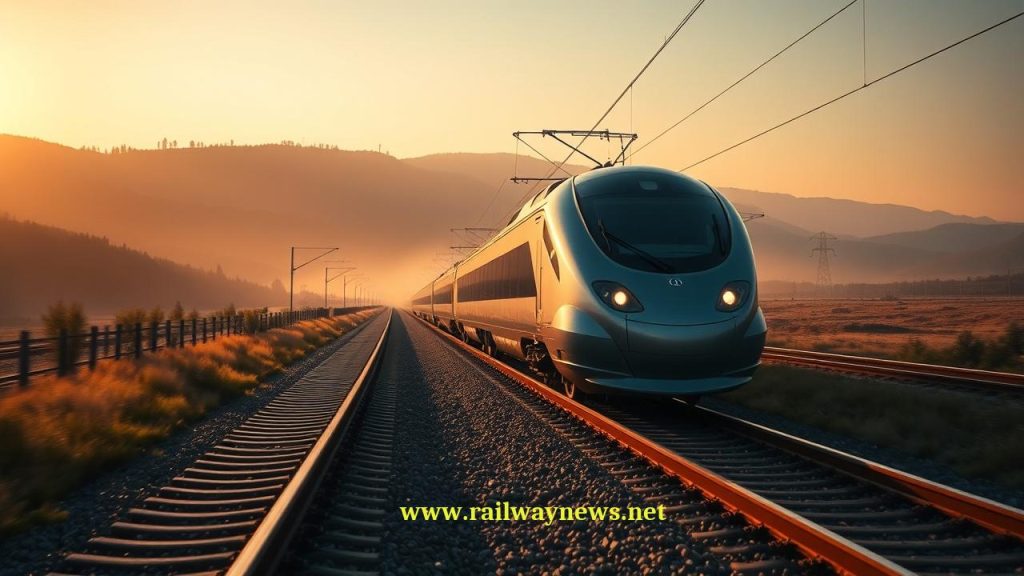
Ten EU Member States were awarded the European Railway Award 2026 for their joint high-speed rail initiative. This supports EU military mobility and security.
📉 Market Brief:
- Event: European Railway Award 2026 ceremony in Brussels.
- Key Data: 10 EU Member States awarded for joint high-speed rail initiative.
- Impact: Signals alignment of rail infrastructure policy with EU military mobility and security objectives.
Rail transport’s strategic importance for European economic competitiveness and military security was the central theme of the European Railway Award 2026 gala in Brussels. The event, organized by the Association of the European Railway Industry and the Community of European Railway and Infrastructure Companies, recognized political initiatives promoting an integrated continental network, placing them on par with national technical achievements. This focus aligns with a wider European reassessment of defense and industrial policy amid external pressures.
The Rail Trailblazer 2026 award was conferred upon a coalition of ten EU Member States. The group, comprising Latvia, Slovakia, Estonia, Czech Republic, Hungary, Italy, Lithuania, Romania, Spain, and Poland, had signed a joint letter to the European Commission. The letter urged an acceleration in the development of a unified European high-speed rail network. Organizers noted the initiative’s influence is already evident in the European Commission’s High-Speed Rail Plan and the Military Mobility Package, both presented in late 2025.
Poland received the Rail Champion 2026 award for its strategic focus on rail transport during its recent Presidency of the Council of the European Union. Piotr Malepszak, Secretary of State in the Polish Ministry of Infrastructure, accepted the award. He emphasized the direct connection between transport infrastructure, national security, and economic competitiveness, particularly in a context of increased hybrid threats targeting critical infrastructure. Warsaw’s presidency prioritized rail investment, innovation, and the sector’s role in bolstering European resilience.
The geopolitical context for this renewed focus on rail was underscored by recent discussions at the Munich Security Conference, where U.S. officials urged Europe to assume greater responsibility for its own defense. This has intensified EU-level dialogue on military autonomy. Additionally, the emerging ‘Merzoni’ political alliance between German and Italian leadership is advocating for reforms to enhance the bloc’s military capacity and promote European industrial partnerships, a strategy where integrated rail logistics are a critical component.
A coordinated declaration from the European rail industry and network operators was issued during the ceremony. The document committed to modernizing and expanding the European rail system, calling for sustained funding, reduced system costs, and accelerated research. A central demand was the large-scale implementation of digital solutions, specifically the European Rail Traffic Management System (ERTMS), to remove cross-border operational bottlenecks. The declaration explicitly linked transport modernization with security, framing rail infrastructure as essential for military mobility and civilian protection.
The ceremony’s opening included a moment of silence for victims of recent rail incidents, including accidents in Spain and a drone attack on a passenger train in Ukraine. These events served as a stark reminder of the physical vulnerabilities of rail networks in an unstable geopolitical environment. Representatives from European institutions at the event reiterated the need to convert political commitments into tangible cross-border projects.
| Award / Initiative | Recipient(s) / Signatories |
|---|---|
| Rail Trailblazer 2026 | Latvia, Slovakia, Estonia, Czech Republic, Hungary, Italy, Lithuania, Romania, Spain, Poland |
| Rail Champion 2026 | Poland (for its EU Council Presidency work) |
| Key Industry Commitment | Modernization, ERTMS implementation, and network expansion for military mobility |
“Rail Baltica’s CCS system procurement advances, with four global giants vying for the contract. This ERTMS-based system is vital for high-speed rail integration in Europe.” – Full article title (Jan 2026)
The 2026 edition of the awards, held annually since 2007, marked a distinct shift. It demonstrated that the future trajectory of European railways is now heavily dependent on policy coherence and strategic cooperation between Member States, moving beyond purely technical and investment-related considerations. The integration of rail development with broader EU security and defense autonomy agendas is now a primary driver of sector policy.

Railway infrastructure, rolling stock and transport technologies specialist focused on global rail industry developments, high-speed rail systems, signaling technologies and freight transportation. Covering railway investments, public transport modernization, rail operations and international mobility projects across Europe, Asia and North America.
RELATED POSTS

September 5, 2026 4:19 pm
CPK launched formal tender talks with four consortia to design...

September 5, 2026 7:14 pm
HS2 Ltd signed renegotiated civils contracts with EKFB and Align...
September 6, 2026 6:17 am
Hungary ordered a national ban on most freight trains from...
September 5, 2026 6:17 pm
Universal Signalling won a deal to install its U-Cross system...
September 6, 2026 8:17 am
DB InfraGO reopened the Nuremberg-Regensburg line in Bavaria on 31...
September 7, 2026 8:16 am
Midea, Gree and TCL shipped air conditioners via China Railway...