
Sweden Tests Digital Couplers on Heavy Freight Trains
Digital Automatic Couplers are now commercially tested in Sweden, part of a EU-backed project. This tech aims to modernize freight, boost efficiency, and cut costs.
🛑 Key Takeaways:
- Commercial demonstrations of Digital Automatic Couplers (DAC) are now operational on heavy freight trains in Sweden.
- The EU-backed project involves over 70 partners and aims to validate DAC technology for a pan-European rollout post-2026.
- DAC is foundational for creating an interoperable, digital rail network to increase freight’s competitiveness against road transport and meet sustainability goals.
LULEÅ, SWEDEN – A large-scale commercial demonstration of Digital Automatic Couplers (DAC) is underway in northern Sweden, testing the technology on heavy-haul steel trains operating in daily traffic. The project, part of the Europe’s Rail Joint Undertaking initiative, is a critical step toward a planned Europe-wide migration from manual screw couplers to a fully automated and digital system.
| Category | Specification / Detail |
|---|---|
| Project Name | Flagship Project 5 (FP5 TRANS4M-R) |
| Funding Body | Europe’s Rail Joint Undertaking (EU) |
| Key Stakeholders | 70+ partners, including railway undertakings, infrastructure managers, and DAC suppliers |
| Current Test Location | Luleå to Borlänge, Sweden |
| Future Test Locations | Italy and Austria |
| Project Conclusion | 2026 |
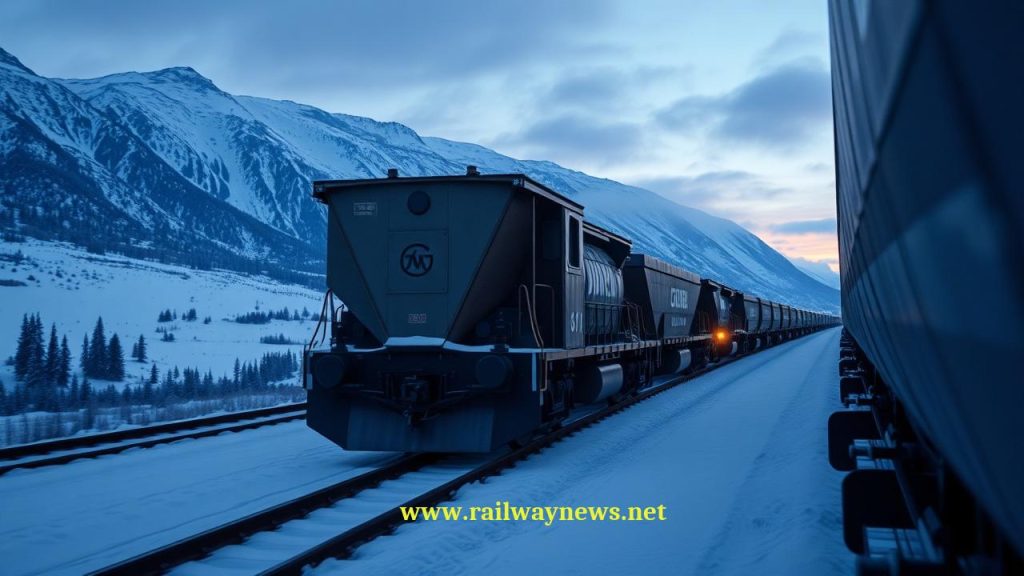
| Test Conditions | 3,000-tonne trains, -40°C temperatures, 10‰ gradients, heavy snow |
Operational & Technical Details
The DAC system replaces traditional, labor-intensive screw couplers with an integrated mechanical, electronic, and pneumatic unit. This automates the physical coupling process, eliminating a significant safety risk for ground personnel. The Swedish demonstration is validating the mechanical robustness of the couplers under severe operational stress. This includes daily use on 3,000-tonne steel trains navigating steep gradients and temperatures as low as -40°C.
Crucially, the DACs provide continuous power and data connectivity along the entire train. This enables constant train integrity monitoring, a key prerequisite for deploying advanced signaling systems like ETCS Level 3 and moving block operations. Data exchange also facilitates remote diagnostics and predictive maintenance, improving operational reliability and asset management.
Market Impact Analysis
The implementation of DAC is a strategic initiative to address the long-standing fragmentation of European rail freight. By creating a single, interoperable coupling standard, the technology removes significant cross-border operational barriers. This is expected to reduce terminal dwell times, shorten transit schedules, and lower operational costs, making rail a more competitive alternative to road haulage.
For European industries, a more efficient rail network promises a more resilient and lower-emission logistics chain. The project’s goal is to establish rail as the backbone of European logistics. The significant upfront investment is justified by proponents as a necessary step to overcome a persistent market failure and unlock the societal and environmental benefits of a modernized, high-capacity freight railway.
FAQ: Quick Facts
What is the main goal of the DAC project?
The primary goal is to establish a new technical standard for European rail freight that enhances safety, automation, and interoperability, making rail more efficient and competitive.
When is the expected completion date?
The current demonstration phase, part of the FP5 TRANS4M-R project, is scheduled to conclude in 2026, after which a wider rollout is planned.

Railway infrastructure, rolling stock and transport technologies specialist focused on global rail industry developments, high-speed rail systems, signaling technologies and freight transportation. Covering railway investments, public transport modernization, rail operations and international mobility projects across Europe, Asia and North America.
RELATED POSTS

October 6, 2026 2:14 am
Union Pacific launched export rail shipments with Ferromex to deliver...
October 1, 2026 10:14 am
HS2 installed a 55-metre steel span in Birmingham, completing phase...

October 1, 2026 3:12 am
Greenbrier confirmed Brian Comstock as new president and CEO effective...

October 4, 2026 11:08 pm
Sound Transit confirmed the September 30 opening of Seattle Pinehurst...

October 5, 2026 6:12 pm
AECOM and Jacobs secured a contract in September 2026 to...
October 6, 2026 12:16 am
FTA awarded $233 million in grants to eight US rail...