
UP-NS Merger: Congress, STB Scrutiny Over Labor & Data
UP-NS merger faces major hurdles: Congress demands labor impact details, and the STB rejects the $85 billion application as incomplete, impacting the deal’s future.
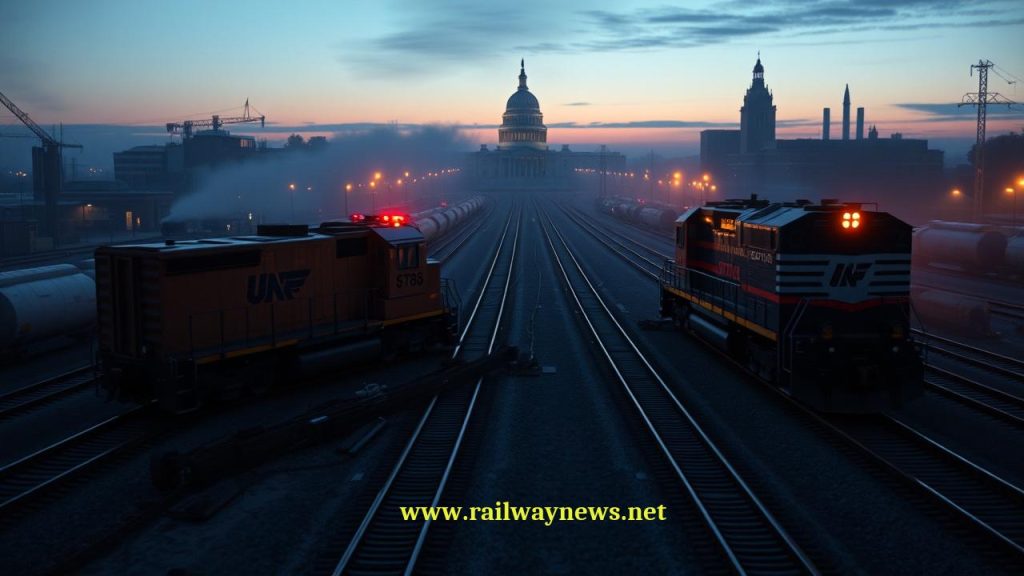
A group of seven influential U.S. House members is demanding a detailed labor impact analysis for the proposed $85 billion mega-merger between Union Pacific and Norfolk Southern. The congressional intervention comes just as the U.S. Surface Transportation Board (STB) has rejected the railroads’ initial application, labeling it incomplete and further complicating the deal’s path forward.
| Category | Details |
|---|---|
| Proposed Merger | Union Pacific Railroad (UP) and Norfolk Southern Railway (NS) |
| Transaction Value | $85 Billion |
| Key Development | Congressional letter demanding labor impact details |
| Date of Letter | January 15, 2026 |
| Regulatory Status | Merger application deemed “incomplete” by the Surface Transportation Board (STB) on Jan. 16, 2026 |
WASHINGTON D.C. – A cohort of seven Democratic House members has formally requested that the Surface Transportation Board (STB) compel Union Pacific and Norfolk Southern to provide a comprehensive explanation of how their potential merger would affect the rail labor force. In a January 15 letter addressed to STB Chairman Patrick Fuchs, the lawmakers insisted that the STB obtain answers to a specific set of questions regarding labor as part of its public-interest review. The letter, signed by co-chairs of the congressional Monopoly and Labor Caucuses, demands that these answers be provided to Congress at least 60 days before any final decision on the merger is rendered.
The political pressure landed just one day before the STB delivered a significant regulatory setback to the two Class I giants. On January 16, the board sent the nearly 7,000-page merger application back for revision, declaring it “incomplete.” The STB cited critical omissions, including the failure to provide the entire merger agreement and a lack of “full system impact analyses” with projected market shares. According to STB regulations, these analyses are mandatory to demonstrate the transaction’s full impact on competition across the national rail network.
This confluence of political and regulatory scrutiny highlights the formidable opposition facing the first major Class I railroad merger proposal under the tougher rules adopted by the STB in 2001. The railroads’ initial application, filed on December 19, argued the combination would enhance service reliability and protect union jobs. However, the proposal has drawn fire not only from lawmakers but also from industry rivals. Both BNSF Railway and Canadian National (CN) had previously filed motions with the STB, arguing the application lacked crucial competitive data and limited the ability of stakeholders to properly assess its wide-ranging effects.
Key Takeaways
- A bipartisan group of U.S. lawmakers is escalating scrutiny on the merger’s potential impact on railway workers, demanding detailed disclosures.
- The STB has officially stalled the regulatory review process, finding the $85 billion merger application “incomplete” and requiring substantial revisions.
- Rival Class I railroads are actively challenging the proposal, citing a lack of competitive impact data and transparency in the initial filing.
Editor’s Analysis
The dual challenges from both Congress and the STB within a 24-hour period signal a difficult path ahead for the Union Pacific-Norfolk Southern merger. This isn’t just a procedural hiccup; it represents a fundamental test of the STB’s strengthened 2001 merger rules and a broader shift in Washington’s approach to industrial consolidation. The explicit focus on labor from influential caucuses underscores that worker welfare is no longer a secondary consideration but a primary pillar in the public interest test for major transactions. This case will likely set a new, higher bar for how labor impacts are evaluated in future consolidations, not just in the rail sector but across the entire logistics and transportation industry.
Frequently Asked Questions
Who is proposing the merger?
Class I railroads Union Pacific (UP) and Norfolk Southern (NS) have proposed an $85 billion merger to combine their operations.
Why are some U.S. lawmakers concerned about the merger?
Seven House members, including co-chairs of the Monopoly and Labor Caucuses, are concerned about the potential negative impacts on railroad labor. They are demanding that the railroads provide a detailed analysis of these impacts to the STB and Congress before any decision is made.
What is the current status of the merger application with the STB?
The Surface Transportation Board (STB) has rejected the initial application as “incomplete” and sent it back for revision. The board stated that the filing lacked required information, including the complete merger agreement and full system-wide competitive impact analyses.
RELATED POSTS

December 21, 2020 5:10 pm
High-Speed Rail Infrastructure: The Crucial Role of Switches and Crossings...
May 24, 2020 5:41 am
The global railway industry is undergoing a significant digital transformation,...
May 29, 2025 3:00 am
Los Angeles, USA – October 26, 2023 The Los Angeles...
April 25, 2008 6:29 pm
Porto's Metro expansion continues! Railway sector news: Line...
July 1, 2023 2:44 am
Introduction This article explores the innovative application of Artificial Intelligence...
July 21, 2022 3:44 am
Houston's MetroRail Red Line, a significant railway project, successfully...