
Austria’s BBT: Wilma TBM Hits 5km Milestone, 2032 Target
Wilma TBM hits 5km on the Brenner Base Tunnel, a critical step toward 2032 completion, despite a revised €8.37 billion budget for Europe’s vital rail link.
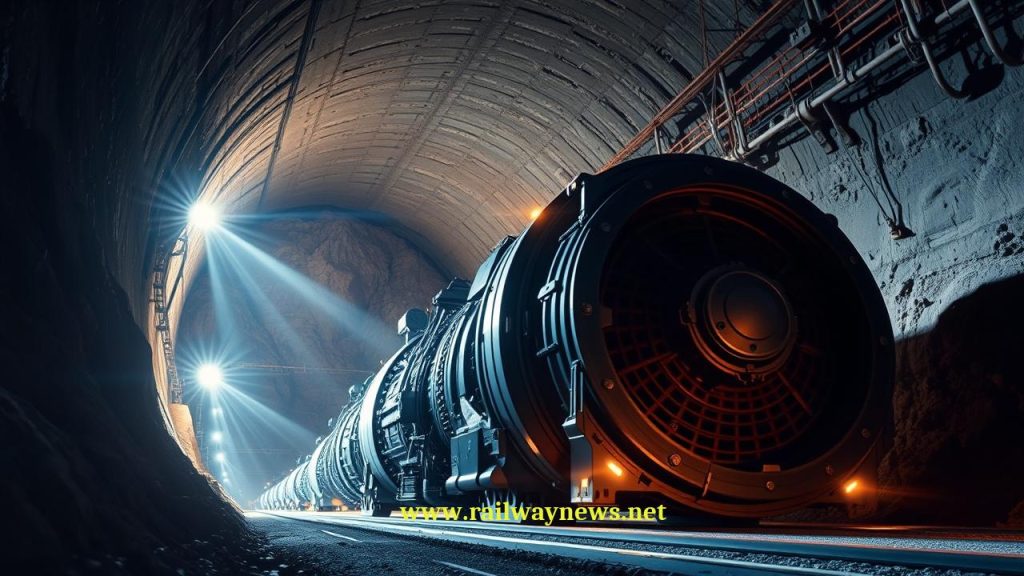
INNSBRUCK, Austria – The ‘Wilma’ tunnel boring machine (TBM) has achieved a major milestone in the construction of the Brenner Base Tunnel (BBT), completing 5 kilometers of excavation in the western main tunnel of the critical Pfons–Brenner section. This achievement, accomplished in just a year and a half, marks approximately 70% completion for the Wilma TBM’s assigned route and brings the visionary 64 km trans-Alpine project significantly closer to its 2032 operational target.
| Category | Details |
|---|---|
| Project | Brenner Base Tunnel (BBT) |
| Section | Pfons–Brenner (Lot H41) |
| Machine & Progress | TBM Wilma: 5 km excavated (approx. 70% of its 7.4 km route) |
| Twin Machine Progress | TBM Olga: Approaching 50% of its 7.6 km route |
| Revised Budget (ECA 2025) | €8.37 billion |
| Projected Completion | 2032 |
Main Body:
Project company BBT SE announced the significant progress, celebrating a promising start to 2026. The Wilma TBM, which began its northward journey in September 2024, has now bored through 5 km of challenging alpine geology, leaving just 2.4 km remaining on its 7.4 km path in the western main tube. Progress is also steady in the parallel eastern main tunnel, where Wilma’s “twin sister,” the TBM Olga, has already excavated nearly half of its slightly longer 7.6 km route. “The year 2026 thus begins with promising results and a decisive contribution to the future longest underground railway link in the world, a visionary infrastructure dedicated to European mobility,” a spokesperson for BBT SE stated.
The consistent performance of the Wilma and Olga TBMs underscores the advanced engineering driving the project forward. While specific technical specifications are proprietary, the machines’ ability to maintain a steady advance through the mountain demonstrates their sophisticated design, tailored for the complex geological conditions of the Alps. The parallel excavation strategy is crucial, allowing for synchronized progress and logistical efficiency. This technological capability is essential for mitigating further delays on a project that has faced significant schedule revisions over its lifetime.
The Pfons–Brenner section is the final Austrian segment of the BBT, connecting to the Italian border and representing a critical phase of construction. The entire 64 km tunnel, which runs from near Innsbruck, Austria, to Fortezza, Italy, is a cornerstone of Europe’s TEN-T transport network. However, its path to completion has been long. The project’s operational date is now set for 2032, 16 years behind the original schedule. A November 2025 report from the European Court of Auditors (ECA) confirmed the project’s revised budget of €8.37 billion, a 40% increase from a 2019 estimate of €5.97 billion, highlighting the immense financial and logistical scale of this generational infrastructure project.
Key Takeaways
- Major Construction Milestone: The Wilma TBM has completed 70% of its excavation on the western tube of the final Austrian section, a critical step towards project completion.
- Parallel Progress: Twin TBMs are operating successfully, with the Olga machine also nearing the halfway point in the eastern tube, ensuring balanced and efficient construction.
- Schedule and Budget Realities: Despite the on-the-ground progress, the project’s overall timeline has been extended to 2032, with the budget increasing by 40% over earlier estimates to €8.37 billion.
Editor’s Analysis
This milestone in the Pfons–Brenner section is more than just a measurement of meters excavated; it’s a tangible sign of momentum for a project of immense strategic importance to Europe. The Brenner Base Tunnel is the centerpiece of the Scandinavian-Mediterranean TEN-T Corridor, designed to shift massive volumes of trans-Alpine freight from road to rail. Every kilometer bored by machines like Wilma brings the continent closer to alleviating the chronic traffic congestion and environmental pollution plaguing the Brenner Pass. While the project’s history of delays and cost overruns rightly attracts scrutiny, this steady, measurable progress demonstrates a commitment to overcoming immense engineering challenges to deliver an infrastructure asset that will redefine European logistics and sustainability for the next century.
Frequently Asked Questions
- What is the Brenner Base Tunnel?
- The Brenner Base Tunnel (BBT) is a 64-kilometer-long railway tunnel under construction through the base of the Eastern Alps, connecting Innsbruck, Austria, with Fortezza, Italy. Once complete, it will be the longest underground rail link in the world, designed to facilitate freight and passenger transport.
- What is the significance of the Wilma TBM’s progress?
- The Wilma TBM has excavated 5 kilometers, or about 70%, of its designated 7.4 km route in the western main tunnel of the Pfons–Brenner section. This is a critical milestone as this section is the final Austrian portion of the tunnel, bringing the entire project much closer to completion.
- When will the Brenner Base Tunnel be finished and what is its cost?
- The BBT is scheduled to become operational in 2032. According to a 2025 European Court of Auditors report, the project’s revised total cost is estimated at €8.37 billion, a significant increase from previous estimates.
RELATED POSTS
March 28, 2025 12:39 am
Introduction This article delves into the significant expansion of Alstom’s...

June 14, 2021 5:23 am
The Impact of Automation on Railway Jobs: A Shifting Landscape...
November 14, 2021 4:07 pm
China's Beijing-Tianjin high-speed rail line, completed in 2007, showcases rapid...
August 22, 2016 4:21 pm
The Kuala Lumpur-Singapore High-Speed Rail (HSR) project, once aiming for...

December 30, 2025 9:39 am
HS2 Phase One tunnels are complete, a major milestone. £25.3bn...
March 9, 2017 4:17 am
Here's an excerpt tailored for railway professionals:"Metra has awarded Alstom...