
SNCB Boosts Rail Punctuality: €47M Ostend Maintenance Hall Opens
SNCB opens a state-of-the-art €47M maintenance hall in Ostend, boosting train reliability and punctuality for passengers through modern efficiency.
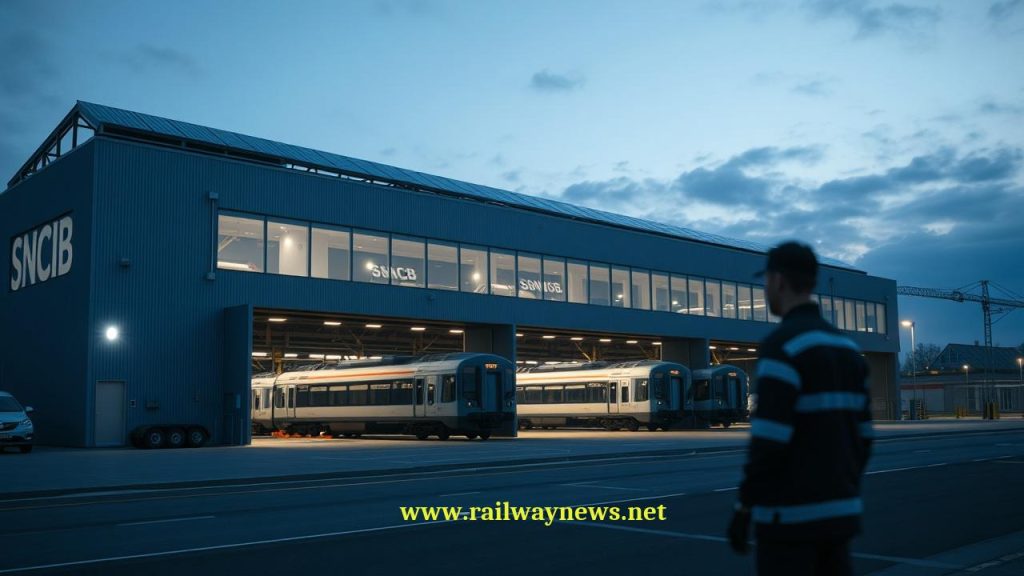
OSTEND, BELGIUM – Belgian national rail operator SNCB has officially inaugurated a state-of-the-art maintenance hall at its Ostend traction workshop, a strategic EUR 47 million investment aimed at significantly enhancing the reliability and punctuality of its rail services. This new facility is the fifth major workshop upgrade in a nationwide program designed to modernize SNCB’s entire rolling stock maintenance infrastructure.
| Category | Details |
|---|---|
| Project Investment | EUR 47 Million |
| Operator | SNCB (National Railway Company of Belgium) |
| Location | Ostend Traction Workshop, West Flanders, Belgium |
| Hall Dimensions | 200m (L) x 18m (W) x 13m (H) with two through lines |
| Operational Start | End of 2025 |
| Sustainability Features | ~400 kW solar array (900+ panels), rainwater harvesting |
The inauguration marks a significant milestone in SNCB’s ambitious 2023–2032 investment plan, which allocates EUR 1.4 billion—approximately 15% of the company’s total investment budget—to upgrading workshops and maintenance facilities. The Ostend project, which began in 2020, is the latest in a series of modernizations, following similar new halls in Arlon, Hasselt, Kinkempois, and Melle. The primary objective is to increase train availability and reliability, which directly translates to improved on-time performance for passengers across West Flanders and beyond.
Technically, the new 200-meter-long hall is engineered for maximum efficiency. It features two through lines accessible from both ends, a design that allows maintenance to be performed on long trainsets without the time-consuming process of uncoupling multiple units. This configuration enables up to four trains to be serviced simultaneously. The facility is complemented by a 370-meter external inspection channel with multiple workstations, and a mobile platform for safe and rapid interventions on train pantographs. Further investments in industrial signaling, advanced cleaning platforms, and new train maneuvering equipment underscore the detailed nature of the upgrade.
Operationally, the new hall facilitates the implementation of the Timetable Integrated Maintenance (TIM) principle. This modern approach shifts from lengthy, infrequent overhauls to more frequent but shorter service intervals. On average, a train will now enter the workshop every two weeks for a focused four-hour maintenance session, often during off-peak hours or overnight, ensuring it is back in service for the morning rush. This proactive strategy is supported by the workshop’s 250 employees and is enhanced by significant ergonomic and sustainable design elements, including over 900 rooftop solar panels and advanced safety systems for staff.
Key Takeaways
- Major Punctuality Drive: The EUR 47M investment is a direct effort by SNCB to reduce train downtime and improve service punctuality through modernized, efficient maintenance.
- Strategic National Program: The Ostend facility is the fifth new hall in a EUR 1.4 billion national strategy to overhaul SNCB’s maintenance capabilities over the next decade.
- Efficiency Through Design: The hall’s through-line design and the adoption of the TIM (Timetable Integrated Maintenance) model will drastically reduce service times and maximize rolling stock availability.
Editor’s Analysis
SNCB’s investment in the Ostend workshop is not merely a local upgrade but a reflection of a critical Europe-wide trend. As rail networks across the continent face pressure from rising passenger numbers, aging fleets, and the complex rollout of new technologies like ETCS, the efficiency of maintenance infrastructure has become a primary determinant of operational success. Proactive, data-driven maintenance, as exemplified by the TIM model, is replacing outdated reactive strategies. This allows operators to maximize asset availability, a crucial factor in increasing network capacity without building new lines. By investing heavily in the “unseen” backbone of their operations, companies like SNCB are future-proofing their services, ensuring they can deliver the reliability and punctuality that passengers demand and that is essential for making rail the preferred mode of transport.
Frequently Asked Questions
What is the main purpose of the new SNCB maintenance hall in Ostend?
The main purpose is to increase the availability and reliability of trains, which will directly improve the punctuality of rail services. The facility is designed for faster and more efficient maintenance cycles.
How much did the new Ostend workshop hall cost?
The project represents a EUR 47 million investment, part of a larger EUR 1.4 billion plan by SNCB to modernize its maintenance infrastructure between 2023 and 2032.
What is the TIM (Timetable Integrated Maintenance) principle?
TIM is a maintenance strategy where trains undergo more frequent but much shorter service checks (e.g., four hours every two weeks). This work is scheduled during low-traffic periods to minimize disruption and maximize train availability during peak hours.

Railway infrastructure, rolling stock and transport technologies specialist focused on global rail industry developments, high-speed rail systems, signaling technologies and freight transportation. Covering railway investments, public transport modernization, rail operations and international mobility projects across Europe, Asia and North America.
RELATED POSTS

October 4, 2026 5:14 pm
Alstom secured a CA$4.7 billion order from VIA Rail Canada...
October 1, 2026 3:12 am
Greenbrier confirmed Brian Comstock as new president and CEO effective...
October 1, 2026 10:14 am
HS2 installed a 55-metre steel span in Birmingham, completing phase...

October 4, 2026 11:08 pm
Sound Transit confirmed the September 30 opening of Seattle Pinehurst...

October 5, 2026 6:12 pm
AECOM and Jacobs secured a contract in September 2026 to...
October 6, 2026 12:16 am
FTA awarded $233 million in grants to eight US rail...