
Copenhagen’s S-Bahn: Siemens & Stadler Win €3B Automated Fleet Deal
Copenhagen’s S-bahn gets a €3 billion upgrade! Siemens and Stadler will deliver 226 automated trains, revolutionizing urban transport by 2032.
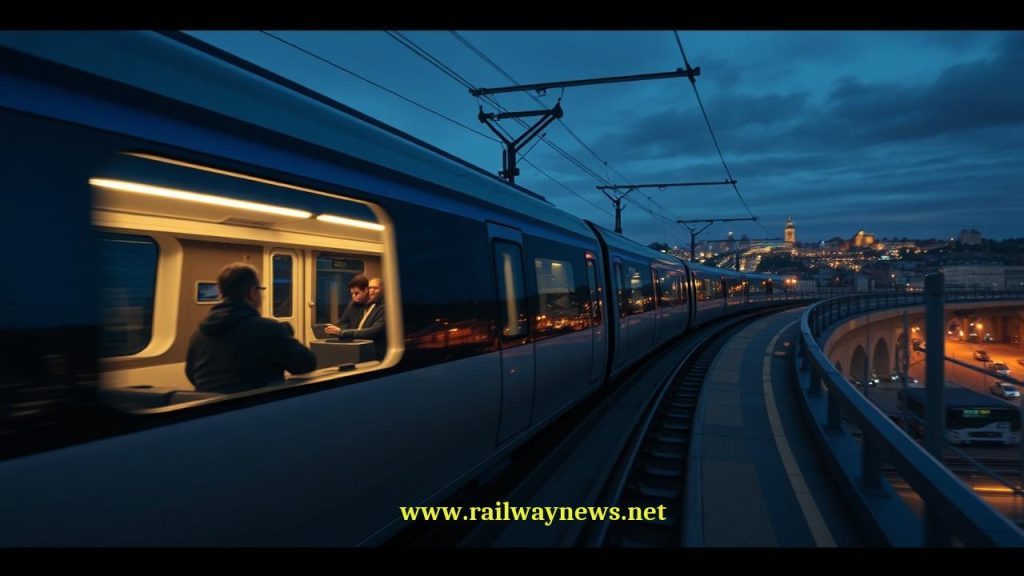
Danish State Railways (DSB) has awarded a landmark €3 billion contract to a consortium led by Siemens Mobility and Stadler to deliver and maintain a new fleet of fully automated S-bahn trains for Copenhagen. This strategic investment will supply at least 226 new electric multiple units (EMUs) and spearhead the transformation of the city’s suburban network to unattended train operation (UTO) over the next decade.
| Category | Details |
|---|---|
| Contract Value | Approx. €3 billion (DKK 23 billion), including 30-year maintenance |
| Winning Consortium | Siemens Mobility (lead) & Stadler |
| Fleet Size | Minimum 226 four-car automated EMUs |
| Key Project Timeline | Testing from 2028; Passenger service from 2032 |
| Train Top Speed | 120 km/h |
Main Body:
In a major step towards automating its urban rail network, Danish State Railways (DSB) has officially selected the Siemens Mobility and Stadler consortium for its next-generation S-train fleet. The detailed agreement, valued at approximately €3 billion, covers the supply of at least 226 four-car EMUs and establishes a 30-year maintenance programme. While the consortium will assume overall responsibility for fleet performance, the partnership model ensures that day-to-day maintenance tasks will be handled by DSB’s existing personnel, facilitating a smooth operational transition.
The new 56-metre-long trains are designed for high performance and passenger-centric flexibility. Capable of operating at speeds up to 120 km/h, the units can be coupled in formations of up to three trainsets to meet fluctuating demand. Each four-car unit will feature 156 seats and is designed with adaptable interiors, including dedicated work zones with tables, flexible multi-purpose areas for bicycles and large luggage, and integrated spaces for two wheelchair users. To enhance passenger safety and security across the driverless network, each train will be equipped with a detailed on-board CCTV system providing full surveillance.
This fleet renewal is a cornerstone of Denmark’s “Infrastructure Plan 2035,” which received political approval in June 2021 and paved the way for DSB to announce the project bidders in September 2023. The rollout will be phased, with initial testing of the driverless trains set to begin in 2028. The first route slated for the upgrade is the crucial Line F (Ringbanen), which connects København Syd with Hellerup. Following initial automated operations starting in 2029, the first commercial passenger services on this line are scheduled to commence in 2032, marking a new era for public transport in the Danish capital.
Key Takeaways
- Massive Modernisation Investment: The €3 billion deal represents one of Europe’s most significant recent investments in urban rail, signalling a strong commitment to public transport and automation.
- Transition to Full Automation: The project will transform Copenhagen’s S-bahn into a fully unattended network, aiming to increase service frequency, reliability, and operational efficiency.
- Long-Term Technical Partnership: The 30-year maintenance agreement creates a durable partnership between DSB, Siemens, and Stadler, ensuring the long-term performance and availability of the new fleet.
Editor’s Analysis
This contract is a significant milestone not just for Copenhagen, but for the global urban rail industry. It solidifies the trend of major European cities moving beyond legacy systems to embrace Grade of Automation 4 (GoA4) for their core networks. The decision to award the contract to a Siemens-Stadler consortium leverages the distinct strengths of two of Europe’s rail manufacturing giants, setting a powerful precedent for future collaborative bids on complex, large-scale projects. For other cities grappling with aging infrastructure and growing ridership, Copenhagen’s S-bahn automation project will serve as a critical case study in combining fleet renewal with a full technological leap, promising major gains in capacity and service quality.
Frequently Asked Questions
Who was selected to build Copenhagen’s new S-trains?
A consortium led by Siemens Mobility and Stadler was chosen by Danish State Railways (DSB) to deliver and maintain the new fleet.
When will passengers be able to ride the new automated trains?
The first passenger services using the new trains are expected to begin in 2032, starting with Line F (Ringbanen).
What are the key features of the new trains?
The trains will be fully automated (driverless), operate at speeds up to 120 km/h, and feature flexible interiors with 156 seats, dedicated spaces for bicycles and wheelchairs, work zones, and detailed CCTV for security.

Railway infrastructure, rolling stock and transport technologies specialist focused on global rail industry developments, high-speed rail systems, signaling technologies and freight transportation. Covering railway investments, public transport modernization, rail operations and international mobility projects across Europe, Asia and North America.
RELATED POSTS

October 1, 2026 7:09 am
United States regulators confirmed a September 30 deadline for the...

October 8, 2026 1:15 pm
Alstom secured a €1bn contract to build 13 automated trains,...

October 4, 2026 5:14 pm
Alstom secured a CA$4.7 billion order from VIA Rail Canada...

October 1, 2026 12:13 am
Illinois approved $1.5 billion annually for the Northern Illinois Transit...
October 6, 2026 2:14 am
Union Pacific launched export rail shipments with Ferromex to deliver...

October 1, 2026 6:10 am
Amtrak approved a System Expansion Committee on July 30 to...