
Stadler to Hungary: 93 Swiss Trains Get Second Life
Stadler modernizes 93 GTW trains for Hungary, adding 14,000 seats. This sustainable initiative extends rolling stock life and boosts passenger capacity.
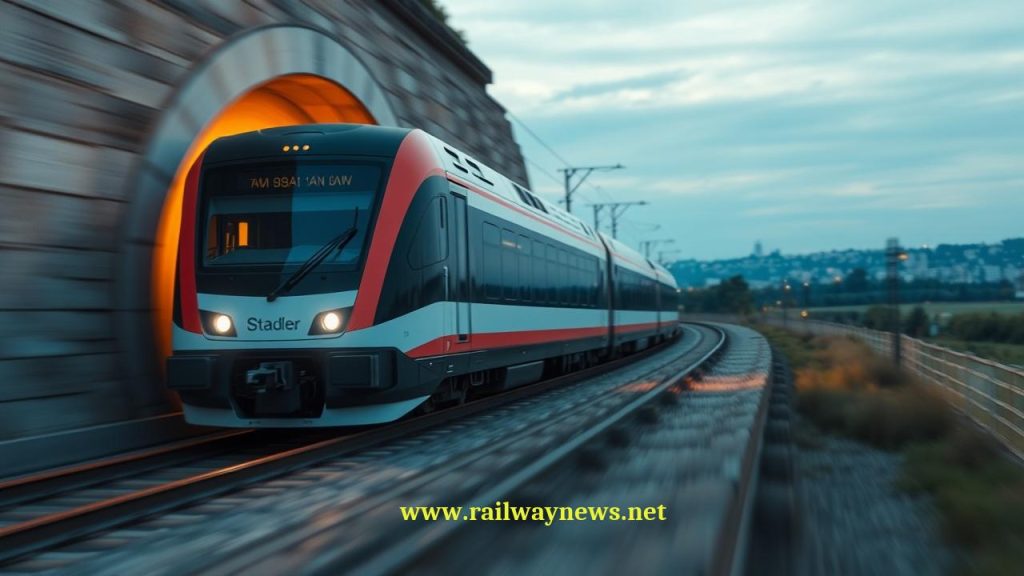
Stadler is set to pioneer a landmark “second life” initiative, acquiring 93 GTW articulated railcars from Swiss operator Thurbo for detailed modernization and resale to Hungary’s MÁV. This strategic agreement will add approximately 14,000 much-needed seats to the Hungarian rail network and establishes a new benchmark for sustainable rolling stock management in Europe.
| Category | Details |
|---|---|
| Project Scope | Purchase, modernization, and resale of 93 GTW railcars |
| Key Parties | Stadler (Seller/Modernizer), Thurbo AG (Original Owner), MÁV-START Zrt. (New Owner) |
| Project Timeline | Phased transfer and modernization from 2027 to 2034 |
| Fleet Impact (Hungary) | Addition of ~14,000 passenger seats; replacement of older vehicles |
| Technical Modernization | Adaptation to Hungarian network standards, interior refurbishment, and passenger amenity upgrades |
Main Body:
Swiss rolling stock manufacturer Stadler has formally announced a tripartite agreement that will see it manage the complete lifecycle transition of 93 GTW (Gelenktriebwagen) multiple units. Under the terms of the contract, Stadler will purchase the fleet from the Swiss regional operator Thurbo, undertake a significant modernization program, and deliver the upgraded trains to the Hungarian state railway company, MÁV. The transfer of the trains will occur in annual batches between 2027 and 2034, coinciding with Thurbo’s own fleet renewal program, which involves phasing in 107 new Stadler FLIRT Evo trains.
The modernization process is a technically complex undertaking designed to tailor the Swiss-service trains for Hungarian operational requirements. Each unit will undergo an intensive 12-week overhaul that includes a complete interior refurbishment to enhance passenger comfort with modern seating, climate control, and updated information systems. Critically, the work will involve adapting the trains’ electrical systems for compatibility with Hungary’s 25 kV 50 Hz AC network, a key difference from the Swiss 15 kV 16.7 Hz AC standard. While the prototypes will be developed in Switzerland, Stadler will establish a dedicated service base in Hungary for the series modernization and future maintenance, fostering local expertise and ensuring long-term support for the fleet.
This initiative addresses a pressing need for MÁV, which is actively seeking to expand its rolling stock capacity to meet growing passenger demand. The acquisition of modernized, high-quality second-hand vehicles presents a financially astute and rapid alternative to procuring an entirely new fleet. For Stadler, the project represents a strategic evolution of its business model, moving beyond manufacturing to full-service asset management. By extending the operational life of the GTW fleet—one of its first major successful product lines—Stadler demonstrates a powerful circular economy model that offers significant environmental and economic benefits.
Key Takeaways
- Sustainable Fleet Management: The project extends the service life of modern railcars, providing a competitive and environmentally friendly alternative to new builds.
- Significant Capacity Boost for Hungary: MÁV will integrate approximately 14,000 additional seats into its regional network, replacing older, less efficient rolling stock and improving passenger experience.
- Innovative Business Model: Stadler establishes a new benchmark for the industry by acting as an intermediary that purchases, refurbishes, and resells rolling stock, creating value for all parties.
Editor’s Analysis
This Stadler-MÁV-Thurbo deal is more than just a transaction; it’s a blueprint for the future of rolling stock procurement in an era of tightening budgets and increasing pressure for sustainability. The traditional “build, operate, scrap” model is being challenged by a more intelligent, circular approach. By proving the technical and financial viability of giving a high-quality, mid-life fleet a “second life” in a new market, Stadler is positioning itself as a leader in lifecycle management. This model could be replicated across Europe, where numerous fleets from the early 2000s are approaching replacement age, offering a pragmatic solution for operators seeking to modernize rapidly and cost-effectively without compromising on quality.
Frequently Asked Questions
- Which companies are the main parties in this agreement?
- The three key parties are Stadler, the manufacturer and modernizer; Thurbo, the current Swiss operator and original owner of the trains; and MÁV, the Hungarian state operator that will be the new owner.
- What is the timeline for the train transfer?
- The 93 GTW railcars will be transferred from Thurbo to Stadler for modernization in annual batches, starting in 2027 and concluding by 2034.
- Where will the modernization work take place?
- The prototype trains will be modernized in Switzerland. However, the series production and subsequent maintenance will be handled at a new service base Stadler is establishing in Hungary.

Railway infrastructure, rolling stock and transport technologies specialist focused on global rail industry developments, high-speed rail systems, signaling technologies and freight transportation. Covering railway investments, public transport modernization, rail operations and international mobility projects across Europe, Asia and North America.
RELATED POSTS

October 1, 2026 7:09 am
United States regulators confirmed a September 30 deadline for the...

October 4, 2026 5:14 pm
Alstom secured a CA$4.7 billion order from VIA Rail Canada...
October 1, 2026 3:12 am
Greenbrier confirmed Brian Comstock as new president and CEO effective...
October 1, 2026 10:14 am
HS2 installed a 55-metre steel span in Birmingham, completing phase...
October 1, 2026 11:14 pm
CATS confirmed a six-mile streetcar route in Charlotte to add...
October 1, 2026 5:14 am
Siemens confirmed delivery of the first new S200 train to...