
Leo Express Launches: Germany to Ukrainian Border Rail Line in 2026
Leo Express launches a new, unsubsidized rail service from Frankfurt to the Ukrainian border in 2026, a 1,300 km route expanding open-access rail.
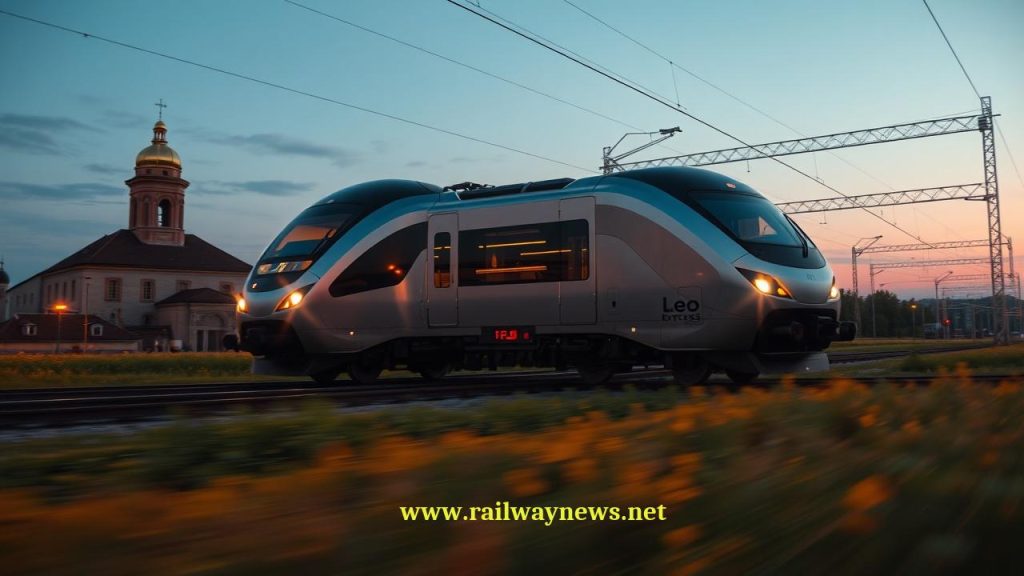
FRANKFURT, Germany – Private Czech operator Leo Express has announced a landmark expansion of Europe’s open-access rail network, launching a daily commercial service connecting Germany, the Czech Republic, and Poland with the Ukrainian border starting June 25, 2026. The ambitious 1,300 km route will be one of the longest direct passenger services in Europe, operating entirely without public subsidies.
| Category | Details |
|---|---|
| Operator | Leo Express (Private Czech Company) |
| Route | Frankfurt Airport (Germany) to Przemyśl (Poland) |
| Launch Date | June 25, 2026 |
| Route Length | Over 1,300 km |
| Funding Model | 100% Commercial (No Public Subsidies) |
In a significant move for European rail integration, Leo Express will establish a new trans-continental link starting in Przemyśl, Poland—a key gateway city near the Ukrainian border. The daily service will traverse Central Europe, stopping at major hubs including Krakow, Ostrava, and Prague, before entering Germany to serve Dresden, Leipzig, Erfurt, and terminating at Frankfurt and its international airport. According to the operator, the westbound service is timed to arrive at Frankfurt Airport at 07:53, offering seamless connections for passengers catching morning flights, with the return journey departing at 08:27. “With this new line, we are removing the historical barriers between Western and Eastern Europe, connecting important European centers, and providing rail access to Ukraine,” stated Leo Express CEO Peter Köhler.
While the operator has not yet released technical specifications for the rolling stock that will serve this extensive route, it has confirmed a full suite of modern passenger amenities. All trains will be equipped with complimentary Wi-Fi, at-seat power outlets, air conditioning, and a detailed on-board catering service. The pricing strategy aims for accessibility, with introductory fares starting as low as EUR 10. Initially, tickets will be sold without seat reservations, but a more structured system featuring reserved seating and a premium Business class will be introduced from January 2026, signaling a phased approach to service enhancement.
The announcement has been hailed by industry advocates as a victory for market liberalization. ALLRAIL, the alliance for open-access operators, praised the initiative as “a clear example of railway market reform working in practice.” The new route positions Leo Express as a direct competitor to established state-owned incumbents, particularly Deutsche Bahn in Germany, by creating what Köhler calls “an alternative to existing operators.” However, the service will face operational hurdles, as Leo Express acknowledges that ongoing construction and maintenance on the German network will necessitate schedule adjustments on certain days, a common challenge for all operators in the region.
Key Takeaways
- Strategic East-West Corridor: The route bridges major Western European financial centers like Frankfurt with key Central and Eastern European cultural and economic hubs, extending all the way to the Ukrainian border.
- Open-Access Milestone: As a fully commercial, unsubsidized service, this 1,300 km line represents a significant achievement for Europe’s liberalized rail market and private operator ambition.
- Enhanced Connectivity to Ukraine: By terminating in Przemyśl, the service provides a vital and resilient rail link for passenger traffic to and from Ukraine, improving its connection with the rest of Europe.
Editor’s Analysis
The launch of the Frankfurt-Przemyśl line by Leo Express is more than just a new timetable entry; it is a strategic play that underscores the maturation of Europe’s open-access rail framework. This move demonstrates that private operators are now confident enough to undertake complex, long-haul, multi-country services that were once the exclusive domain of state-backed giants. The route’s terminus at the Ukrainian border carries immense geopolitical weight, establishing a robust passenger corridor that supports Ukraine’s integration with the EU and provides a reliable alternative to air travel. For the wider market, this venture intensifies competition on lucrative German corridors and serves as a powerful proof-of-concept for future commercial rail projects, potentially accelerating the shift from state-monopolies to a more dynamic, pan-European railway system.
Frequently Asked Questions
- When will the new Leo Express service from Frankfurt to the Ukrainian border begin?
- The daily service is scheduled to commence on June 25, 2026.
- What major cities are on the new international route?
- The train will connect Frankfurt, Erfurt, Leipzig, Dresden, Prague, Ostrava, Krakow, and Przemyśl, among other stops.
- Is this rail service funded by government subsidies?
- No, the service will operate on a purely commercial basis without any public subsidies, a key feature of the open-access model.

Railway infrastructure, rolling stock and transport technologies specialist focused on global rail industry developments, high-speed rail systems, signaling technologies and freight transportation. Covering railway investments, public transport modernization, rail operations and international mobility projects across Europe, Asia and North America.
RELATED POSTS

October 1, 2026 7:09 am
United States regulators confirmed a September 30 deadline for the...

October 1, 2026 12:13 am
Illinois approved $1.5 billion annually for the Northern Illinois Transit...

October 4, 2026 5:14 pm
Alstom secured a CA$4.7 billion order from VIA Rail Canada...

October 6, 2026 2:14 am
Union Pacific launched export rail shipments with Ferromex to deliver...

October 1, 2026 6:10 am
Amtrak approved a System Expansion Committee on July 30 to...

October 1, 2026 3:12 am
Greenbrier confirmed Brian Comstock as new president and CEO effective...