
Czech Railways: 120 Battery Trains to Revamp Regional Rail
Czech Railways invests in 120 battery-electric trains, enhancing regional services. This move offers seamless travel and modernizes the fleet for a sustainable future.
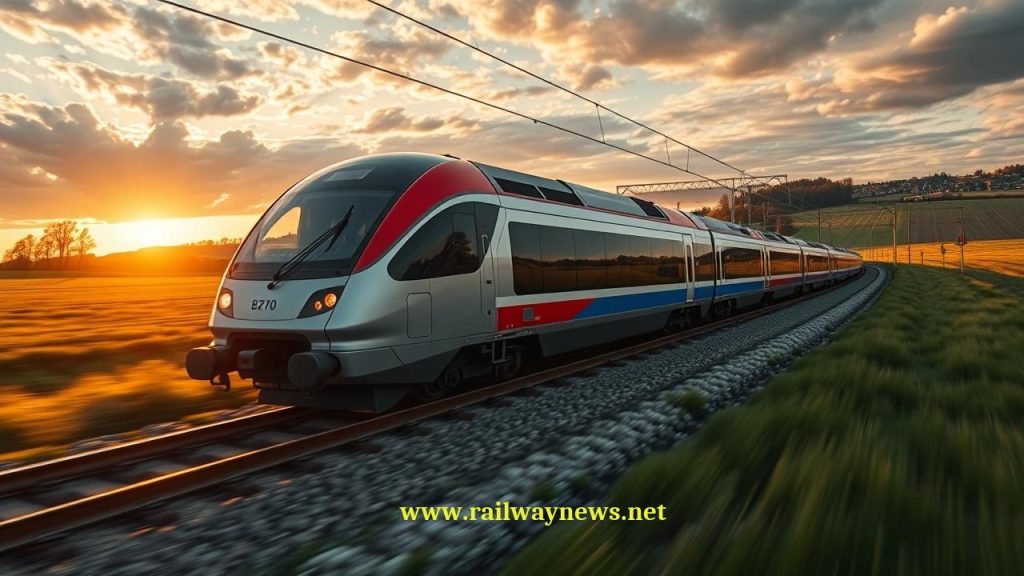
PRAGUE, CZECH REPUBLIC – Czech Railways (České dráhy) has initiated a major public procurement process for up to 120 new battery-electric multiple units (BEMUs) to significantly upgrade its regional transport services. The tender, divided into two lots for different capacity trains, aims to establish framework agreements that will enable direct, zero-emission services across both electrified and non-electrified lines throughout the Czech Republic.
| Category | Details |
|---|---|
| Procuring Entity | Czech Railways (České dráhy) |
| Total Units | Up to 120 BEMUs |
| Train Types | Up to 40 BEMU130 (≥121 seats) & up to 80 BEMU135 (≥140 seats) |
| Initial Firm Order | 13 units (7 BEMU130, 6 BEMU135) |
| Top Speed | 160 km/h (catenary) / 120 km/h (battery) |
| Power Systems | Multi-system: 3 kV DC and 25 kV 50 Hz AC |
Czech Railways has formally launched two public tenders to secure suppliers for a new generation of regional trains, signalling a major investment in sustainable mobility. The procurement is structured around framework agreements for up to 40 BEMU130 units and up to 80 larger BEMU135 units. According to CEO Michal Krapinec, this move is a direct response to growing demand from regional authorities who are keen to introduce modern, emission-free transport. “Many regions have already expressed interest in introducing battery-powered hybrid electric multiple units,” Krapinec stated. The initial firm order will consist of 13 units, with subsequent orders contingent on the specific needs of the regions. The detailed contracts will also cover the supply of spare parts and potentially full-service maintenance agreements, which will be negotiated with the shortlisted bidders.
The technical specifications for the new fleet are stringent, shaped by the requirements of regional transport authorities and the criteria of the national TRANSGOV financing programme. The dual-system trains must be compatible with both 3 kV DC and 25 kV 50 Hz AC overhead lines, allowing them to charge batteries while on electrified sections. They will feature a partially low-floor design for accessibility, with minimum seating capacities of 121 for the BEMU130 and 140 for the BEMU135. Passenger comfort is a priority, with air-conditioning, first and second-class seating, and ample space for bicycles, prams, and luggage. Modern amenities will include on-board Wi-Fi, power sockets, USB ports, and a detailed audio-visual information system. For safety and interoperability, the units will be equipped with both ETCS and GSM-R systems.
This large-scale procurement builds on the successful deployment of BEMUs in the Moravia-Silesia region, which served as a pilot for the technology within the Czech network. CEO Michal Krapinec highlighted that the introduction of these hybrid trains led to a notable increase in passenger numbers. The key advantage, he noted, is the ability to offer “direct connections on electrified and non-electrified lines without transshipment,” a feature that has proven highly popular with travellers. This strategic investment aims to replicate that success across the country, replacing older diesel rolling stock and enhancing service quality and environmental performance. By the end of 2026, Czech Railways will already be operating 15 RegioPanter hybrid units from Škoda Group in the Moravia-Silesia region, setting a precedent for this larger fleet expansion.
Key Takeaways
- Fleet Modernization: The tender for 120 BEMUs represents a significant step in modernizing the Czech Republic’s regional rail fleet, prioritizing hybrid technology over diesel.
- Seamless Connectivity: The primary strategic goal is to eliminate the need for passengers to change trains when travelling between electrified and non-electrified routes, creating more efficient direct services.
- Proven Demand: The decision is backed by positive results from the Moravia-Silesia region, where similar BEMU services have already led to increased ridership and high passenger satisfaction.
Editor’s Analysis
Czech Railways’ tender for 120 BEMUs is a powerful signal of the accelerating transition away from diesel power in European regional rail. While full electrification remains the ultimate goal, battery-hybrid technology offers a pragmatic and cost-effective interim solution, allowing operators to decarbonize services without waiting for massive infrastructure investments on secondary lines. This move places the Czech Republic firmly among the European leaders in adopting BEMU technology at scale and will be closely watched by other national operators facing similar network challenges. The tender is likely to attract fierce competition from major European rolling stock manufacturers, highlighting the growing strategic importance of the battery-train market segment.
Frequently Asked Questions
- What types of trains is Czech Railways purchasing?
- Czech Railways is procuring up to 120 battery-electric multiple units (BEMUs) in two sizes: the BEMU130 (minimum 121 seats) and the BEMU135 (minimum 140 seats).
- What is the main advantage of these new battery-electric trains?
- Their main advantage is the ability to operate seamlessly on both electrified and non-electrified railway lines, allowing for direct, uninterrupted journeys and eliminating the need for passengers to change trains.
- How fast will the new BEMUs be able to travel?
- The trains will have a maximum speed of 160 km/h when running under overhead power lines and 120 km/h when operating in battery mode.

Railway infrastructure, rolling stock and transport technologies specialist focused on global rail industry developments, high-speed rail systems, signaling technologies and freight transportation. Covering railway investments, public transport modernization, rail operations and international mobility projects across Europe, Asia and North America.
RELATED POSTS

October 4, 2026 5:14 pm
Alstom secured a CA$4.7 billion order from VIA Rail Canada...

October 1, 2026 3:12 am
Greenbrier confirmed Brian Comstock as new president and CEO effective...
October 1, 2026 10:14 am
HS2 installed a 55-metre steel span in Birmingham, completing phase...

October 1, 2026 11:14 pm
CATS confirmed a six-mile streetcar route in Charlotte to add...
October 1, 2026 5:14 am
Siemens confirmed delivery of the first new S200 train to...
October 1, 2026 11:13 am
Norfolk Southern expanded its 3B Corridor in Alabama in 2025,...