
UK Unveils First Hydrogen Rail Shunter: Green Freight Push
UK unveils its first hydrogen-powered HydroShunter project, a key step in decarbonizing rail freight with hybrid technology, driving sustainable transport solutions.
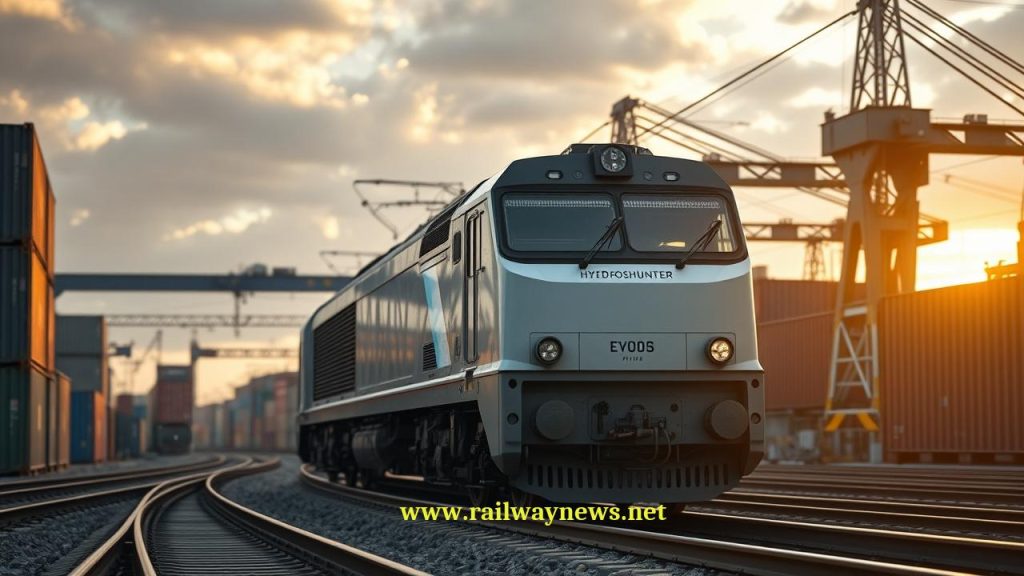
London, UK – The United Kingdom has officially greenlit five pioneering hydrogen technology projects, including the development of the nation’s first hydrogen-powered rail shunter, marking a significant step in decarbonising its transport and energy sectors. This strategic investment through the Hydrogen Innovation Initiative aims to accelerate the adoption of hydrogen technologies by demonstrating their real-world viability across the entire value chain, from production to end-use.
| Category | Details |
|---|---|
| Programme Name | Hydrogen Innovation Initiative (HII) 2025/26 Demonstration Programme |
| Key Rail Project | HydroShunter – The UK’s first hydrogen-powered railway shunter |
| HydroShunter Lead | Vanguard Sustainable Transport Solutions |
| HydroShunter Technology | Hybrid system combining hydrogen fuel cells with battery traction |
| Supporting Bodies | High Value Manufacturing Catapult, Innovate UK, Connected Places Catapult |
The UK government has approved five projects under the Hydrogen Innovation Initiative’s (HII) 2025/26 Demonstration Programme, a collaborative effort designed to fortify the country’s hydrogen ecosystem. Led by High Value Manufacturing Catapult and supported by Innovate UK and Connected Places Catapult, the initiative will showcase innovations in hydrogen production, storage, and application. The projects aim to de-risk the technology for commercial adopters and foster business growth. Among the five, Vanguard Sustainable Transport Solutions will develop the “HydroShunter,” a landmark project for the UK rail freight industry that will test the feasibility of zero-emission shunting operations under demanding duty cycles.
The HydroShunter will employ a sophisticated hybrid powertrain, integrating hydrogen fuel cells with a battery traction system. This configuration is critical for shunting, which involves frequent stops, starts, and high-torque movements that place significant stress on power systems. While specific technical specifications for the shunter have not yet been released, the hybrid approach allows the battery to provide instant power for peak loads while the fuel cell acts as a range extender, continuously recharging the battery and ensuring sustained operation. This model mirrors successful hybrid strategies in other transport sectors and is seen as a crucial solution for decarbonising rail depots where overhead electrification is often impractical. Other projects in the initiative include Latent Drive’s “SeaStack” offshore electrolyser, which will produce hydrogen from seawater, and Unitrove’s work on advanced liquid hydrogen storage and distribution.
This initiative places the UK’s hydrogen development in the context of a competitive global energy transition. While nations like the US and UAE are making significant strides in green hydrogen production, and the UK itself is de-risking related technologies like floating offshore wind, the HII focuses on creating a robust domestic supply chain and proving out specific use cases. As Sameer Savani, Managing Director for Transport at Connected Places Catapult, noted, these real-world demonstrations are vital for “backing UK businesses and positioning them to seize opportunities in the global sustainable energy transition.” By fostering a full ecosystem—from offshore production to rail yard application—the UK aims to build a resilient and self-sufficient hydrogen economy.
Key Takeaways
- First Hydrogen Shunter for UK Rail: The HydroShunter project represents a critical milestone in the effort to decarbonise the UK’s rail freight sector, targeting hard-to-abate emissions in depots and yards.
- Full Value Chain Demonstration: The five selected projects cover the entire hydrogen lifecycle, including offshore production from seawater (Latent Drive), liquid hydrogen storage (Unitrove), and end-use applications in rail, drones, and power generation.
- De-Risking for Commercialisation: The core goal of the Hydrogen Innovation Initiative is to provide real-world performance data and integration insights, lowering the barrier to entry for businesses looking to adopt hydrogen solutions.
Editor’s Analysis
The launch of the HydroShunter project is more than a national first; it’s a strategic test case for the global rail freight industry. While electrification is a viable path for many mainline routes, the high cost and logistical complexity of electrifying vast, complex shunting yards have left diesel as the stubborn incumbent. This hydrogen-battery hybrid demonstrator addresses that specific, high-emission niche. Global freight operators and port authorities will be closely monitoring the project’s performance, particularly its reliability, refuelling time, and operational costs compared to diesel. If successful, the HydroShunter could provide the blueprint for a scalable, zero-emission solution, unlocking a significant new market for hydrogen technology and accelerating the decarbonisation of logistics hubs worldwide.
Frequently Asked Questions
- What is the HydroShunter project?
- The HydroShunter is the UK’s first hydrogen-powered railway shunting locomotive. Led by Vanguard Sustainable Transport Solutions, it uses a hybrid system of hydrogen fuel cells and batteries to provide zero-emission power for moving rail wagons in freight yards and depots.
- What is the Hydrogen Innovation Initiative (HII)?
- The HII is a UK-based programme led by High Value Manufacturing Catapult with support from Innovate UK and Connected Places Catapult. It aims to strengthen the UK’s hydrogen sector by funding and supporting real-world demonstration projects across hydrogen production, storage, and end-use applications.
- Why is hydrogen being tested for rail shunters?
- Rail shunting involves challenging duty cycles with high power demands, making battery-only solutions difficult. Hydrogen fuel cells, combined with batteries, offer a zero-emission alternative to diesel with the necessary power and operational range, avoiding the high cost and complexity of electrifying entire rail yards.

Railway infrastructure, rolling stock and transport technologies specialist focused on global rail industry developments, high-speed rail systems, signaling technologies and freight transportation. Covering railway investments, public transport modernization, rail operations and international mobility projects across Europe, Asia and North America.
RELATED POSTS

October 1, 2026 7:09 am
United States regulators confirmed a September 30 deadline for the...

October 8, 2026 1:15 pm
Alstom secured a €1bn contract to build 13 automated trains,...

October 4, 2026 5:14 pm
Alstom secured a CA$4.7 billion order from VIA Rail Canada...

October 1, 2026 12:13 am
Illinois approved $1.5 billion annually for the Northern Illinois Transit...

October 6, 2026 2:14 am
Union Pacific launched export rail shipments with Ferromex to deliver...

October 1, 2026 6:10 am
Amtrak approved a System Expansion Committee on July 30 to...